
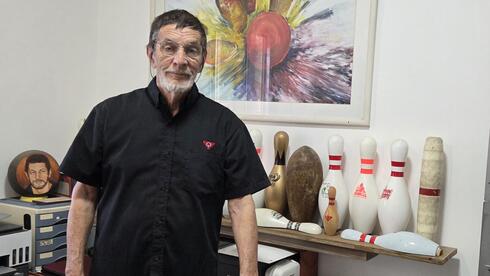
There is one phone number that anyone who wants to open a bowling venue in Israel eventually has to call. On the other end is Len Cherney, a man who has devoted 40 years to a simple game that, despite the era of screens, video games and extreme attractions, still manages to excite people.
At its core, bowling is just a slightly odd ball and 10 pins at the end of a lane. But it has remained a popular family pastime, and Israel now has more than 60 bowling venues of different sizes spread across the country.

Cherney, who immigrated to Israel from South Africa at 17, found his way into the industry after starting out in hospitality and aviation. He was among the founders and managers of the legendary bowling alley beneath Ramat Gan Stadium and later helped build and supply equipment for most of Israel’s bowling venues.
Behind the simple game is a global industry that includes lane manufacturing, machinery, scoring systems, balls, pins and, in recent years, innovative variations such as mini bowling, duckpin and upgraded experiences using LED lights and other gimmicks. According to international reports, the global bowling center market is a huge industry worth an estimated $18.3 billion to $23.6 billion and is expected to continue growing.
Cherney is the Israel representative of the American company QubicaAMF, the main supplier of bowling equipment for venues in Israel.
“My connection with the company goes back many years,” he says. “It began after they were looking for someone who could build and manage the bowling center in Ramat Gan. After that, they sent me on quite a few missions around the world. I gave lectures and took part in exhibitions in Asia and Europe to try to promote the construction of new bowling venues.”

How did the public respond when you opened the Ramat Gan venue in the 1990s? It was one of the first in Israel
“It was a hit. In the evenings and on weekends there were long waiting lists. It wasn’t like today. There were only lanes, no video games, and a very modest restaurant. People simply came to bowl. After I saw there was interest, I worked to bring a world-class coach to Israel to guide local players so we could build a proper team for competitions abroad. I also went into coaching, and we took players to tournaments in Europe.”
Even though bowling alleys often look full whenever you go and there is usually a waiting list for a lane, the financial barrier to entering the industry is high.
“Almost every day I get a call from an entrepreneur or someone interested in opening a new venue,” Cherney says. “But there is a series of very important questions that must be addressed to know whether the project really has a chance of happening.”
What needs to be taken into account?
“First, I ask whether they have a building that is large enough and suitable for building lanes. A bowling lane is 25 meters long, and you need additional passage areas for technicians and, of course, the players’ seating area. It is quite a large space, and you also have to make sure there are no support columns that interfere with construction of the lanes.
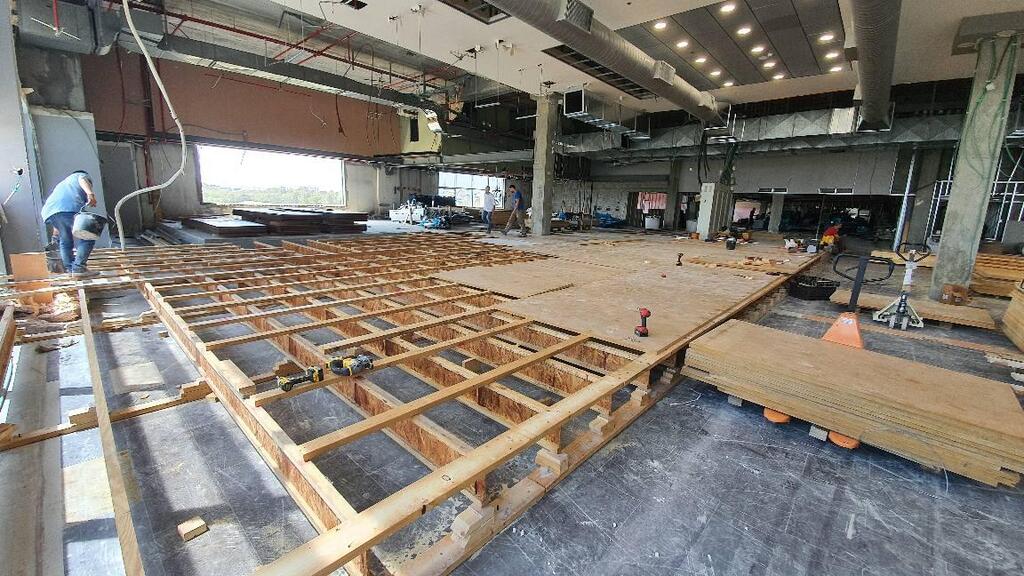
“For a venue to be profitable, the magic number is 12 lanes. There are places with 10 that work well, but in my view, 12 is the optimal number. On top of that, you need space for a cafeteria, video games and event rooms. It reaches about 1,200 square meters, so you have to make sure you have that space and that it is in a good location with parking and accessibility.”
The second key question is weekend activity and the target audience. One of the industry’s main problems is that most customers arrive at the same bottleneck times: weekends and evenings. During the day, most venues are not full.
“Without working on weekends, it is not easy from a business standpoint,” Cherney says. “But there are well-managed venues that succeed even though they are closed on Saturday. Special periods such as the intermediate days of holidays, summer vacations and private events can cover for being closed on Saturday. I am in talks with Haredi entrepreneurs in Jerusalem who want to build a venue, and it will of course be closed on Saturday, but they are quite optimistic about the volume of activity during the rest of the week.”
Where does the equipment come from, including the balls, machines, chairs and everything else?
“It is manufactured in the United States and brought over in containers by sea. In general, the calculation for construction is around $36,000 to $38,000 per lane. On top of that, of course, you have to add the costs of the building, rent, municipal taxes, employees and other expenses. From there, you can invest more in special lights and gimmicks, but that already depends on each entrepreneur and how much they want their venue to be special and attractive.
“The entry threshold is not low. It is not like opening a store or a small business. This is an investment of several million shekels. As for return on investment, it is hard to answer because it depends very much on the venue itself, the local audience and the marketing. Some succeed within a few years, while others take time. There are also some that did not succeed.”
In the early years, bowling was just bowling. Since then, nearly every venue has added video games, private event rooms and even restaurants and bars.
How much has that changed the industry?
“It has turned bowling into more of an entertainment complex where you stay longer, but at the end of the day, for every dollar you bring in from bowling, you bring in 15 cents from everything else. Bowling remains the center. Video games are nice, but almost always they are operated in partnership with the company that installs and runs them. So only in bowling and food does all the revenue remain with the venue owner. What has become a significant growth engine is birthdays and private corporate events.”
What innovations and gimmicks are there in a game that has existed for decades?
“Every year there is a global exhibition, and there are always new things. In recent years, LED lights along the lane, on the pins and special screens have really come in. A full LED wall adds to the experience. To make it easier for young children and give them a sense of success, there is a new mini bowling gimmick with a short lane and balls suited to preschoolers.
5 View gallery
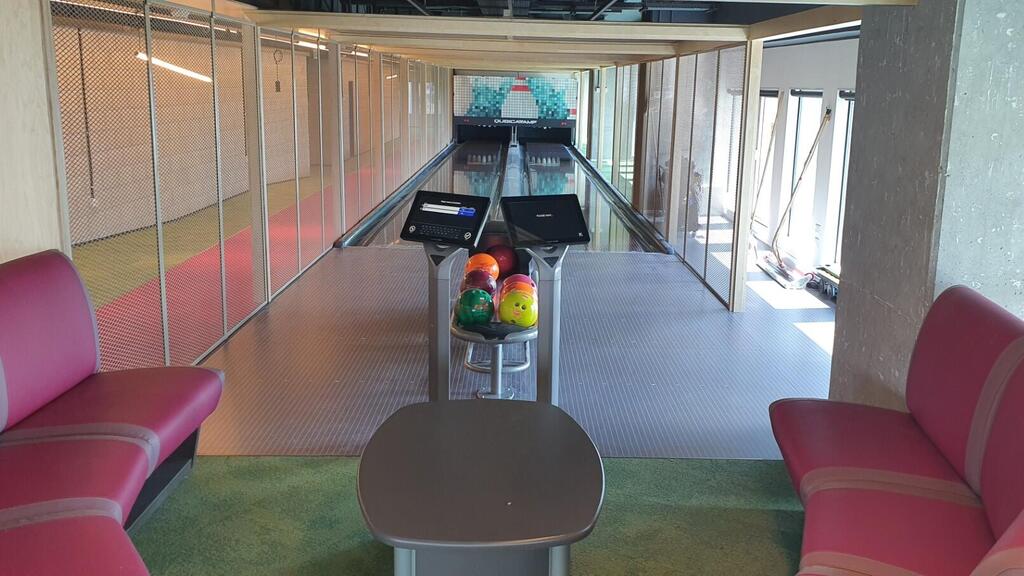
A private bowling lane built for employees of a high-tech company
(Photo: Len Cherney)
“There is also a game abroad called duckpin. The ball is quite small and has no holes, and you can roll it with one hand while holding a beer in the other. The lane is fairly short and a little different from regular bowling. There are also games based on hitting lights along the sides, with special scoring. That is called hyperbowling, a combination of traditional bowling and video games.”
As Israel’s “bowling man,” Cherney has received some interesting phone calls over the years. In one case, he was asked to come to the 14th floor of Tel Aviv’s Azrieli Towers.
“I went up to the 14th floor and saw that these were actually company offices,” he recalls. “I asked them whether they intended to convert the space into a bowling alley, but then it turned out they were building a games floor for employees and, among other things, wanted two lanes so workers could bowl during their break. It was a special project, but we built lanes for them with a view from the tower.”
Other calls came from private individuals who wanted to build bowling lanes in the basement of their villa.
“These are people who want to play at home with family and friends, and if there is space and financing, then there is no problem. You simply go down to the basement and play.”
Most people will never score like Messi, dunk like LeBron or serve like Federer, but almost anyone can occasionally bowl a strike. Is that the secret of the game’s magic?
“Without a doubt, and also the internal competition among the players. Everyone can play at any age, and also win. It is a simple and fun game. And truly, every now and then you can get a strike or a spare, and that is the peak of the game.”
Israel already has 60 venues. Is there room for more?
“Absolutely. Jerusalem has a shortage, and there are other cities where even two or three venues could succeed at the same time. I get inquiries from many places in Israel, and in most cases I think there is good potential. It has to be built properly and managed well, but the game itself is popular and loved. It will not be the obstacle to success.”
And what about the price per game? It is already around 40 shekels
“That is roughly the realistic price with today’s expenses. When I tour successful venues with potential entrepreneurs, I always tell them to photograph the price list. They will need to know how to make money at about those prices. People will not pay much more than that.”
One day, Cherney received a surprising phone call.
“They called me from the company headquarters in Richmond, Virginia, in the United States,” he says. “They told me they had received an inquiry from an Egyptian source in Sharm el-Sheikh and asked whether I could go there to train them. I went, and it turned out that one of the hotels in the city wanted to build a bowling venue on the lower floor. After we moved forward and it worked well, businesspeople from the capital came and asked whether the same thing could be done in Cairo. I went there too, and for two years I helped them build venues. I am basically signed on the first bowling alley in Egypt.”
Bowling’s success reached then-President Hosni Mubarak, who even hosted Yasser Arafat for a friendly game. After the Egyptian president won, he turned to Cherney and told him it was an excellent game and that he wanted him to build eight lanes in every major Egyptian army base.
“He was so pleased that he had won that nothing else interested him,” Cherney says, laughing. “He simply ordered the Egyptian Defense Ministry to write me a check for the military lanes. That was the easiest sale I ever made.”

