142
US-Israel-Iran War Latest News: The United States and Iran have entered a sharper phase of confrontation after new American strikes hit Iranian targets for the second day in a row. The escalation has raised fears of a wider regional conflict, especially after strong statements from US President Donald Trump about continued military action alongside a push for negotiations.
Trump said during remarks at the White House, “We’re going to hit them again hard today.”
He also indicated that diplomacy had nearly succeeded but collapsed at the last moment, saying, “We were really close to a deal, but they keep tapping us along.”
Reports suggest the latest strikes followed the downing of a US helicopter and growing frustration over stalled nuclear talks.
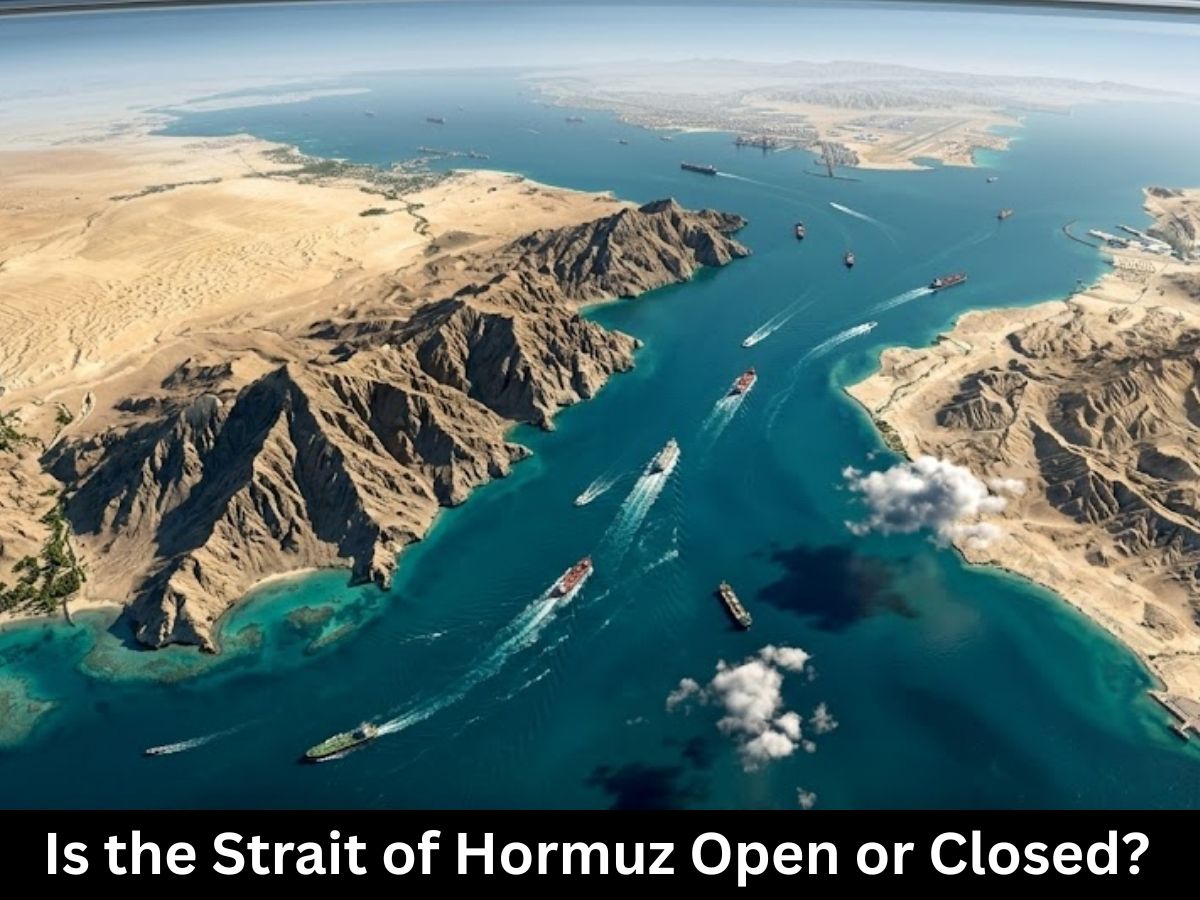
Is the Strait of Hormuz Really Closed or Still Open?
The Strait of Hormuz is not clearly closed despite Iran’s announcement, as conflicting reports continue to emerge from both sides. Iran has claimed that it has shut the strategic waterway to all commercial and oil traffic, but the United States and maritime tracking data indicate that ships are still moving through the corridor.
This gap between political statements and on-ground shipping activity has created confusion in global markets. For now, the strait remains operational in practice, but it is under extreme tension, and even the threat of disruption is enough to keep oil traders and governments on high alert.
US-Israel-Iran War Latest News: Iran Declares Strait of Hormuz Closure for All Vessels
After the US attacks, Iran announced a major escalation by declaring the Strait of Hormuz closed to all maritime traffic, including commercial ships and oil tankers.
Iranian military-linked media said the move came in response to US actions, and warned that vessels attempting to pass would be treated as hostile targets. The statement said, “The Strait of Hormuz is declared closed for passage for all types of vessels, including oil tankers and commercial ships.”
It further added, “Any movement of vessels through the Strait of Hormuz will be targeted.” Iranian reports later claimed that two vessels trying to enter the zone were struck.
US-Israel-Iran War Latest News: US Rejects Claim of Blockade in Key Shipping Route
The United States quickly challenged Iran’s announcement and said normal shipping activity continues in the region.
US Central Command (CENTCOM) posted on X, “CLAIM: Iran’s Islamic Revolutionary Guard Corps claims that the Strait of Hormuz is closed. TRUTH: Commercial ships are continuing to transit in and out of the Strait of Hormuz tonight.”
🚫 CLAIM: Iranian media sources are claiming that Iran has attacked a U.S. warship in the Strait of Hormuz. FALSE.
✅ TRUTH: No U.S. warships have been struck. pic.twitter.com/hdA9UcPKVS
— U.S. Central Command (@CENTCOM) June 10, 2026
This contradiction has created confusion among global traders and energy markets about whether any real blockade is in effect.
US-Israel-Iran War Latest News: Why the Strait of Hormuz Matters to the World Economy?
The Strait of Hormuz is one of the most important energy chokepoints on the planet. It handles a major share of global oil and gas exports, especially from Gulf countries like Saudi Arabia, Iraq, Kuwait, the UAE, Qatar, and Iran.
Any disruption directly affects global supply chains, fuel prices, and industrial costs across continents.
The global market quickly reacted to the tensions as traders priced in supply risks. Oil benchmarks moved higher on fears of possible disruption in the region.
Brent crude rose $2.30, or 2.47%, to $95.40 a barrel, while US West Texas Intermediate crude climbed $2.60, or 2.89%, to $92.63. US crude futures gained more than $3 during trading.
US-Israel-Iran War Latest News: Global Economy Faces Fresh Pressure if Tensions Continue
Analysts warn that prolonged instability could raise inflation worldwide as energy costs rise. Higher fuel prices can also impact transport, manufacturing, food production, and fertiliser supply chains.
International agencies have warned that sustained disruption to trade routes may slow global growth and increase pressure on developing economies already facing financial strain.

