
The rapid development of the Middle Corridor is increasingly drawing the attention of policymakers, investors and geopolitical analysts across Eurasia. What was once viewed primarily as an alternative transportation route connecting China and Europe has evolved into a broader strategic project encompassing logistics, trade, infrastructure, energy cooperation and regional political coordination.
Against the backdrop of geopolitical turbulence, sanctions, disruptions in global supply chains and growing competition over transit routes, the Trans-Caspian International Transport Route, widely known as the Middle Corridor, is acquiring significance that extends far beyond transportation. The corridor is gradually reshaping the economic geography of Eurasia while strengthening the strategic roles of countries located along the route.
Kazakhstan and Azerbaijan have emerged as two of the principal beneficiaries of this process. Their growing cooperation in transport, shipping, port development and regional connectivity projects is helping transform the Caspian region into a major link between Asia and Europe.
In an interview with News.Az, Kazakh political analyst Burikhan Nurmukhamedov said the expansion of cooperation between Astana and Baku reflects the emergence of a new geopolitical reality in Eurasia.
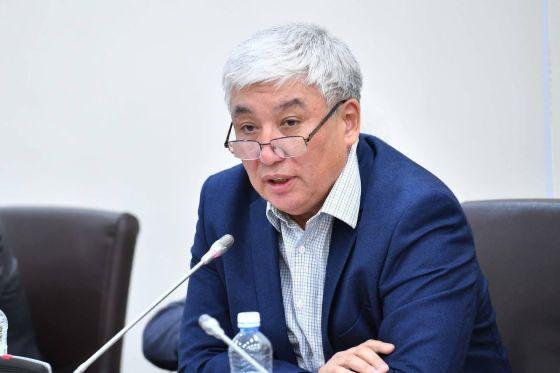
Photo: Burikhan Nurmukhamedov, Kazakh political analyst
According to Nurmukhamedov, the Middle Corridor should no longer be viewed solely through the prism of transportation. He said it is seen not simply as “a transport corridor, but as a new space of economic and political connectivity linking Central Asia, the Caspian region, the South Caucasus, Türkiye and Europe.”
The expert noted that the project is enhancing the strategic importance of both Kazakhstan and Azerbaijan, adding that for Kazakhstan it is an opportunity to strengthen its role as a key transit hub between East and West, while for Azerbaijan it is a chance to consolidate its importance as a vital Caspian and Caucasian bridge.
“In this sense, Astana and Baku are becoming independent players that influence the architecture of Eurasian connectivity and increase their strategic agency,” Nurmukhamedov stressed.
At the same time, he believes the future success of the corridor will depend not on political declarations but on practical implementation.
“This trend should not be exaggerated. The new reality is still taking shape, and its sustainability will depend on infrastructure, investment, transport speed, tariff policy and political coordination among participants,” he said, adding that it is already clear that, through the Middle Corridor, Kazakhstan and Azerbaijan are increasing their importance in the new system of Eurasian connectivity.
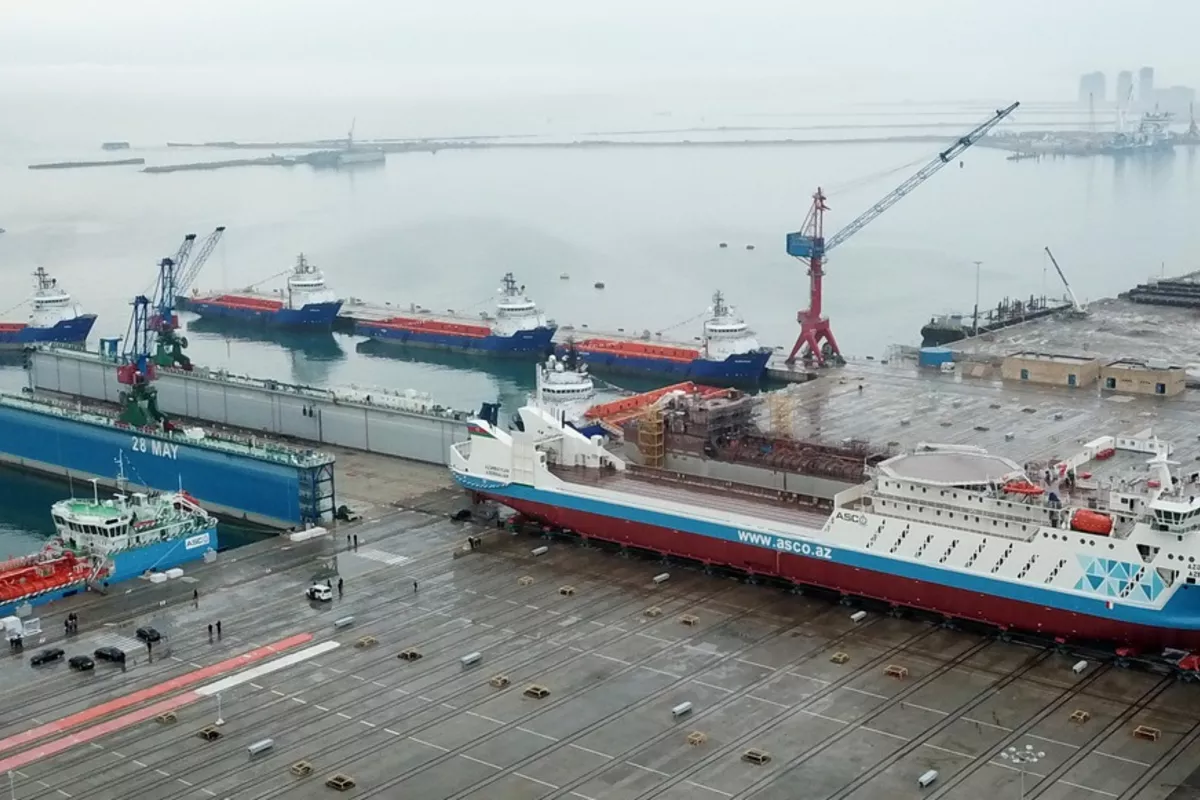
One of the latest examples of growing cooperation between Kazakhstan and Azerbaijan is the construction of Kazakhstan’s first container vessel at the Baku Shipyard.
According to Nurmukhamedov, the significance of the project goes beyond shipbuilding.
Source: Trend
“The beginning of construction of Kazakhstan’s first container vessel at the Baku Shipyard can be regarded as an important indicator that the Middle Corridor is moving to the level of a long-term strategic project,” the expert said. He noted that this is no longer simply a discussion of routes and transit opportunities, but a concrete investment in infrastructure without which the sustainable development of transportation across the Caspian Sea is impossible.
The analyst believes the vessel symbolises a broader commitment to developing the infrastructure needed to support future trade flows between Asia and Europe.
“This project shows that Kazakhstan and Azerbaijan are creating the material foundation for future growth in trade and logistics between Central Asia, the Caucasus, Türkiye and Europe,” he said. “For Kazakhstan, it expands access to foreign markets, while for Azerbaijan it strengthens Baku’s role as an industrial and transport centre of the Caspian region.”
At the same time, Nurmukhamedov emphasised that the symbolic value of the project may be as important as its immediate economic impact.
“Of course, a single container vessel will not solve all existing problems, but it symbolises the most important thing: the participants of the route are ready to invest in the future of the Middle Corridor,” he said.
The expert argues that growing cooperation between Kazakhstan and Azerbaijan in the Caspian region is contributing to broader geopolitical changes. He emphasised that economics is becoming the foundation for a broader regional role for both countries. “Joint projects in the Caspian region strengthen not only trade and logistics but also the political significance of the two countries within the Eurasian agenda,” Nurmukhamedov said.
He noted that the Caspian Sea is increasingly becoming a strategic space through which transportation, energy and trade routes are developing.
“Today, the Caspian Sea is acquiring new significance as a space through which transport, energy and trade flows pass. Kazakhstan is strengthening its role as a Central Asian hub, while Azerbaijan is consolidating its importance as a connecting link between the Caspian region, the South Caucasus, Türkiye and Europe,” he explained.
According to the analyst, this process is also strengthening political cooperation. He said that joint projects in ports, shipping and transit require constant political coordination, adding that this strengthens mutual trust, improves negotiating positions with external partners and gradually turns economic cooperation into an instrument of political influence.
He also said the development of the Middle Corridor is reshaping traditional transport patterns across Eurasia.
For decades, the majority of cargo traffic between Asia and Europe moved through northern routes passing across Russian territory. However, geopolitical uncertainty and growing demand for diversified supply chains have increased interest in alternative corridors.
According to Nurmukhamedov, the Middle Corridor is gradually becoming one of the most viable alternatives.
“The Middle Corridor is gradually changing the regional balance because it creates an additional route between Asia and Europe through Central Asia, the Caspian Sea, the South Caucasus and Türkiye. This strengthens the importance of Kazakhstan and Azerbaijan as key transit states and expands the opportunities of regional countries in choosing external economic partners,” he said.
Nevertheless, he cautioned against unrealistic expectations, saying it is important not to exaggerate the scale of these changes.

Source: TASS
“The Middle Corridor cannot yet become a full replacement for traditional routes through Russia, because infrastructure limitations related to ports, shipping on the Caspian Sea, tariffs, throughput capacity and cargo transit speed remain,” he noted.
However, Nurmukhamedov stressed that the very existence of an alternative route is already producing geopolitical consequences, noting its strategic significance. “The countries of Central Asia and the South Caucasus gain greater room for manoeuvre, while their transit role becomes increasingly important for China, Europe and Türkiye,” he said.
Another trend attracting growing attention is the deepening cooperation among Azerbaijan, Kazakhstan and Türkiye. According to Nurmukhamedov, this relationship is gradually moving beyond cultural and historical ties and becoming increasingly driven by economic interests.
“The prerequisites for this are indeed emerging, and there are reasons for cautious optimism,” he said, adding that cooperation between Azerbaijan, Kazakhstan and Türkiye is gradually moving beyond symbolic closeness and is being filled with practical content through transport, logistics, energy, trade and investment.
The expert described the Middle Corridor as the backbone of this emerging partnership, saying Kazakhstan provides access from Central Asia to the Caspian Sea, Azerbaijan connects the Caspian region with the South Caucasus, and Türkiye opens the way to European markets. “This combination creates a natural line of economic interaction among Turkic states and makes cooperation more practical and sustainable,” he explained.
At the same time, he stressed that the future of this partnership depends on a number of factors.
“The success of this project will depend on infrastructure quality, coordinated tariff policy, transport speed, common trade rules and the ability of the participating countries to maintain a balance between Turkic cooperation and a multi-vector foreign policy,” Nurmukhamedov said.
Some analysts have suggested that the growing partnership between Azerbaijan, Kazakhstan and Türkiye could eventually emerge as a major geopolitical axis in Eurasia.
Nurmukhamedov believes such assessments should be approached cautiously.
“Over the next decade, such a scenario appears less realistic than genuinely probable. Russia and China will retain their status as the largest centres of power in Eurasia due to the scale of their economies, resource base, military potential, infrastructure influence and deep political ties across the region,” he said.
Nevertheless, he acknowledged that the Baku-Astana-Ankara partnership is becoming an increasingly important factor in regional affairs.
“The Baku-Astana-Ankara linkage is acquiring independent significance. It is based on the Middle Corridor, the Caspian region, Turkic cooperation, energy, logistics and access to European markets,” he noted.
According to the analyst, the most realistic scenario is the emergence of a more diversified regional order rather than the replacement of existing centres of power.
“A more realistic outcome is not the replacement of the Moscow-Beijing axis, but the gradual formation of an additional direction in Eurasian politics,” he said, adding that the Baku-Astana-Ankara line may expand the room for manoeuvre for the countries of Central Asia and the South Caucasus, but is unlikely to become the main backbone of Eurasia within the next 10 years. “Most likely, it will become one of the important elements of a more complex and multipolar regional configuration,” Nurmukhamedov concluded.
As Eurasia’s transport map continues to evolve, the Middle Corridor is increasingly becoming more than an infrastructure project. It is emerging as a strategic framework through which Kazakhstan, Azerbaijan and their regional partners are seeking to strengthen economic resilience, expand geopolitical flexibility and secure a greater role in shaping the future architecture of Eurasian connectivity.