43
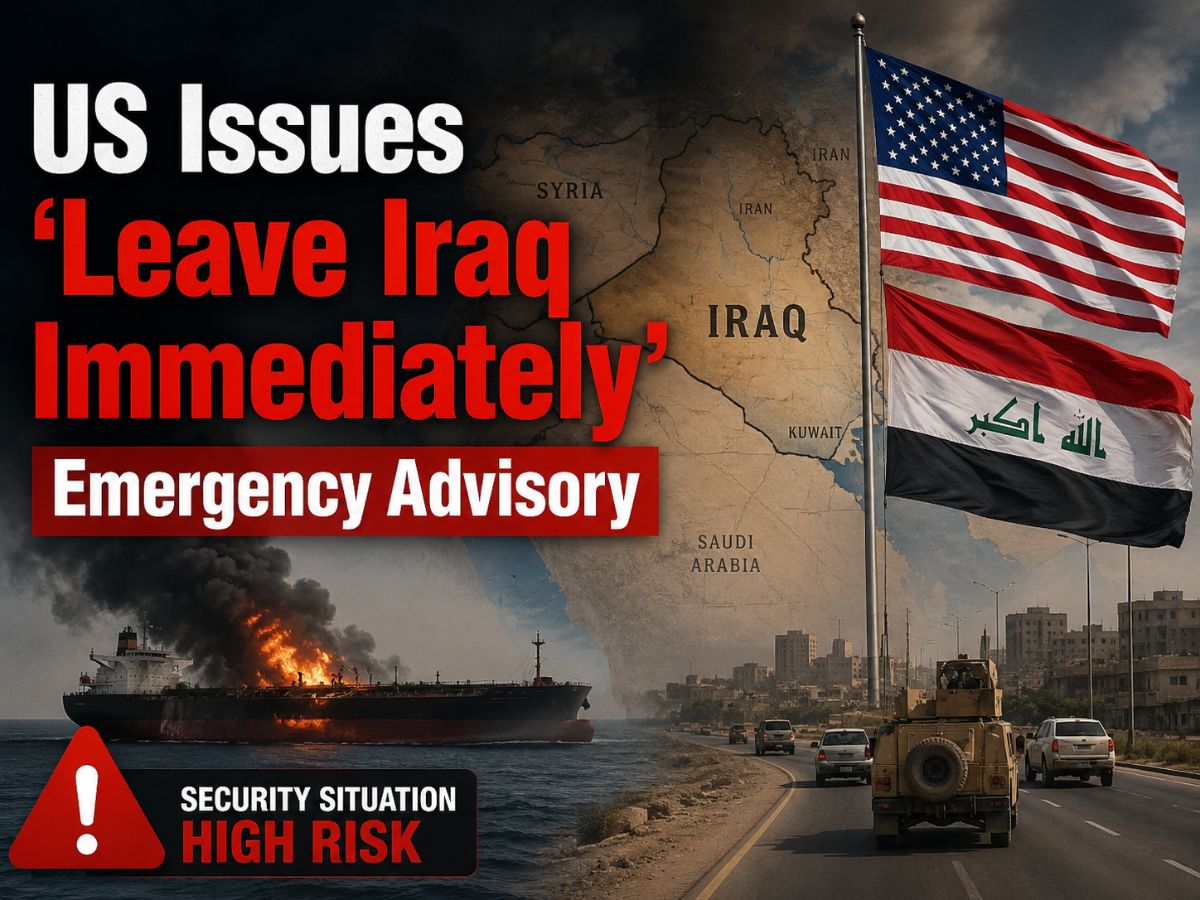
US-Israel-Iran war tension is increasing day by day as maritime attacks, evacuation warnings, and military alerts have been spread across multiple countries. The US has issued a fresh advisory urging its citizens to leave Iraq amid fears of sudden escalation and security breakdowns.
At the same time, a deadly attack on an oil tanker in the Gulf of Oman has killed 2 Indian seafarers and left 1 missing, which further intensified concerns about the safety of commercial shipping routes. With Gulf countries increasing security readiness and the UN’s waning of a fragile ceasefire, the situation is becoming increasingly unstable and unpredictable.
US-Israel-Iran War News: US Asks Citizens to Leave Iraq
The US State Department has advised American citizens in Iraq to leave the country if conditions allow, citing rising risks linked to regional military tensions and potential retaliatory attacks. The warning highlights concerns over possible disruptions such as sudden airspace closures, restricted movement, and security incidents affecting foreign nationals.
The US Embassy in Baghdad confirmed that its diplomatic operations remain active, but it has reduced staff presence in certain locations as a precaution. Officials say the advisory is part of ongoing risk management amid rising tensions involving US forces and Iran-aligned groups operating across Iraq and neighbouring regions.
The move reflects growing fears that Iraq could become a key flashpoint if broader conflict escalates in West Asia.
Gulf Countries on High Alert
Gulf nations have significantly increased surveillance and maritime monitoring following repeated incidents targeting commercial shipping in nearby waters. Security agencies are closely watching strategic zones, especially around the Strait of Hormuz and the Gulf of Oman, which are vital corridors for global energy transport.
Naval patrols have been strengthened, and shipping advisories have been updated to reflect the increased risk level. Several commercial operators are reassessing routes and insurance coverage due to rising uncertainty.
Authorities across the region are also coordinating intelligence sharing to prevent further incidents that could destabilise oil exports and maritime trade.
US-Israel-Iran War News: ‘Gulf Region Will Become Hell’ – Iran Warns
Security analysts warn that continued escalation in the region could push the Gulf into one of its most volatile phases in recent years. With overlapping military tensions, proxy conflicts, and repeated maritime incidents, the region is facing growing pressure on both security and economic fronts.
Experts suggest that if attacks on commercial vessels continue, it could trigger a broader disruption of global oil supply chains. Insurance costs for shipping are already rising, and companies are preparing contingency plans in case of further escalation.
The phrase reflects growing concern among observers that the region could face severe instability if diplomatic efforts fail to contain the crisis.
US-Israel-Iran War Latest News: Oil Tanker Attack Near Oman Leaves 3 Indian Crew Dead
A commercial oil tanker named Settebello was attacked near the Gulf of Oman in a serious maritime incident that has drawn international attention. The strike resulted in the death of 3 Indian seafarers- Aditya Sharma, a deck cadet, Shivanand Chaurasiya, an engine fitter and Chief Engineer Patnala Suresh.
Emergency response teams rescued multiple crew members after the vessel suffered significant damage and fire following the attack. The Forward Seamen’s Union of India confirmed the casualties and ongoing search efforts, calling it a tragic reminder of the risks faced by seafarers in conflict-prone waters.
Indian authorities are in contact with regional agencies and maritime safety bodies to investigate the incident and ensure the safe return of the missing crew member.
US to Attack Gulf Countries?
Speculation about possible wider military action has increased as tensions continue to rise across the region. While US officials maintain that current operations are defensive and targeted, repeated strikes and counter-strikes have fueled uncertainty about the future direction of the conflict.
Security experts caution that any miscalculation or escalation could quickly widen the conflict, potentially involving additional regional actors and affecting critical infrastructure in Gulf countries.
However, no official confirmation has indicated plans for broader attacks, and diplomatic channels remain active despite the heightened tensions.
US-Israel-Iran War Latest News: Strait of Hormuz Under Severe Threat
The Strait of Hormuz remains one of the most sensitive maritime chokepoints in the world, and recent developments have significantly increased concerns about its security. The waterway handles a large share of global oil exports, making it critical for international energy markets.
Following the latest attacks, shipping companies have increased risk assessments and, in some cases, rerouted vessels to avoid potential danger zones. Any disruption in this corridor could have immediate global consequences, including rising oil prices and supply chain delays.
Maritime security experts warn that continued instability could force long-term changes in global shipping strategies.
UN Warns ‘Ceasefire is More Like a Lesser Fire’
United Nations Secretary-General António Guterres has issued a strong warning about the deteriorating security situation, stating:
“This week has brought wider attacks and further deterioration, where the ceasefire is ‘more like a lesser fire.” We should not minimise the risks of a lesser fire becoming a full fire.”
The UN has urged all parties involved to avoid further escalation and prioritise diplomatic solutions. Officials warn that continued military activity could quickly transform localised tensions into a wider regional conflict affecting multiple countries.
What’s Next in the US-Israel-Iran War?
The situation remains highly unpredictable as diplomatic efforts struggle to contain rising tensions. Continued maritime attacks, evacuation advisories, and military alerts suggest that the crisis is still escalating.
In the coming days, global attention will focus on whether regional powers move toward de-escalation or whether further retaliatory actions deepen the conflict. Analysts warn that energy markets, shipping routes, and regional stability could all face significant pressure if tensions continue to rise.

