
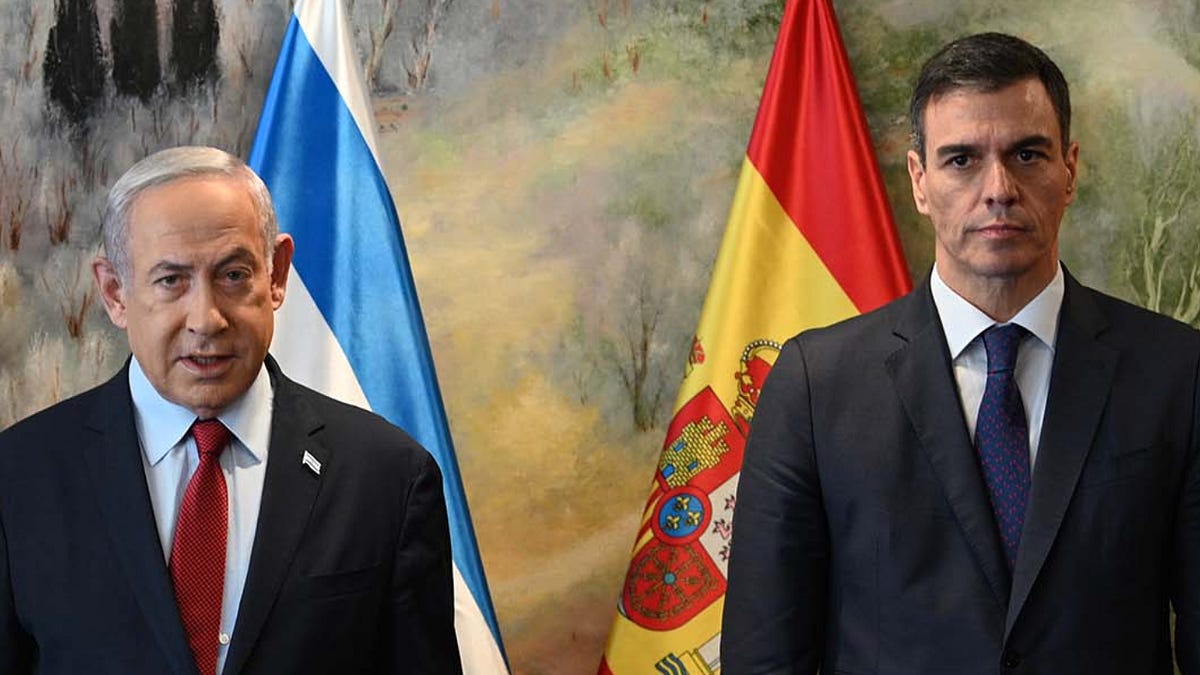
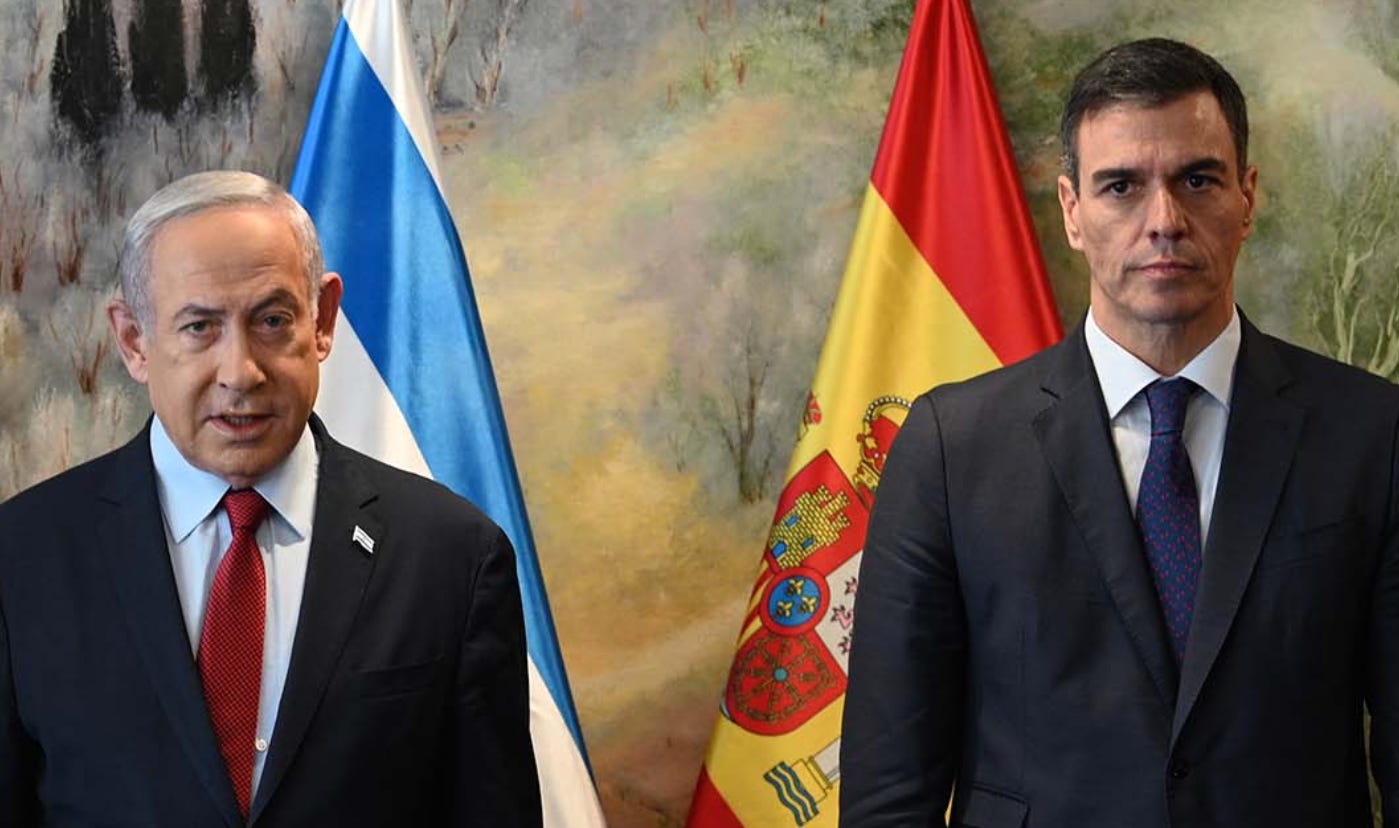
The Spanish government has implemented the first operational ban within the European Union on imports originating from named Israeli settlements, moving to enforce what much of Europe has long only stated.
Spain is turning a long standing EU position that settlements are illegal under international law into an enforceable trade restriction establishing that Israeli settlements in the occupied West Bank, East Jerusalem, and the Golan Heights are now not just politically disputed but economically restricted.
Prime Minister Pedro Sánchez has said Europe’s response has been inadequate and that international law is not being enforced consistently.
The policy represents a shift in method more than in rhetoric. European governments have long condemned settlement expansion for years but have rarely translated that position into binding economic measures. Spain, which officially recognized Palestine in 2024, is now attempting to close that gap through customs enforcement, financial compliance rules, and targeted restrictions on trade linked to settlement territories.
Critics of the decree have already argued that its impact may be more symbolic than material.
Abu_O_Bea said this on X:

Abubeja 🐝 𓂆 #SpanishGovtFundsGenocide@Abu_O_Bea
@aseisfree Actually, the Spanish decree 10/25 is absolutely useless on purpose because of the exceptions introduced by the government in the rule, which allow continued trading with the Zionist entity

Abubeja 🐝 𓂆 #SpanishGovtFundsGenocide @Abu_O_Bea
Todo este hilo es una traslación con mis palabras de la intervención de Eduardo Melero en la jornada de ayer en el Congreso. Leed el ‘working paper’ del @CentreDelas que recoge este análisis de la aplicación del RDL 10/25
https://t.co/GWGH3e7xKU
7:47 PM · May 28, 2026 · 21 Views
1 Reply · 1 Repost
The charge is blunt: that what is presented as a boycott is, in practice, a managed restriction with enough carve-outs to avoid meaningful disruption.
The argument points to a familiar tension in sanctions policy: governments often announce sweeping measures while embedding carve-outs for strategic goods, existing contracts, or indirect trade routes that can significantly dilute their effect. It is often designed to look comprehensive while preserving legal and economic escape routes.
Exemptions rarely cancel a policy outright, but they can of drain it of economic force.
Of course, Israel went into full victim mode. Israeli Foreign Minister Gideon Saar condemned the measures and accused Spain of hostility toward Israel. Madrid rejected that characterization and insisted the restrictions apply only to settlement linked goods in occupied territory and are grounded in international legal frameworks governing trade.
Spanish Foreign Minister José Manuel Albares condemned Israel’s escalating military actions in southern Lebanon, calling new evacuation orders “completely unacceptable” and a violation of international law.
Speaking ahead of an EU foreign ministers’ meeting in Limassol, he said democracies are bound by international law and warned that Israel’s conduct risks further straining relations with Europe. He added that Palestinians and Lebanese civilians have the same right to safety and security as Israelis.
The comments followed Israeli military orders declaring areas south of the Zahrani River a combat zone and instructing civilians to evacuate, alongside statements from Prime Minister Benjamin Netanyahu vowing to continue military operations.

Drop Site@DropSiteNews
🚨 Israel Burns More Palestinians Alive Under U.S.-Backed Ceasefire
Palestinians carried burned and wounded children through the streets after an Israeli airstrike hit a residential home in central Gaza City, killing at least 7 people, including two young girls, and wounding
9:50 PM · May 27, 2026 · 442K Views
361 Replies · 9.72K Reposts · 14.7K Likes
At the same time, the settlement ban sits inside a broader escalation in Spain’s policy toward Israel’s military and economic infrastructure. The government has suspended or canceled roughly 1 billion euros in defense contracts with Israeli firms, including missile systems and rocket launcher programs, and introduced restrictions on military transit through Spanish ports and airspace. Financial institutions in Spain have also tightened compliance requirements on Israeli linked business activity.
These measures mark a shift from diplomatic distance to economic separation in specific sectors tied to the genocide. And the same political temperature has also begun to surface inside Spain’s own borders.
In Bilbao, that tension turned physical when activists arriving from a Gaza bound flotilla were met with beatings involving Basque police at the city’s airport. The group was part of the Global Sumud Flotilla. It had returned after being intercepted abroad and participants alleged mistreatment during detention.
As they arrived in Spain, confrontations broke out between supporters and police and footage showed officers using batons and force as the situation escalated. Several people were detained.
The Basque police, the Ertzaintza, which work closely with Israeli forces, said they intervened in response to public order disturbances. Regional authorities have since faced criticism and calls for investigation from human rights groups and political actors who argue the response was disproportionate given the condition of returning activists.
Are state institutions maintaining order or suppressing political expression tied to foreign policy decisions?
The economic impact on Israel is about precedent. Spain imports hundreds of millions of dollars in Israeli goods annually while also playing a role in European defense procurement chains that involve Israeli companies. Officials in Israel have warned that if Spain’s model spreads it could affect broader European contracts and supply relationships beyond the Spanish market itself.
Drop Site@DropSiteNews
🇪🇸 Spanish Prime Minister Pedro Sánchez said those responsible for the destruction of Gaza must be prosecuted, stressing that “peace cannot mean forgetting.” Speaking to Spain’s largest radio network, Cadena SER, he said there should be no impunity for the main actors in the

3:58 PM · Oct 14, 2025 · 99.5K Views
154 Replies · 1.76K Reposts · 5.06K Likes
Inside the European Union, the move exposes an unresolved contradiction that has defined EU policy on Israel and Palestine for decades. The EU has consistently maintained that Israeli settlements are illegal under international law and not recognized as part of Israel’s sovereign territory. But enforcement has largely been left to voluntary guidelines and uneven national implementation.
Spain’s approach attempts to make that position operational within its own jurisdiction. It is testing whether a member state can enforce what the bloc has not codified at the EU level.
Spain’s political intention is explicit: Officials have indicated that the settlement ban is part of a broader strategy to push other EU states toward similar measures and create pressure for bloc wide alignment. Whether that happens will depend on how other capitals respond. Some including Ireland, Belgium, France, and Slovenia have shown increasing willingness to adopt stronger language and targeted restrictions while others remain opposed to trade based enforcement.
The result is a widening split inside Europe over how far legal principles should extend into economic policy.
For Israel, the concern is less about immediate losses than accumulation. The settlement ban itself is limited in scale but it establishes a mechanism that can be replicated. That is what makes it strategically significant. It converts a political stance into a regulatory tool that others could adopt.
As Spain expands humanitarian aid to Gaza alongside tightening restrictions on settlement linked trade and defense cooperation, its policy now combines two tracks that have often been separated in European diplomacy. Assistance on one hand and economic pressure on the other.
What remains uncertain is whether Spain’s approach will remain an outlier or become the first step in a wider European shift from statements about settlements to enforceable constraints on them.
Spain isn’t fulfilling its legal obligations, but it is attempting to translate long-standing legal positions into economic enforcement while absorbing the domestic political and institutional strain that comes with it.
Spain is increasingly emerging as a bellwether inside Europe’s Israel policy debate forcing an uncomfortable test of European law itself: whether it is something that governs state behavior, or something that states selectively cite without consequence.

