
Editor’s note: Gulaid Yusuf Idaan is a senior lecturer and researcher in diplomacy, international law and international relations, specializing in strategic studies of the Horn of Africa. His research focuses on maritime security, recognition politics, corridor-based geopolitical competition and the strategic architecture of the Red Sea–Indian Ocean system. The views expressed in this article are the author’s own and do not necessarily reflect the position of News.Az.
For more than three decades, the Republic of Somaliland has existed as a functionally sovereign yet largely unrecognized state. This article argues that its anomalous diplomatic status is becoming strategically untenable not because of its internal maturation alone, but because the regional system in which it is embedded has undergone a structural transformation.
The convergence of the Red Sea, Gulf of Aden, and western Indian Ocean into a single maritime-continental theatre has elevated Somaliland from a peripheral unrecognized state to a central node in an emerging competition over strategic connectivity.
Drawing on the concept of Corridor Power, this article demonstrates that Somaliland’s significance derives from the interaction of four reinforcing dimensions: maritime geography anchored by the port of Berbera; corridor infrastructure linking the Gulf of Aden to the Ethiopian interior; an expanding resource-industrial base encompassing livestock, fisheries, agriculture, mining, renewable energy, and frontier hydrocarbons; and a digital and manufacturing economy supported by special economic zones and public–private partnerships.
Israel’s recognition of Somaliland in December 2025 and the August 2026 Türkiye–Saudi Arabia–Pakistan Mecca Joint Defense Agreement are treated not as isolated events, but as competing impulses in a wider struggle to institutionalize control over the Horn’s productive and logistical networks. The article advances a reconceptualization of Somaliland not as a disputed fragment of Somalia, but as an irreplaceable geoeconomic platform whose recognition constitutes a foundational act in the construcrtion of a stable, multipolar Red Sea–Indian Ocean order.
It concludes by proposing strategic multi-alignment — maximum connectivity with minimum dependency — as Somaliland’s optimal path for converting geographical capital into sustainable national power.
From recognition question to strategic platform
In June 1960, the State of Somaliland achieved independence from British colonial rule. Five days later, it entered into a union with the former Italian Somaliland through a process whose legal validity and constitutional basis remained ambiguous and contested, resulting in the creation of the Somali Republic. Following the collapse of that union in civil war, Somaliland restored its sovereignty in May 1991.
In the three decades since, it has held multiple competitive elections, maintained its own currency and security forces, and negotiated commercial agreements with multinational corporations and foreign states. Yet it has remained largely invisible to the international system, recognized by only one United Nations member state — Israel, which crossed the diplomatic threshold on 26 December 2025.
Conventional analyses have treated Somaliland’s status as a problem of African territorial norms, Somali constitutional politics, or international legal precedent. This article advances a different proposition: that Somaliland’s unrecognized status is increasingly anomalous in geoeconomic and geopolitical terms. The strategic environment of the Red Sea, Gulf of Aden, and western Indian Ocean has integrated into a continuous chain of maritime commerce, energy transportation, military logistics, and production networks. Within this system, Somaliland occupies a position of irreplaceable significance — not only because its coastline commands the approach to the Bab el-Mandeb strait, but because its territory contains the resource base, industrial potential, and logistical infrastructure necessary to convert geographical advantage into sustained economic and strategic influence.
The argument proceeds as follows. The first section introduces the theoretical framework of networked geopolitics and Corridor Power, situating Somaliland within a theory of competition in which power is exercised through the control of ports, corridors, logistics networks, and production ecosystems rather than through territorial possession alone.
The second section establishes Somaliland’s geoeconomic foundation, demonstrating that its strategic value derives not from geography in isolation but from the interaction of livestock, fisheries, agriculture, minerals, renewable energy, manufacturing, and digital connectivity with its maritime position.
The third section examines how Berbera Port and the Ethiopia–Somaliland corridor convert these assets into an integrated strategic platform.
The fourth section analyzes the transformation of the Red Sea–Indian Ocean system into a single strategic theater and the implications of Israel’s recognition of Somaliland as a diplomatic inflection point.
The fifth section maps the competing models of regional order: the consumptive, security-centered Türkiye–Saudi Arabia–Pakistan alignment anchored in Mogadishu, and the productive, connectivity-centered network that converges around Somaliland.
The sixth section develops the Somaliland Strategic Network, demonstrating how the United States, India, Israel, the United Arab Emirates, Ethiopia, Greece, and Cyprus are drawn to Somaliland not as an object of charity but as a functional node within overlapping security, economic, maritime, and Mediterranean layers.
The seventh section addresses risks and limitations, including the dangers of excessive dependency and the imperative of strategic multi-alignment.
The conclusion argues that the central question facing international actors is no longer whether Somaliland deserves recognition, but what strategic opportunities are being missed by failing to develop comprehensive relationships with it.
Theoretical framework: networked geopolitics and corridor power
Classical geopolitics has traditionally emphnasized territorial control as the foundation of strategic power. Yet in an era of containerized shipping, just-in-time supply chains, and satellite-dependent navigation, influence increasingly accrues to actors who can integrate geographical nodes into coherent operational networks
The author previously developed the concept of Corridor Power in the article Republic of Somaliland and Corridor Power (2026), defining it as the ability to derive strategic influence from controlling, securing, financing, regulating, and strategically connecting critical geographical corridors rather than merely possessing territory. The present article builds upon and extends this concept through a broader framework of networked geopolitics, in which corridors function not as isolated routes but as interconnected systems of ports, infrastructure, markets, security arrangements, and diplomatic relationships. The article was published by The Times of Israel on March 17, 2026.
This article extends that framework to encompass networked geopolitics. Contemporary regional competition is conducted less through the annexation of territory than through the ability to connect ports, maritime chokepoints, logistics corridors, infrastructure, intelligence systems, diplomatic relationships, energy networks, and digital pathways into mutually reinforcing networks. Corridor Power operates through a cumulative progression: geography generates infrastructure; infrastructure generates connectivity; connectivity generates production and trade; production generates economic interdependence; interdependence generates security requirements; and security requirements generate diplomatic institutionalization.
Under this model, a port is valuable not in isolation, but because it connects to a road corridor, an economic zone, an agricultural hinterland, a digital network, and an energy system. The whole exceeds the sum of its parts — a non-linear effect that transforms territorial peripheries into systemic hubs.
Somaliland is the paradigmatic case. Its 850-kilometer coastline, 8 million hectares of arable land, substantial solar and wind potential, and an emerging mineral exploration frontier provide the material foundation of Corridor Power. The Berbera Port and Economic Zone, the Ethiopia–Somaliland corridor, and a distributed geography of regional specialization provide the institutional and infrastructural mechanisms through which this material base can be converted into strategic leverage. Recognition, in this framework, is not merely symbolic diplomacy but a form of geoeconomic infrastructure: it can reduce political and legal uncertainty, strengthen institutional frameworks for investment and economic cooperation, facilitate the development of supply chains, energy and data corridors, and signal long-term commitment to the network.
This framework also engages with securitization theory. The framing of Bab el-Mandeb and the Gulf of Aden as existential chokepoints for global commerce has enabled extraordinary security cooperation among states that otherwise maintain conventional diplomatic relations.
The Saudi–Türkiye–Pakistan convergence has been facilitated by the securitization of Red Sea shipping lanes; conversely, any alternative network derives political legitimacy from the securitization of alternative maritime routes. Somaliland’s strategic value is therefore partially constructed through discourse: the more the southern Red Sea is perceived as vulnerable, the more indispensable Somaliland’s geography becomes.
The geoeconomic foundation: from geography to productive power
If geography provides Somaliland’s strategic skeleton, its geoeconomic assets provide the muscle. The Somaliland Investment Portal identifies a diversified portfolio of opportunities across agriculture, livestock, fisheries, manufacturing, energy, mining, ICT, oil and gas, infrastructure, and tourism. These are not merely development aspirations; they constitute the material basis for a regional production hub that distinguishes Somaliland from other Horn of Africa territories functioning primarily as consumption or military-post nodes.
Livestock and the regional food economy
Somaliland is a major livestock-exporting economy, with more than five million animals traded annually. The strategic opportunity, however, lies not in the export of live animals but in vertical integration: modern abattoirs, meat processing, dairy production, leather tanning, animal-feed manufacturing, cold-chain logistics, and halal food processing. Geopolitically, this creates a structural linkage between Somaliland and the Arabian Peninsula’s food security requirements. The livestock sector is therefore not merely an agricultural industry; it is an anchor of Red Sea trade interdependence.
Fisheries and the blue economy
Somaliland’s 850-kilometer coastline remains significantly underexploited. Commercially relevant species include tuna, lobster, shark, and snapper. The investment opportunity extends beyond artisanal fishing to industrial fleets, aquaculture, fish processing, seafood packaging, cold storage infrastructure, fishmeal production, and marine logistics.
The development of a blue economy would convert maritime geography into productive export capacity, linking Somaliland to global food markets and creating port-dependent industries around Berbera.
Agriculture and agro-processing
With approximately 8 million hectares of arable land, Somaliland possesses substantial agricultural potential. The strategic value, however, lies in agro-processing: edible-oil refining, food packaging, irrigation systems, fertilizer production, and agricultural machinery. Rather than exporting raw commodities, Somaliland can integrate agriculture into a manufacturing base that serves both domestic consumption and regional export markets, particularly Ethiopia.
Mining and frontier resources
The Investment Portal identifies opportunities in industrial minerals, gemstones, and rare-earth elements. For analytical rigor, it is important to distinguish between mineral exploration potential and proven commercial reserves.
Somaliland possesses significant frontier potential; geological surveys indicate substantial untapped resources, but commercially viable deposits require further investment. Nevertheless, the sector represents a future geopolitical multiplier: if developed, mining would generate government revenue, infrastructure demand, and foreign investment flows that deepen Somaliland’s integration into global supply chains.
Hydrocarbons: frontier energy potential
Somaliland’s oil and gas sector should be characterized as frontier exploration potential rather than established production. Geological indicators justify continued exploration, and commercially viable discoveries — should they materialize — would carry implications far beyond the domestic economy. Hydrocarbon production would connect Somaliland to global energy security calculations, generate maritime security requirements for offshore infrastructure, and provide a revenue base for strategic autonomy.
Renewable energy and industrial power
Somaliland reports more than 3,000 hours of annual sunshine and solar potential of approximately 5–7 kWh/m²/day, alongside significant wind resources along its coastline. These resources create opportunities for solar and wind generation, battery storage, mini-grids, and potentially solar-panel manufacturing.
Reliable energy is a prerequisite for industrialization; consequently, renewable energy development is the foundation for the next stage of Somaliland’s economic transformation. Energy security enables industrialization; industrialization generates economic growth; growth attracts investment; and investment produces strategic resilience.
Manufacturing and industrial parks
The Investment Portal reports more than 56 operational industries and identifies potential expansion into pharmaceuticals, textiles, garments, food processing, cement, construction materials, plastics recycling, and agricultural equipment. Industrial parks in Hargeisa, Berbera, and Burco suggest a geographically distributed manufacturing strategy. This shifts Somaliland’s role from an exporter of raw resources to a producer, processor, and exporter — a far more powerful geoeconomic position within regional supply chains.
Digital economy and ICT
High mobile penetration and emerging opportunities in software development, mobile finance, e-commerce, and digital government services add a non-physical dimension to Somaliland’s connectivity. The emerging model combines port connectivity, road connectivity, and digital connectivity, creating a modern regional economic platform that can integrate with Gulf and Indian Ocean digital networks.
Distributed geoeconomic geography
A critical feature of Somaliland’s economic potential is its regional differentiation. The Investment Portal identifies distinct comparative advantages across Somaliland’s six regions: Sahil (ports, logistics, fisheries, tourism, renewable energy); Togdheer (livestock, meat processing, agriculture); Sanaag (frankincense, eco-tourism, fisheries, mining); Maroodi Jeex (finance, ICT, real estate, education, health); Awdal (agriculture, livestock, cross-border trade); and Sool (minerals, livestock, infrastructure). This distributed geography prevents overconcentration in Hargeisa and Berbera alone, creating national economic resilience and multiple entry points for foreign investment.
Berbera and the corridor ecosystem: from port to production platform
Source: AP
The conversion of Somaliland’s geoeconomic potential into strategic leverage depends upon infrastructure. DP World’s development of Berbera illustrates the cumulative logic of Corridor Power. The first-phase expansion increased container capacity toward 500,000 TEUs. The Berbera Economic Zone (BEZ), situated 15 kilometers from the port and connected to Ethiopia via the Berbera–Wajaale road, integrates maritime access with manufacturing and logistics.
The 2023 edible-oil terminal announcement explicitly identified the facility as part of this corridor ecosystem. In November 2025, DP World launched a shipping route linking Dubai’s Jebel Ali Port with Berbera, with stops at Aden and Djibouti.
These developments transform Berbera from a transshipment point into a production-and-logistics ecosystem. The BEZ links port, economic zone, manufacturing, logistics, Ethiopia, and regional markets into a single chain. For Ethiopia, a landlocked economy of over 120 million people dependent on Djibouti for approximately 95 percent of its trade, the Berbera corridor offers maritime diversification and strategic autonomy.
The January 2024 Ethiopia–Somaliland memorandum of understanding established the basis for a 943-kilometer trade corridor linking Addis Ababa to Berbera, creating a continental-maritime bridge that is difficult to replicate elsewhere in the Horn.
The disappearing strategic distance: one maritime system
The post-Cold War analytical tradition treated Middle Eastern security, Horn of Africa politics, and Indian Ocean strategy as related but separable fields. That distinction has collapsed. The contemporary strategic system extends continuously from the Persian Gulf through the Arabian Sea, Gulf of Aden, Bab el-Mandeb, Red Sea, Suez Canal, and into the Eastern Mediterranean. This is not merely a geographical sequence but an interconnected system in which developments in one segment generate consequences across the others through maritime trade, energy flows, naval deployments, port infrastructure, and logistics networks.
The progressive militarization of the southern Red Sea since 2023 has intensified the strategic value of this continuum. Houthi attacks on commercial shipping have demonstrated the vulnerability of Bab el-Mandeb transit, forcing rerouting around the Cape of Good Hope and disrupting supply chains from Saudi oil exports to European and Asian markets.
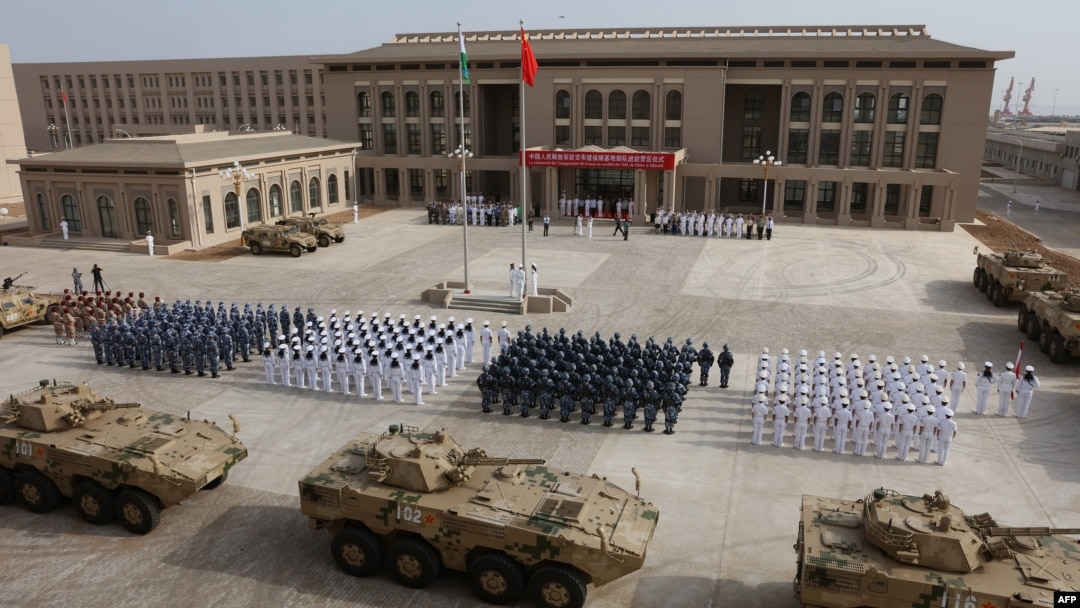
Türkiye’s military infrastructure in Mogadishu — Camp TURKSOM, the training of over 15,000 Somali troops, and Bayraktar TB2 drone deployments — has extended Ankara’s operational reach toward the Gulf of Aden. China’s base in Djibouti provides a permanent footprint near the same maritime system.
Within this integrated environment, Somaliland occupies an unusual position. Its importance is not derived solely from its coastline or proximity to Bab el-Mandeb. It derives from the interaction between geography and productive capacity. Djibouti hosts foreign military bases but lacks continental depth and industrial diversity.. Eritrea controls Red Sea coastline but remains diplomatically isolated and economically underdeveloped. Somaliland offers something distinct: a stable, strategically positioned territory with functioning governance and, critically, a productive economic base capable of sustaining long-term partnerships without permanent external subsidy.
The recognition inflection and the competing models of order
The most consequential change in Somaliland’s diplomatic environment occurred on December 26, 2025, when Israel formally recognized Somaliland as an independent and sovereign state. The United Nations subsequently documented the recognition and Somalia’s rejection of it during the Security Council briefing of 29 December. This event was not merely a bilateral gesture; it was a structural inflection point that transformed recognition from a hypothetical legal question into an operational strategic and economic instrument.
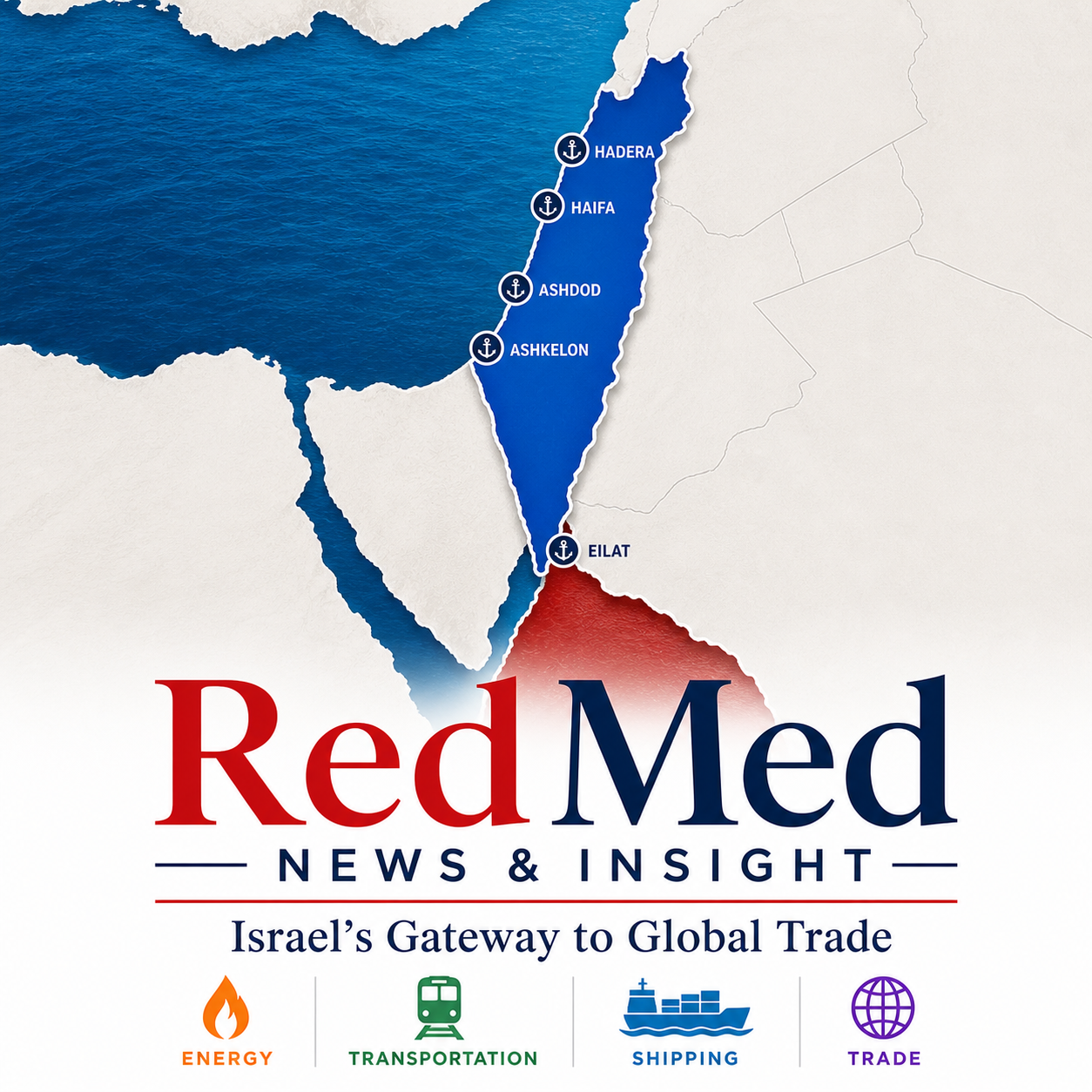
Before December 2025, potential recognizers could argue that recognition was theoretically problematic, unprecedented, or diplomatically unmanageable. After December 2025, those arguments lost empirical force. Israel’s decision provided a test case demonstrating that recognition was operationally feasible, diplomatically survivable, and strategically productive. For Jerusalem, the logic was rooted in southern Red Sea security: the Eilat port, through which Israel receives approximately 15 percent of its imports, is vulnerable to disruption in the Gulf of Aden and Bab el-Mandeb. For Somaliland, recognition provided a legal framework for expanded cooperation in port security, surveillance, technology transfer, and investment. The decision also generated path dependence: once a UN member state had crossed the threshold, the cost of recognition for subsequent states decreased while the cost of non-recognition — ceding initiative to rival networks — increased.
This diplomatic shift must be understood alongside the August 2026 Mecca Joint Defense Agreement among Türkiye, Saudi Arabia, and Pakistan. The agreement established a collective-defense commitment — an attack on one treated as an attack on all — and institutionalized a set of relationships that had developed through bilateral defense cooperation and strategic hedging.
Türkiye contributes military-industrial capacity, drones, expeditionary experience, and its Mogadishu-based presence; Saudi Arabia contributes financial power and Red Sea exposure; Pakistan contributes military manpower, nuclear deterrence, and South Asian strategic depth.
Yet this alignment is not a monolithic ideological bloc. The Pakistan-Türkiye-Saudi network is not a fully integrated military bloc. Its danger lies in what it represents: a mechanism for converting temporary military cooperation into durable strategic presence. By establishing a foothold in Somalia, Pakistan gains a maritime dimension to its rivalry with India that bypasses traditional South Asian constraints. The network’s ability to accumulate institutionalized relationships — training programs, intelligence sharing, logistics, port access — means that by the time it becomes fully obvious, its foundations may already be difficult to reverse. It is a transactional arrangement of three states with divergent long-term objectives. Türkiye’s neo-Ottoman ambitions may eventually conflict with Saudi regional leadership claims; Pakistan remains primarily focused on its rivalry with India.
The alignment’s Horn of Africa strategy is anchored in Mogadishu — a collapsed state characterized by governance vacuums, insurgency, and dependence on external security provision. Türkiye’s Camp TURKSOM, its training of Somali forces, and its drone deployments represent a logistics-of-control model: the projection of military influence into unstable territory to secure strategic access. This model is consumptive; it requires continuous external subsidy and does not generate productive economic networks that sustain themselves.
The alternative is emerging as a productive-connectivity model centered on Somaliland. Rather than militarizing weak states, this model seeks to develop the Horn’s economic and logistical infrastructure through investment, trade, and corridor development. The rivalry between these models is therefore not merely between alliances, but between competing visions of regional order: one based on the security externalization into governance vacuums, the other on the geoeconomic development of a functional, resource-endowed territory.
The Somaliland strategic network: converging interests
The strategic significance of Somaliland increases when the interests of external actors are viewed not in isolation but as overlapping layers of a single network. The following analysis examines how the United States, India, Israel, the United Arab Emirates, Ethiopia, Greece, and Cyprus are drawn to Somaliland not as an object of competition but as a functional node within a broader architecture of security, economics, maritime connectivity, and Mediterranean integration. These relationships are not a formal alliance; they are a distributed network of complementary interests.
The security layer: the United States and Israel
For the United States, Somaliland presents a strategic dilemma rooted in Washington’s traditional Somalia-centered policy framework. The 2026 National Defense Authorization Act established a framework for military cooperation with Hargeisa, including access to Berbera facilities. H.R. 3992, the Republic of Somaliland Independence Act introduced in the U.S. House in June 2025, demonstrates that Somaliland’s status has entered formal American legislative politics. Yet Washington has remained constrained by diplomatic frameworks that privilege formal recognition over functional governance capacity.
he strategic question for the United States is not whether Somaliland can replace Djibouti. China’s permanent military presence in Djibouti makes the latter an increasingly contested strategic environment, but it does not diminish its importance. Rather, the question is whether Somaliland can provide the United States with a complementary platform for strategic diversification, reducing overreliance on a single regional hub while expanding its access to the Gulf of Aden and the wider western Indian Ocean. Against the backdrop of China’s Djibouti base and the Türkiye–Saudi–Pakistan convergence, Somaliland offers the United States additional geographic options for maritime-domain awareness, counterterrorism cooperation, intelligence sharing, and logistics. A stable, pro-Western territory adjacent to the Bab el-Mandeb approach provides surveillance and operational depth that is difficult to replicate elsewhere on the African side of the Gulf of Aden.
The central American question is therefore whether Washington will help shape the emerging regional architecture or respond after other powers have already established their positions.
Israel’s recognition of Somaliland in December 2025 created the legal foundation for a security relationship rooted in southern Red Sea geography. The Eilat port, through which Israel receives approximately 15 percent of its imports, is vulnerable to disruption in the Gulf of Aden and Bab el-Mandeb. Turkish military infrastructure in Somalia compresses Israeli early warning margins. Somaliland offers a stable partner on the opposite shore of the maritime chokepoint, with potential for intelligence cooperation, maritime surveillance, and port-security technology.
Israeli technical assistance for the Ethiopia–Somaliland corridor security has reportedly advanced, with Israeli companies positioned for surveillance and logistics management contracts. The Israel–Somaliland relationship therefore functions as the security anchor of the broader network, providing technological and intelligence capabilities that complement the maritime and economic layers.
The economic layer: the United Arab Emirates and Ethiopia
For the UAE, Somaliland is primarily an investment-and-logistics node. DP World’s development of Berbera is not merely a commercial venture; it is an extension of Abu Dhabi’s broader strategy to link Gulf capital with East African markets through port infrastructure. The BEZ, the Jebel Ali–Berbera shipping route, and the corridor toward Ethiopia connect the UAE’s maritime logistics network to the African continent. Deeper UAE–Somaliland relations would protect existing investments, increase legal and political certainty, and strengthen logistics networks that are vulnerable to diplomatic ambiguity.
The distinction between the UAE’s commercial engagement and formal diplomatic recognition is analytically important: it demonstrates that functional geopolitical engagement can precede and eventually necessitate institutional recognition.
Ethiopia represents the continental dimension of the economic layer. As Africa’s second most populous state and a landlocked economic heavyweight, Ethiopia’s dependence on Djibouti for approximately 95 percent of its trade creates structural vulnerability. The Berbera corridor offers an alternative maritime gateway that improves Addis Ababa’s bargaining position and reduces exposure to disruptions.
The January 2024 Ethiopia–Somaliland memorandum of understanding and the 943-kilometer corridor linking Addis Ababa to Berbera create a maritime–continental bridge. For Somaliland, Ethiopia provides a hinterland of over 120 million consumers; for Ethiopia, Somaliland provides strategic optionality. The relationship’s strongest foundation is therefore economic interdependence rather than military or diplomatic alignment alone.
The maritime layer: India and the Western Indian Ocean
“India’s strategic interests stretch from the Arabian Sea through the Gulf of Aden, Red Sea, Suez Canal, and into the Mediterranean. India’s $3.92 trillion economy relies heavily on the Red Sea corridor — roughly 50% of India’s exports and 30% of imports flow through this route, and over 50% of India’s crude imports transit through Bab el-Mandeb. The Red Sea-Suez Canal corridor handles approximately 12% of global trade and roughly 35% of India’s total foreign trade. For an economy aspiring to great power status, the stability and redundancy of this maritime corridor are structural necessities. India is actively diversifying through IMEC and alternative shipping routes as a risk management strategy.”.
Somaliland offers India something distinctive: a stable geographical position near the southern entrance of the Red Sea, outside the Chinese-influenced Djibouti node and the unstable Somalia theater. India does not need a military base in Somaliland for the relationship to matter; maritime-domain awareness, port cooperation, anti-piracy coordination, intelligence sharing, and trade expansion would suffice.
Recognition would provide New Delhi with a diplomatic foundation for deeper engagement, connecting India’s western maritime pivot to a productive regional anchor. The January 2026 India–UAE Strategic Defence Partnership and Prime Minister Modi’s February 2026 Jerusalem mission — establishing protocols concerning Berbera Port maritime security — demonstrate that India is already moving toward this western engagement. Somaliland could become the mechanism through which India’s Indian Ocean strategy acquires a Red Sea dimension.
The Mediterranean layer: Greece and Cyprus
The strategic system does not terminate at Suez; it continues into the Eastern Mediterranean. Greece and Cyprus are relevant not because they are Horn of Africa powers, but because they occupy the northern end of the same maritime chain. The concept of disappearing strategic distance is essential here: developments in the Red Sea increasingly affect Mediterranean shipping, European trade, and Eastern Mediterranean energy security.
Cyprus provides geographic proximity to the Levant, Egypt, and the Suez maritime system, while its EU membership provides legal and regulatory embeddedness within European institutions. Greece offers ports such as Piraeus and Thessaloniki positioned to benefit from east–west commercial flows, while the Greece–Israel–Cyprus trilateral framework provides an established institutional mechanism for expanding cooperation. The India–Middle East–Europe Economic Corridor explicitly connects these spaces.
For Athens and Nicosia, Somaliland represents the southern anchor of a maritime architecture linking the Eastern Mediterranean to the Indian Ocean. Their inclusion would create strategic continuity: a network running from Somaliland through Bab el-Mandeb, the Red Sea, Suez, and into Cyprus and Greece.
The network effect: why the whole exceeds the parts
The preceding analysis demonstrates that Somaliland’s strategic value increases when these relationships are viewed collectively rather than individually. The network’s architecture is deliberately decentralized, reflecting the strategic cultures of its principal members and the geographical logic of the corridor it seeks to secure. Its strength derives from complementarity rather than uniformity, and redundancy rather than concentration.
If one maritime route becomes insecure, alternatives remain available through the network. If one partner reduces its commitment, other nodes continue functioning. If one port becomes strategically constrained, other logistical nodes can compensate. If one diplomatic relationship weakens, the broader network does not necessarily collapse. This configuration creates a stable competitive equilibrium in which the Türkiye–Saudi–Pakistan arrangement can pursue its interests but cannot acquire uncontested control over the maritime and continental corridors connecting the Indian Ocean to the Mediterranean.
The network effect also operates geoeconomically. UAE investment in Berbera creates the port infrastructure that enables Ethiopian trade; Ethiopian trade generates the cargo volumes that justify Indian maritime engagement; Indian engagement provides the strategic weight that encourages American coordination; American coordination strengthens the security environment that protects Israeli technology transfers; and Israeli technology enhances the corridor’s efficiency, making it more attractive to Greek and Mediterranean connectivity.
Somaliland sits at the center of this cycle, not as a passive recipient but as the territorial platform through which the cycle operates.
External powers and the wider environment
Source: voanews
China. Beijing’s military presence in Djibouti and its relationships with Ethiopia and Somalia provide multiple vectors of influence. Somaliland offers an alternative node outside Chinese control — a distinction critical for Washington and New Delhi. The development of Berbera as a competing logistics hub does not automatically challenge China, but it does provide regional actors with options that reduce dependency on Chinese-influenced infrastructure.
Iran. Tehran’s influence through Yemen and the Houthis makes the Gulf of Aden central to its regional calculations. Somaliland’s position opposite Yemen gives it latent intelligence and surveillance value. Greater cooperation between Somaliland and Israel or the United States could attract Iranian strategic attention, but it would also provide the network with early warning capabilities regarding Houthi maritime disruption.
Egypt. Cairo’s interests focus on the Suez Canal, Nile politics, and opposition to Ethiopian expansion. Egypt has historically opposed developments perceived as undermining Somali territorial integrity. Yet Egypt’s potential alignment with the Türkiye–Saudi–Pakistan convergence — whether formal or tacit — adds complexity to Ethiopia’s strategic calculations.
If Ethiopia’s maritime access through Djibouti becomes contested by Egyptian diplomatic pressure, the Berbera corridor acquires greater value as an alternative route outside Cairo’s direct influence.
Risks, limitations, and the imperative of strategic multi-alignment
For intellectual credibility, the strategic opportunities outlined above must be balanced against identifiable risks. Somalia continues to oppose Somaliland’s external relations, and the African Union maintains its emphasis on Somali territorial integrity.
Türkiye’s opposition to Somaliland’s recognition, articulated by President Erdoğan in February 2026, reflects Ankara’s understanding that a recognized Somaliland would consolidate a rival network’s southern anchor. Saudi Arabia and Egypt have expressed opposition to recognition, while the potential for Houthi or Iranian maritime threats remains a persistent security concern.
Domestically, Somaliland faces the risk of strategic capture: external powers may value Somaliland primarily for its strategic location while the territory remains economically and institutionally insufficiently prepared to manage the consequences of intensified geopolitical competition. Excessive dependence on a single external partner — whether in security, investment, or diplomacy — would undermine the very autonomy that makes Somaliland attractive.
The optimal response is strategic multi-alignment: maximum connectivity with minimum dependency. Somaliland should not choose between the United States and China, India and Pakistan, Israel and Türkiye, or the UAE and Saudi Arabia. Instead, it should build a diversified network based on its own national interests, ensuring that no single external actor acquires decisive leverage over its strategic choices. Its foreign policy should connect recognition diplomacy with trade diplomacy, maritime diplomacy, investment diplomacy, and security diplomacy, maintaining balanced relationships across the security, economic, maritime, Mediterranean, and regional layers described above.
Conclusion: the irreplaceable node
Somaliland’s international status has long been treated as an aberration — a secessionist territory surviving against the odds, awaiting resolution through Somali reconciliation. This article has argued that such framing is strategically obsolete. The geopolitical system of the Red Sea, Gulf of Aden, and western Indian Ocean has integrated into a single theater, and within that theater, Somaliland has become an irreplaceable node.
Its irreplaceability derives from a unique combination: a strategically positioned 850-kilometer coastline near Bab el-Mandeb; functioning governance structures; relative political stability and democratic processes; and, critically, a productive economic base that includes livestock, fisheries, agriculture, minerals, renewable energy, manufacturing potential, and digital connectivity. No alternative actor in the southern Red Sea currently combines these features.
The emerging regional order does not require another rigid military bloc. It requires a balance of productive connectivity. And that balance increasingly depends on whether Somaliland’s geoeconomic potential is integrated into the international system or excluded from it.
The Türkiye–Saudi–Pakistan alignment represents one model: the militarization of weak states to secure strategic access. The Somaliland-centered network represents another: the development of functional, resource-endowed territories into self-sustaining economic corridors.
The central question facing international actors is therefore no longer simply whether Somaliland deserves recognition. The more consequential geopolitical question is: What strategic opportunities are countries missing by failing to develop a comprehensive relationship with Somaliland? For the United States, it is the cost of strategic ambiguity in a region where rivals are constructing architectures without Washington. For India, it is the vulnerability of remaining detached from the western maritime environment while competitors consolidate. For Israel, it is the gap in southern Red Sea strategic depth. For the UAE, it is the legal uncertainty surrounding a major logistics asset. For Ethiopia, it is the failure to secure maritime diversification. For Greece and Cyprus, it is the inability to connect Mediterranean strategy to the Indian Ocean system.
Recognition is no longer merely a question of diplomatic status. It is becoming a mechanism for institutionalizing the networks through which the next Red Sea–Indian Ocean order will be organized. The strategic window has narrowed. It has not closed.
(If you possess specialized knowledge and wish to contribute, please reach out to us at [email protected]).