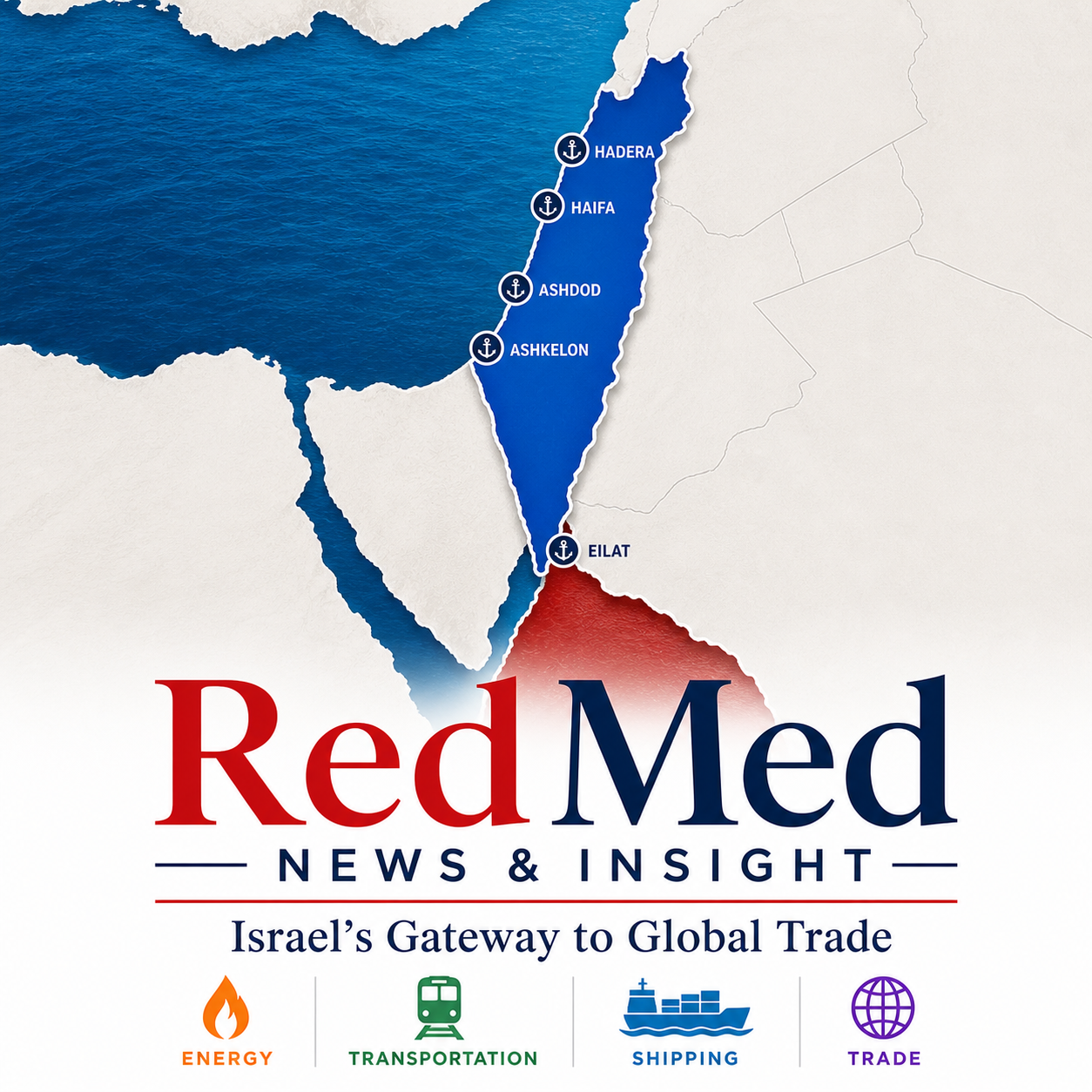

SadaNews – Israel and several Gulf states have been in talks for weeks to explore alternative routes for transporting oil and gas to global markets, bypassing the Strait of Hormuz and Bab El-Mandeb. These discussions include both immediate solutions and long-term projects, with American participation.
This was reported by “Israel Hayom,” which noted meetings held in Israel and abroad to discuss the use of Israeli ports and pipelines for energy transportation to the Mediterranean Sea, amidst the war with Iran and disruption of shipping in the region.
On Wednesday, the newspaper quoted Israeli Energy Minister Eli Cohen as saying that the talks involve unnamed Gulf states, and stated that the parties are exploring solutions that can be implemented immediately, along with infrastructure projects that will take years to complete.
Immediate Route from Yanbu to Eilat and Ashkelon
According to the report, the immediate solution involves unloading oil from tankers arriving from the port of Yanbu in western Saudi Arabia to the port of Eilat, before transporting it through the Europe-Asia pipeline, known in Israel as “Katsa,” to Ashkelon.
Long-term proposals include constructing pipelines from Gulf countries towards the Jordanian city of Aqaba, from there to Eilat, and then to the Mediterranean Sea via Israel.
The report did not specify which Gulf countries are participating in the talks, nor did it indicate the stage reached thus far, and it did not mention any binding agreements as of now.
American Participation
The newspaper indicated that the U.S. administration is involved in these discussions as part of efforts to reduce Iran’s ability to use the Strait of Hormuz as leverage against global energy trade.
Cohen stated that the war with Iran has revealed the need for Gulf countries to find alternatives to the Strait of Hormuz and Bab El-Mandeb, whether for exporting oil and gas or for commercial shipping.
He considered that “the Israeli route through the pipeline to the Mediterranean is the optimal route,” claiming that Israel, unlike other proposed routes including passing through Syria, “will know how to protect such a route.”
Cohen added that the proposed route could lower energy prices in the long term due to competition with other routes, including those extending from Azerbaijan and Iraq to Turkey. He said that developing alternative routes will lead, within four to five years, to making the “Hormuz card ineffective.”
In a related context, Cohen discussed with his Greek counterpart, Stavros Papastavrou, the acceleration of the India-Middle East-Europe “IMEC” corridor project, which aims to link the East with Gulf countries and Israel, reaching Europe.
According to the Israeli Ministry of Energy, the two ministers agreed to take steps to advance the project “as quickly as possible,” focusing on selecting a route that both Tel Aviv and Athens view as capable of ensuring regional stability.
The project, according to the Israeli vision, includes infrastructure for railways and communications, alongside pipelines for transporting oil and gas from Gulf countries to the Mediterranean Sea via Israel.
The ministry stated that recent developments in shipping routes and disruptions in energy supplies, amid Iranian movements in the Strait of Hormuz and Houthi attacks in Bab El-Mandeb, reinforce the need for alternative land routes.
Cohen said that “the infrastructure corridor extending from the Gulf countries to Europe via Israel and Greece will neutralize the Iranian threat in the Strait of Hormuz and the Houthi threat in Bab El-Mandeb.”
He added that the corridor will establish “a new commercial route that serves the international economy, strengthens the Israeli economy and Israel’s status.” He claimed that the project would bring billions of shekels into the state treasury, expand investment in infrastructure, and create new job opportunities.
In another report, the newspaper cited Israeli estimates that potential revenues could reach “hundreds of billions,” without providing calculations or details supporting this estimate.
Competition for Energy Routes
Israel seeks to present itself as a transit hub between the Gulf and Europe, leveraging its location on the Mediterranean Sea and its existing network of pipelines and ports. However, implementing the proposals requires political, security, and regional understandings with Gulf countries, Jordan, and Greece.
Cooperation with Greece also comes amid ongoing tensions between Greece and Turkey over sovereignty in maritime areas and rights to explore for gas in the eastern Mediterranean, adding a geopolitical dimension to the routes promoted by Israel.