
2026-07-02T08:10:18+00:00
Shafaq News- Beirut
Lebanon’s Economy and Trade Minister
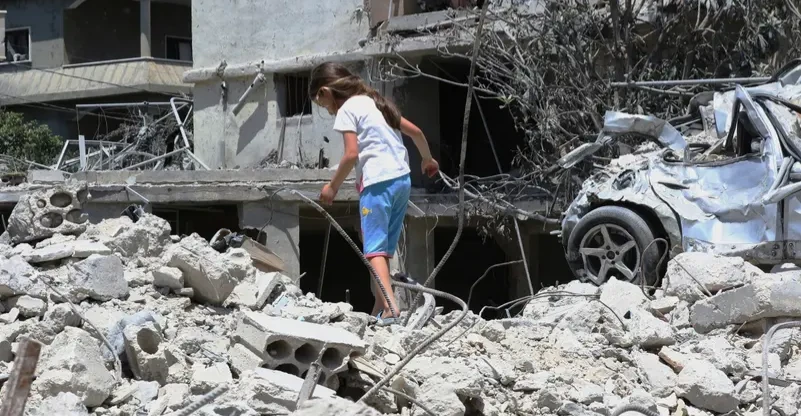
Amer Bisat said on Thursday that the cost of Israel’s war on Lebanon, which has killed more than 4,000 people, could exceed $8 billion, with final damage
assessments still underway.
Speaking to Al Arabiya, Bisat
estimated that the conflict has already cost the Lebanese economy about $2
billion since March, equivalent to roughly 7% of gross domestic product, and
expected the overall losses to match or exceed those recorded during the 2024
war.
The assessment covers three main
areas: lost economic activity, material damage, and inflationary pressures.
Factory closures, damage to agricultural land, job losses, and a sharp downturn
in tourism all contributed to the economic toll, while extensive destruction
affected around 70 towns and villages in southern Lebanon, as well as Beirut’s
southern suburbs and the Beqaa Valley. Field and aerial surveys remain underway
in coordination with the National Council for Scientific Research (CNRS), the
World Bank, and the United Nations, to finalize the damage estimates.
Consumer prices have also risen by
about 20% since the beginning of the year because of higher fuel,
transportation, and shipping costs, while household consumption has fallen by
between 20% and 25%.
To finance reconstruction, the
government is relying on four main sources: private sector contributions,
remittances from the Lebanese diaspora, humanitarian response plans, and the
reallocation of existing international loans. Authorities have already launched
two emergency response plans worth a combined $600 million, securing about $200
million so far, while working with the World Bank to redirect another $600
million in previously approved loans toward urgent post-war priorities.
Bisat acknowledged that Arab
financial support has become more cautious than in previous years because
several countries in the region have also been affected by the recent conflict,
but stressed that efforts to secure additional assistance are continuing. Future
Arab and international reconstruction aid, he added, will depend on several
conditions, foremost among them extending the Lebanese state’s authority across
the country.
