
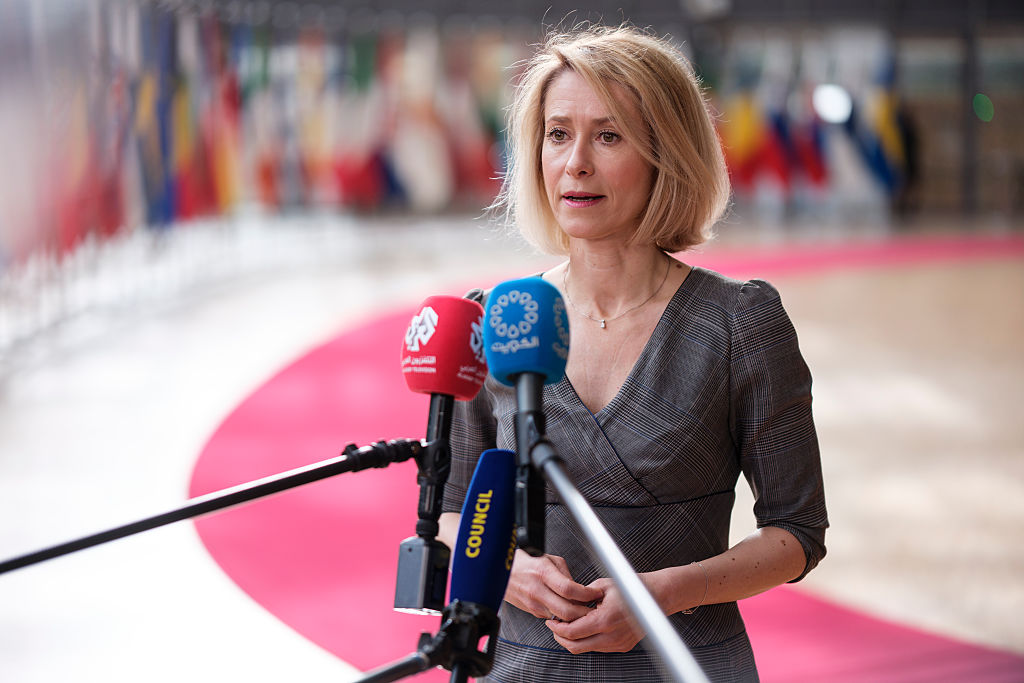
Kaja Kallas has again been rebuffed by her colleagues at the European Commission after calling for new measures to prevent trade with illegal Israeli settlements.
In a humiliation for Kallas, who is both the EU foreign affairs chief and a vice-president of the Commission, officials ruled out new restrictive trade measures, which have the support of France, Spain, and other EU countries, including Sweden, the Netherlands, and Belgium.
The Commission already has longstanding proposals tabled last year, said a spokesperson, “to suspend trade preferences under the EU-Israel Association agreement”, which has stalled because of a lack of support in the Council, which represents national capitals.
“This is still with the Council to adopt by qualified majority. This is what we have on the table right now, and we are not going to speculate at this stage on any other potential measures,” said the Commission spokesperson, noting that EU leaders would discuss the Middle East at a summit on Thursday.
Kallas and some European countries have tried to use the trade route rather than sanctions to avoid making a decision based on foreign policy sanctions that require unanimity, thereby becoming hostage to national vetoes, as the EU’s 27 governments remain divided.
Her last attempt to use trade sanctions was rejected by the College of Commissioners in May.
Kallas puts pressure on her own colleagues over Israel trade sanctions
The European Commission should present legal options for banning trade with illegal Israeli settlements, Kaja…
2 minutes
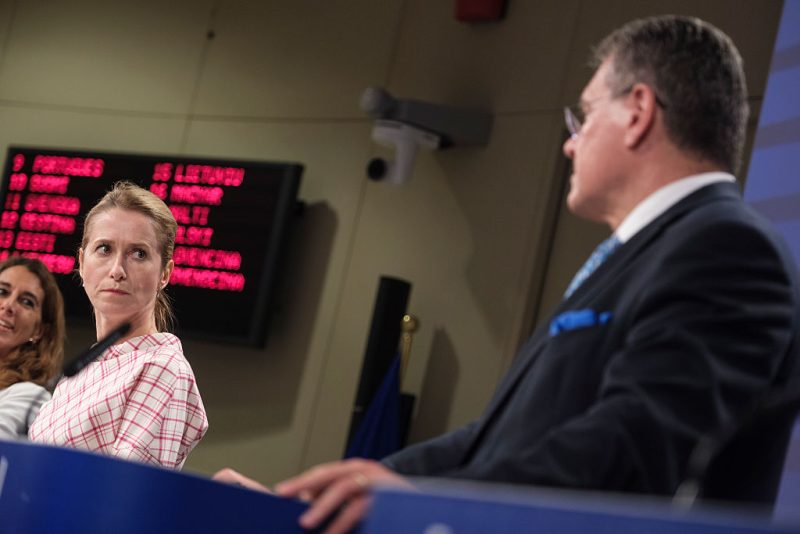
The Commission’s legal service has warned against using trade powers to effectively ban all imports from Israeli settlements in the Gaza Strip or the West Bank by targeting them with high tariffs.
In the past, trade powers have been used to ban Russian Nord Stream gas imports, avoiding national vetoes but leading to legal action against the EU and the Commission.
Speaking on Monday, Kallas said that a large majority of countries back her proposal, highlighting tensions within the EU over how to pursue foreign policy.
She has been mired in Brussels turf wars, controversy over her comments on Israel, and infighting over recent months, with some diplomats and officials accusing Ursula von der Leyen, the Commission president, of usurping her role.
(mm)

