49
US-Israel-Iran war tensions have risen again after recent reports claimed that Iran might be charging ships that is passing the Strait of Hormuz millions of dollars. The narrow waterway is one of the world’s most important oil shipping routes, and any disruption or added cost in the region quickly raises global concern.
The latest claims have come amid ongoing US–Israel–Iran tensions, where maritime security and control of key sea lanes remain highly sensitive issues. While Iran has previously said it has authority over parts of the shipping traffic in the area, such reports have sparked fresh debate over international navigation rules and the safety of global trade routes.
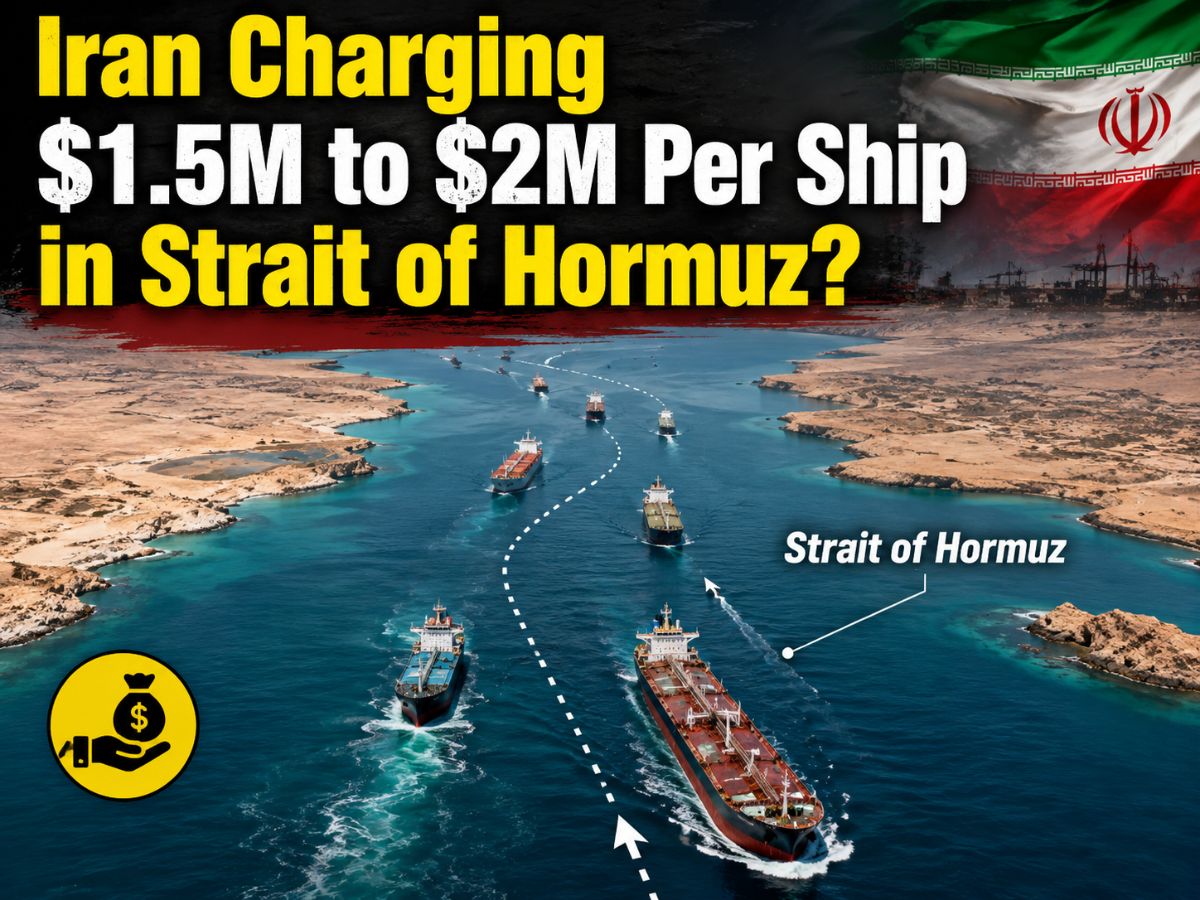
US-Israel-Iran War Latest Live Update: Iran Charging $2m Per Ship Passing Through Strait of Hormuz?
A senior Iranian lawmaker has reportedly claimed that ships passing through the Strait of Hormuz with Iran’s approval are being charged between $1.5 million and $2 million per vessel. The statement has intensified concerns over maritime security and the cost of global oil transport.
Mohsen Zangeneh, a member of Iran’s parliamentary Budget and Planning Commission, told the semi-official Fars News Agency that revenue is being collected from ships navigating the strategic waterway.
He said, “Iran currently receives an average of $1.5 million to $2 million from each ship passing through the Strait of Hormuz, Mohsen Zangeneh, a member of parliament’s budget and planning committee, told IRGC-linked Fars News on Sunday.”
The claim has not been independently verified but has already sparked debate among maritime analysts and energy observers.
What is Iran’s Alleged Transit Fee System?
According to Iranian parliamentary comments, vessels passing through the Strait of Hormuz may require official approval before entry. Reports suggest that these approvals could involve financial payments routed through state-linked systems.
Some accounts indicate that the system may function as a formal or semi-formal transit authorisation process, though exact mechanisms remain unclear. Iranian authorities argue they are responsible for maritime coordination and regional security in the waterway.
However, critics say such a structure may contradict established international maritime laws that guarantee free passage through key global shipping lanes.
Strait of Hormuz Under Increased Scrutiny
The Strait of Hormuz remains one of the most strategically sensitive maritime chokepoints in the world, handling a significant share of global crude oil shipments.
Recent developments indicate increased monitoring and administrative oversight of vessel movement in the region. Shipping companies are closely watching the situation as any disruption or added cost could directly impact global fuel prices and supply chains.
Rising geopolitical friction has also increased insurance costs for tankers operating in the Gulf region.
US-Israel-Iran War Latest Live Update: Proposal of a 30-Day Waiting Period
Adding to tensions, Iranian negotiator Majid Shakeri reportedly discussed a proposal involving a mandatory delay before restoring normal transit operations under Iranian control.
He stated, “Under this proposal, Tehran should announce that the reopening of the Strait of Hormuz under Iranian administration will only be possible 30 days after all threats from the United States and its allies have been removed,” Shakeri said.
If implemented, this proposal could significantly slow maritime traffic and further disrupt global energy logistics.
Global Shipping and Market Impact
Global shipping firms are already facing rising operational risks in the region. Insurance premiums for vessels passing through the Gulf have increased, while some operators are reportedly rerouting ships to avoid potential delays or security threats.
Energy markets remain highly sensitive to any developments in the Strait of Hormuz due to its role in transporting a large portion of the world’s oil exports.
Even minor disruptions or policy changes could lead to price volatility in global crude markets.
What’s Next in the US-Israel-Iran War?
The situation is expected to remain volatile as diplomatic tensions continue between Iran, the United States, and Israel. Any escalation in maritime restrictions or enforcement measures could further heighten regional instability.
International stakeholders are likely to push for negotiations to ensure uninterrupted navigation through the Strait of Hormuz, but competing political interests make resolution uncertain.
For now, global markets, shipping companies, and governments are closely monitoring every development in this strategically critical waterway.

