
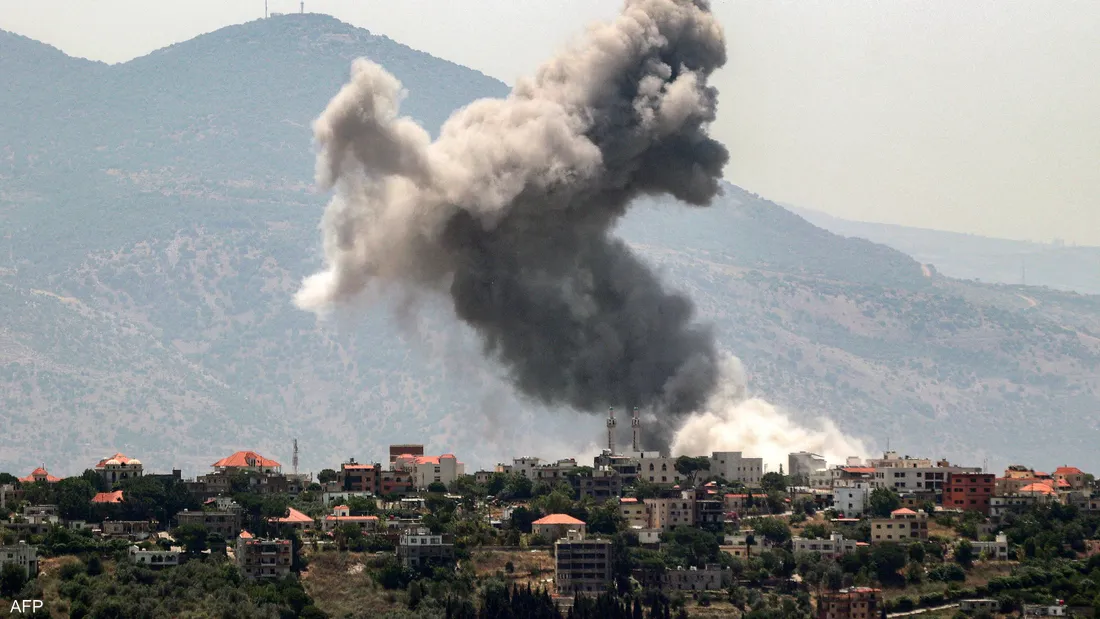
2026-05-30T15:07:05+00:00
Shafaq News-
Beirut
Hezbollah
launched rockets, artillery rounds, and attack drones at Israeli military
positions and towns in northern Israel throughout Saturday, while Israel
intensified airstrikes across southern Lebanon and parts of the Beqaa Valley —even
as military delegations from both countries held direct talks at the Pentagon
for the first time in decades.
The group
issued 13 statements claiming strikes on Israeli troop concentrations in
southern Lebanon, including in Ghandouriyeh, Zawtar, Debbine, Arnoun, and Beit
Leif, as well as on the Liman and Shomeera military bases in northern Israel.
مراسل الجديد: غارة تستهدف اللوبية في قضاء صيدا pic.twitter.com/vVvi1M9XwJ
— Al Jadeed News (@ALJADEEDNEWS) May 30, 2026
Israeli Channel
12 reported that air raid sirens activated across northern Israel every 22
minutes from early morning, with the army confirming interception attempts
against rockets and drones launched from Lebanese territory toward Nahariya and
the Upper Galilee. Sirens sounded in Safed for the first time in roughly six
weeks, according to Israeli Army Radio.
Israeli
airstrikes covered all five districts in southern Lebanon —Saida, Tyre,
Nabatieh, Bint Jbeil, Marjayoun, and Hasbaya, as well as western Beqaa. A
strike on Loubiyeh killed one person and wounded another.
The Lebanese
Army said two of its soldiers sustained serious injuries when an Israeli drone
struck their vehicle on the Ebba public road in Nabatieh; both were evacuated
for treatment.
إصابة عسكريَّين في الجيش بجروح بليغة نتيجة استهدافهما داخل سيارة بمسيّرة إسرائيلية معادية على طريق عام عبا (النبطية)، وجرى نقلهما إلى أحد المستشفيات للمعالجة.#الجيش_اللبناني #LebaneseArmy pic.twitter.com/ymA5c3URM3
— الجيش اللبناني (@LebarmyOfficial) May 30, 2026
Prime Minister Benjamin
Netanyahu confirmed Friday that Israeli forces have advanced to positions north
of the Litani River.
Pentagon talks
A six-member
Lebanese military delegation met Friday with Israeli military officials at the
Pentagon, the first direct military-level contact between the two countries in
decades. The session marked the fourth time Israeli and Lebanese officials have
convened in Washington, and their first on the security track, running parallel
to a separate diplomatic channel at the State Department and the White House.
Israel and
Lebanon agreed two weeks ago to extend a ceasefire by 45 days, but Hezbollah
said it is not party to the arrangement, and violence has surged since. The
disarmament of Hezbollah, which Israel insists on as a precondition for any lasting
settlement, has become the central sticking point in negotiations, prompting
the shift to a security-track format at the Pentagon. Israel reportedly pressed
for normalization in the security field, a demand the Lebanese side declined,
arguing such decisions fall within the political rather than the military
domain.
US Secretary of
State Marco Rubio blamed Hezbollah for the ongoing violence and called for an
immediate halt to its attacks to allow for de-escalation. Lebanese President
Joseph Aoun, in a call with Rubio on Friday, said implementing the existing
ceasefire must be the starting point before any other issues are addressed,
according to a statement from his office.
The Israeli
attacks have killed at least 3,200 people in Lebanon and displaced more than
one million.
