
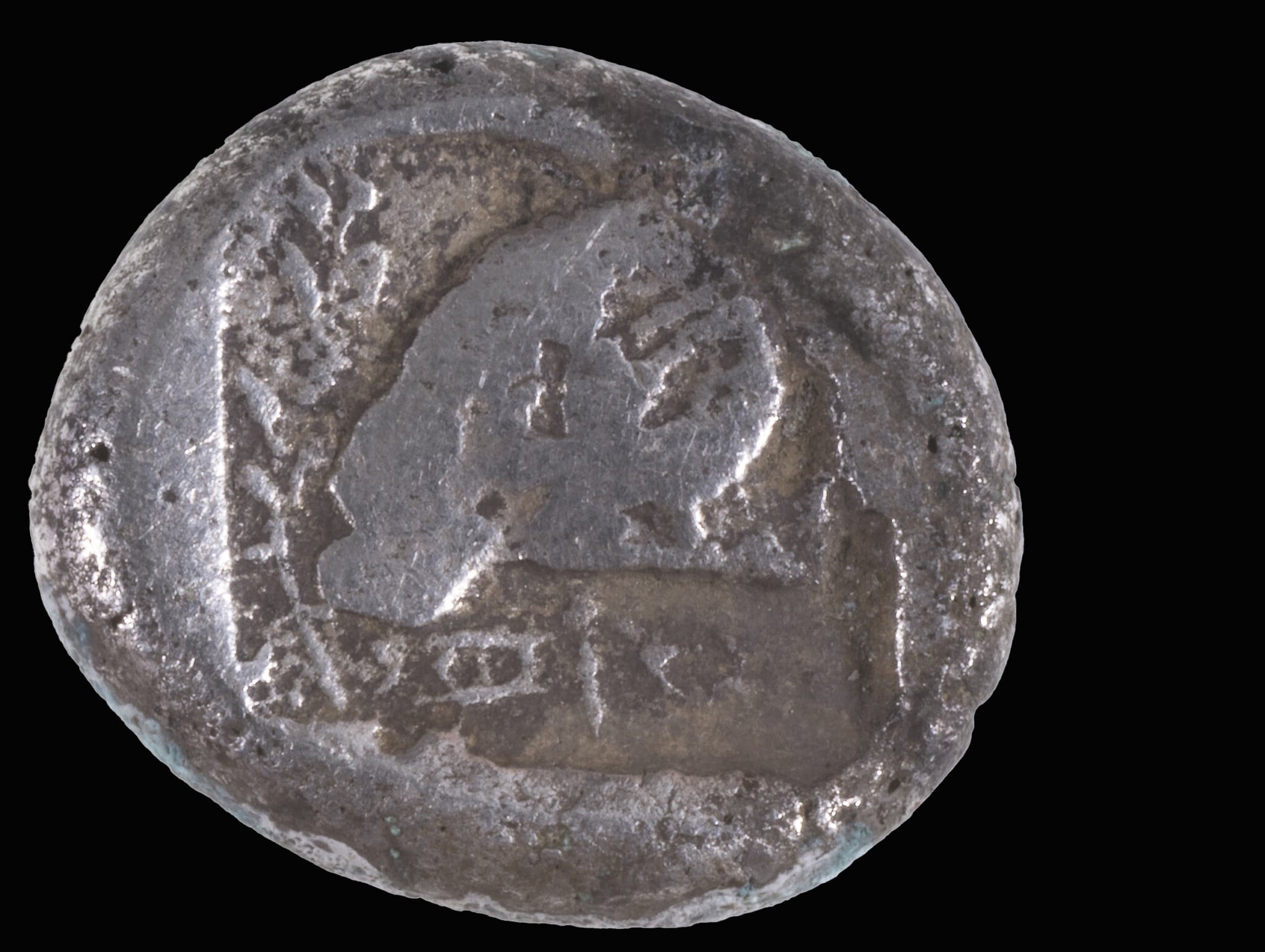
A municipal employee searching for lost jewelry on the beach in Ashdod instead uncovered a rare 2,500-year-old coin from ancient Cyprus, which archaeologists say is the first of its kind ever found in Israel.
Avi Chaprak, deputy director of Ashdod’s Beaches Department, found the coin about a month ago while scouring the shore for items lost by beachgoers. He understood its significance after seeing similar coins in the past, so he turned it over to the Israel Antiquities Authority, as required by law.
Experts at the authority identified the coin as an exceptionally rare silver-plated siglos minted in the ancient city of Salamis on Cyprus’s eastern coast during the mid-fifth century BC, when the island was under Persian rule.
The roughly 11-gram coin appeared at first to be solid silver but was actually made of base metal coated with silver, a practice known from Cypriot coinage of the period because of shortages of silver on the island, according to Yanniv David Levy, a researcher and curator in the IAA’s Coin Department.
One side of the coin depicts a reclining ram facing left, while the reverse shows a ram’s head inside a sunken square, alongside a laurel branch and three symbols believed to belong to the ancient Cypriot syllabic script. Its size was not specified.
Large silver coins from the Persian period are uncommon in archaeological excavations because they were often cut into smaller pieces for use in local trade, Levy said. Complete examples are particularly rare, and previous evidence of such coins has generally come from inland sites rather than Israel’s Mediterranean coast.
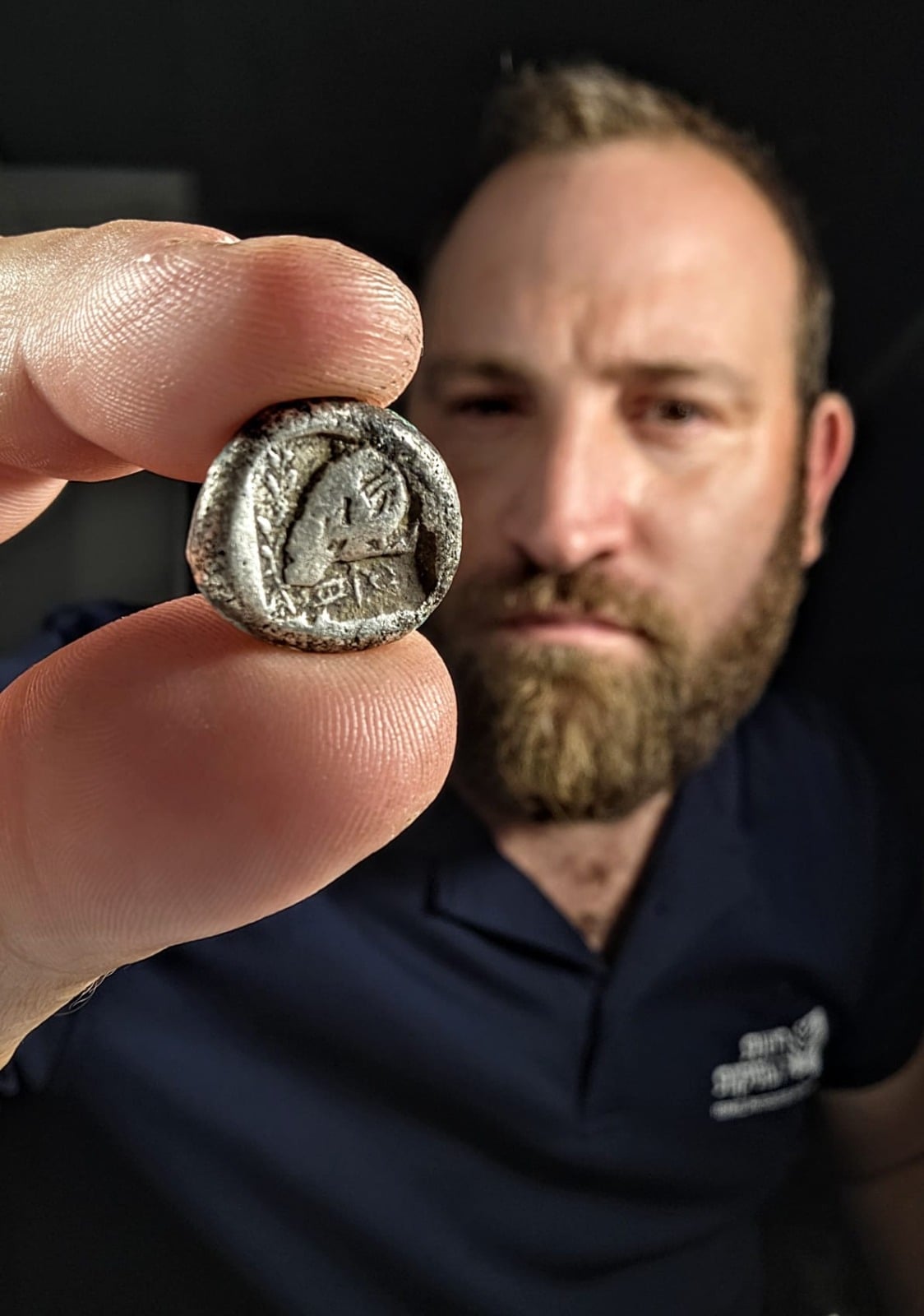
“The discovery of a complete coin from the coastal area is unusual on all counts and of special historical importance,” Levy said.
While coins from Salamis circulated widely across the eastern Mediterranean, finds with a well-documented provenance are uncommon, noted Evangeline Markou, a specialist in ancient Cypriot coinage at the National Hellenic Research Foundation in Athens.
“Therefore, this coin potentially offers significant information about trade ties and movement between Cyprus and the Land of Israel during this period,” Markou said.

Chaprak was presented by the IAA with a certificate of appreciation for reporting the discovery.
“For me, it was clear that the coin belonged to our collective heritage, so I immediately delivered it to the Israel Antiquities Authority,” Chaprak said. “If through this act I contributed another small piece toward the research and history of the Land of Israel, then that is a great honor for me.”