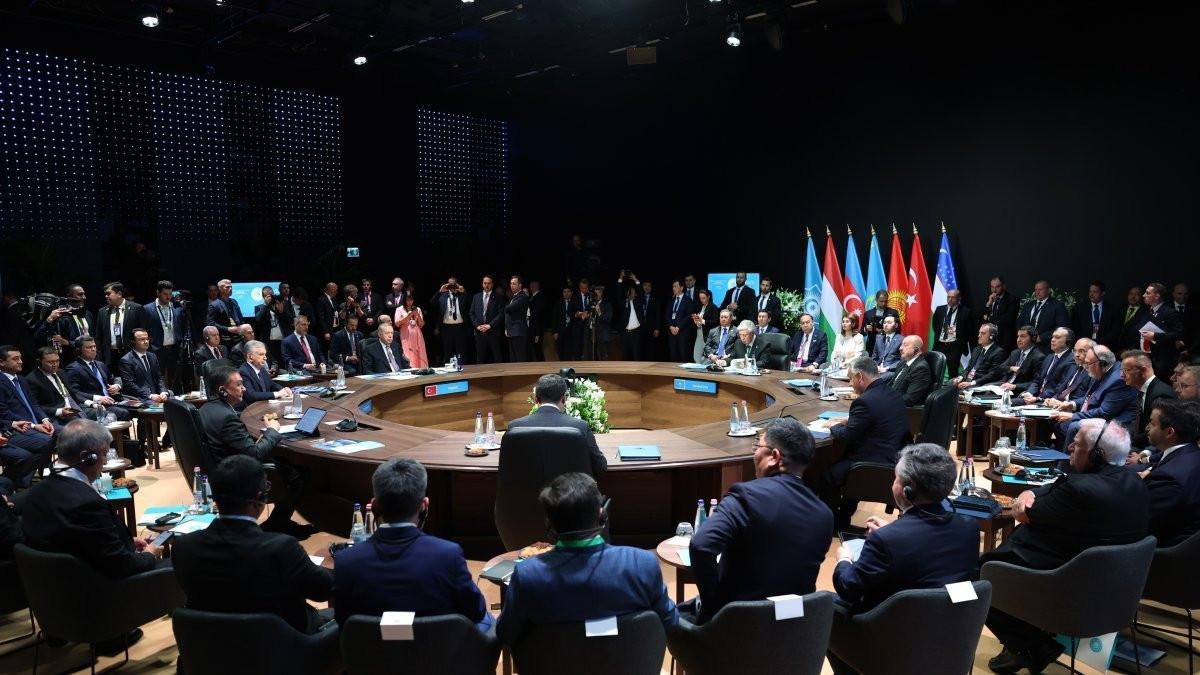

he recent visit to Iran by senior officials of the Makkah Defence Alliance reflects an effort to de-escalate regional tensions through high-level engagement and crisis diplomacy amid threats of renewed US military action and Iranian retaliation. Beyond immediate de-escalation, the initiative seeks to develop a regional approach to security without deepening existing divisions.
Pakistan’s former ambassador Abdul Basit says that the initiative aims to prevent further escalation and create a negotiated off-ramp. Its objectives include reviving the Saudi Arabia-Houthi ceasefire, securing the lifting of the US blockade affecting the Strait of Hormuz and ensuring toll-free passage through the waterway for international shipping.
“In visiting Iran, the alliance leaders have sought to counter its portrayal as a sectarian bloc. Discussing the Saudi Arabia-Houthi conflict with Iranian officials underscored its role as a diplomatic channel for regional engagement alongside its collective-defence mandate.”
Ambassador Basit argues that engagement with Iran also reflects the principle of endogenous security, under which regional states take responsibility for resolving their disputes. The approach could create space for Iran-US negotiations on sanctions, frozen assets, the nuclear programme and reciprocal security assurances.
He warns that the failure of diplomacy could lead to renewed US military action against Iran after the midterm elections. The reported repositioning of US troops and diplomatic personnel may, however, reflect force-protection measures rather than preparations for an offensive.
Continued Iranian retaliation against some Gulf states could deepen regional divisions.
Against this backdrop, President Masoud Pezeshkian’s visit to Russia for talks with President Putin and China’s appointment of a special envoy for the Middle East reflect parallel diplomatic engagement.
Even as China seeks to project a diplomatic role in easing tensions in the Middle East, it faces a challenge closer to home. The Arunachal Pradesh dispute along the China-India frontier highlights the persistence of unresolved boundary issues despite years of negotiations and efforts to disengage militarily. Border management arrangements have helped ease immediate tensions but have yet to produce a mutually accepted boundary.
The border question is part of a wider strategic challenge shaped by the changing balance of military and infrastructure capabilities between the two countries, their economic interdependence and uncertainty over future US strategic priorities. These factors influence India’s options vis a vis China.
The Himalayan frontier between China and India is a region steeped in Buddhist history. The region has cultural significance far beyond its geostrategic value.
“South Asia has emerged as a theatre for big power confrontation due to India’s extra-regional ambitions. India has triggered an arms race, militarised the Indian Ocean, consented to be a counterweight to China and developed a strategic nexus with Israel. Its relationship with China has a trust deficit. Progress on the LAC has remained marginal and the border unstable. The ideological turn India has taken under Modi is a threat to the entire region, says former ambassador Masood Khalid.
The border dispute stems from territorial claims inherited from British rule and the lack of a mutually agreed boundary. In the east, India is sticking to the McMahon Line, drawn at the 1914 Simla Convention; China rejects it. In the west, Aksai Chin remains disputed. China’s construction of a road linking Xinjiang with Tibet through Aksai Chin in the late 1950s, followed by the 1959 Tibetan uprising and India’s decision to grant asylum to the Dalai Lama, further strained relations. Border skirmishes then culminated in the 1962 war.
The dispute spans three sectors: Aksai Chin in the west, which India claims as part of Ladakh; the middle sector along parts of Himachal Pradesh and Uttarakhand; and Arunachal Pradesh in the east, administered by India but claimed by China as Zangnan, or Southern Tibet.
Clashes at Nathu La and Cho La in 1967 and the Sumdorong Chu stand-off in 1986-87 showed that the conflict remained a threat to stability along the Himalayan frontier. Prime Minister Rajiv Gandhi’s 1988 visit to Beijing opened the way for agreements signed between 1993 and 2013 to maintain peace along the Line of Actual Control but left the boundary unresolved. Subsequent face-offs at Depsang in 2013, Chumar in 2014 and Doklam in 2017 demonstrated their limits. The 2020 Galwan clashes severely damaged bilateral trust and prompted heavier military deployments.
The recent visits to Tehran by Pakistani, Turkish and Saudi leaders aimed at reviving the Saudi Arabia-Houthi ceasefire, securing the lifting of the US blockade affecting navigation through the Strait of Hormuz and ensuring toll-free passage through the waterway for international shipping.
The ongoing faceoff in Arunachal Pradesh was first highlighted by India’s Indo-Tibetan Border Police chief, Shatrujeet Singh Kapur on October 22 while addressing paramilitary personnel in Rajasthan. The remarks marked the first official confirmation of the face-offs started in June.
Khalid says “the post-2020 LAC standoff has evolved into a wider strategic contest over regional influence, military deterrence and Asia’s security balance. Although Beijing and New Delhi have pursued border normalisation, they differ over whether border friction can be managed separately. Beijing treats its territorial claims as non-negotiable and seeks to restore normal ties; New Delhi regards a return to pre-April 2020 positions as a prerequisite for cooperation.”
Meanwhile economic engagement continues to grow. China became India’s largest trading partner in FY2025-26, with bilateral trade reaching $151.1 billion.
Following the 2020 Galwan clash, “India tightened scrutiny of Chinese investment and technology links. These restrictions and security concerns have affected the business relationship, even as India needs Chinese technology and investment in solar energy, electric vehicles, battery storage, semiconductors, artificial intelligence and high-speed rail,” says Khalid.
Besides China, India has enduring economic and commercial ties with Russia and is negotiating a bilateral trade deal with the United States. “However, closer strategic alignment with Washington could narrow India’s room for manoeuvre,” says Ambassador Abdul Basit.
Washington is also seeking to expand energy and trade cooperation with India. During his recent tour, US Secretary of State Marco Rubio visited Reliance Industries’ Jamnagar refinery to encourage greater processing of Venezuelan crude. Reliance’s proposed Texas expansion adds to energy cooperation. US is trying to persuade India to diversify its oil imports.
Defence ties face similar pressures. India’s acquisition of Russia’s S-400 air-defence system exposed New Delhi to the threat of US sanctions under the Countering America’s Adversaries Through Sanctions Act.
The proposed US-India trade agreement and Mission 500 aim to raise bilateral trade to $500 billion by 2030.
“The continuing LAC dispute has kept India under strategic pressure. However, it has allowed New Delhi to present itself to the United States and the West as a regional power capable of counterbalancing Beijing,” says Basit.
China increasingly views India through the prism of its relationship with the United States. Regional experts suggest that Beijing’s reluctance to make concessions to New Delhi stems partly from the perception that India remains strategically aligned with Washington and cannot separate its China policy from the US priorities.
Meanwhile, the US security arrangement with Gulf states, built around oil supplies in exchange for protection, is under growing pressure as Washington reassesses its regional commitments.

Against this backdrop, the October 20 meeting among India, the US and the UAE in Mumbai highlighted a US-backed regional framework linking India and the Gulf more closely with Israel and Europe through trade, transport and energy networks. I2U2 and the proposed India-Middle East-Europe Economic Corridor could deepen Israel’s regional integration. However, this puts India’s ties with Iran in a bind. The Chabahar port and the Russia-backed International North-South Transport Corridor remain important to India’s access to Afghanistan and Central Asia. This leaves India balancing its established connectivity interests with Russia and Iran against its growing engagement with Israel and the US-led regional framework.
Similar uncertainty surrounds Washington’s strategic priorities in relation to China and India. “Washington’s interest in using India as a counterweight to China is less clear under President Trump. His administration’s pursuit of a more stable relationship with Beijing, the failure to convene the planned Quad leaders’ summit in 2025 and the reduced prominence accorded to India within the grouping in US strategic documents have raised doubts about its future direction,” says Khalid.
Quad’s 2026 summit in India has reportedly been shifted to the sidelines of the ASEAN Summit in Manila on November 16-18, raising questions about the Quad’s direction.
The writer is a senior The News staffer based in Karachi.