
The global economy relies on a handful of narrow maritime passages to keep goods, energy and industrial inputs moving. But geopolitical tensions, climate change and the growing willingness of governments to weaponize geography are turning these vital trade routes into strategic vulnerabilities, according to a new report from Roland Berger.
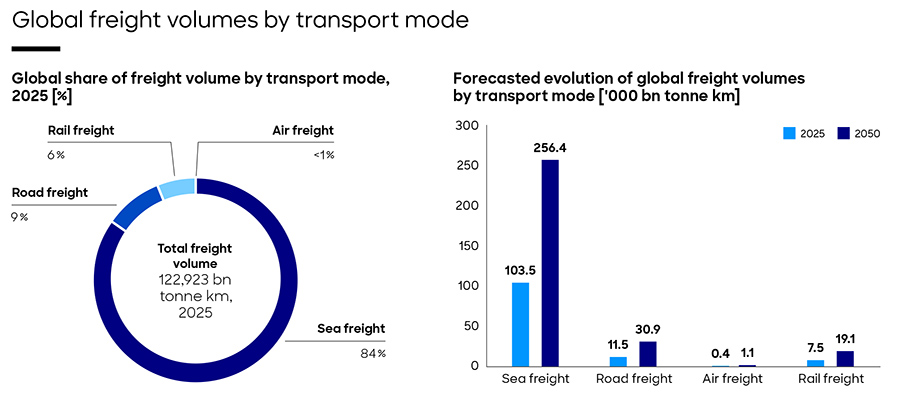
Around 84% of global freight volume travels by sea. From energy and agricultural commodities to chemicals, semiconductors and consumer goods, maritime transportation underpins international trade. Yet much of this activity depends on a relatively small number of narrow waterways, canals and straits.
These maritime chokepoints make global trade faster and cheaper, but also create critical points of failure.
The report from Roland Berger, a global strategy consultancy, examines the world’s most strategically important maritime chokepoints and the economic risks associated with their disruption. Its central conclusion is that companies can no longer regard uninterrupted maritime access as a given. What was once largely a logistical consideration has become a strategic business risk.
Source: DHL, Roland Berger
The scale of the dependency is striking. Sea freight accounted for 84% of global freight volume in 2025, compared with 9% for road, 6% for rail and less than 1% for air. Its dominance is expected to increase further: global sea freight volumes are projected to rise from 103.5 trillion tonne-kilometers in 2025 to 256.4 trillion by 2050..
Alternative transport modes simply cannot replicate its capacity and cost efficiency “Rail, road, inland waterway transportation, and air freight each are indispensable for long-haul transportation and – in the case of road transportation – for serving the last mile as well, but none can substitute for the sheer capacity and economics of maritime trade at global scale,” say the authors.
Source: DHL, Roland Berger
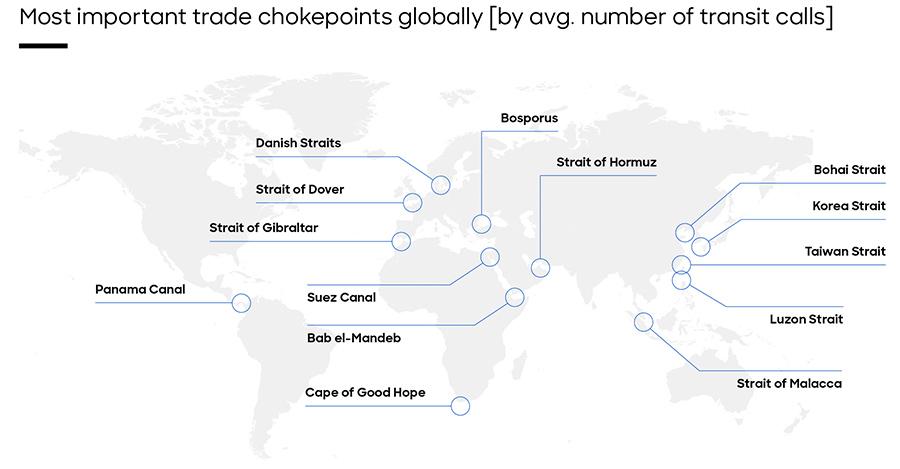
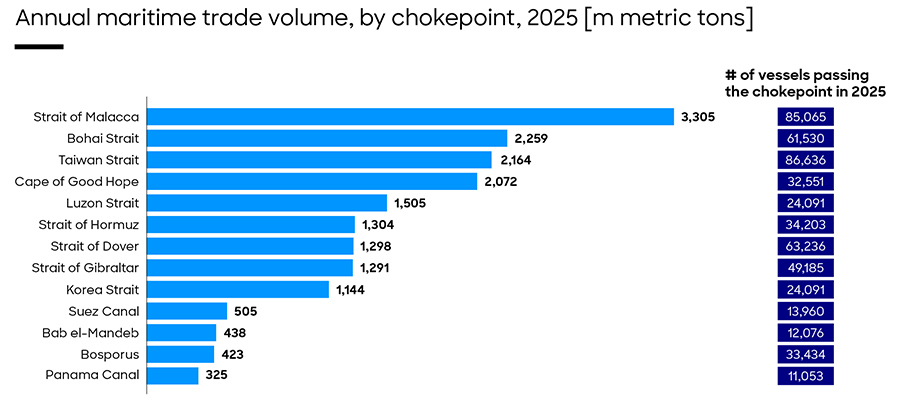
The report identifies a network of critical passages, including the Strait of Hormuz, the Suez Canal, Bab el-Mandeb, the Panama Canal and the Strait of Malacca. East and Southeast Asia are particularly important, with the Strait of Malacca alone handling approximately 24% of global seaborne trade.
Hormuz: A disruption that travels far beyond shipping
The ongoing crisis in the Strait of Hormuz illustrates the consequences. Following military escalation involving Iran, shipping traffic through the passage fell from around 90–120 vessels per day to fewer than ten. The initial disruption was compounded by attacks on commercial vessels, soaring insurance premiums and, ultimately, the effective closure of key shipping lanes.
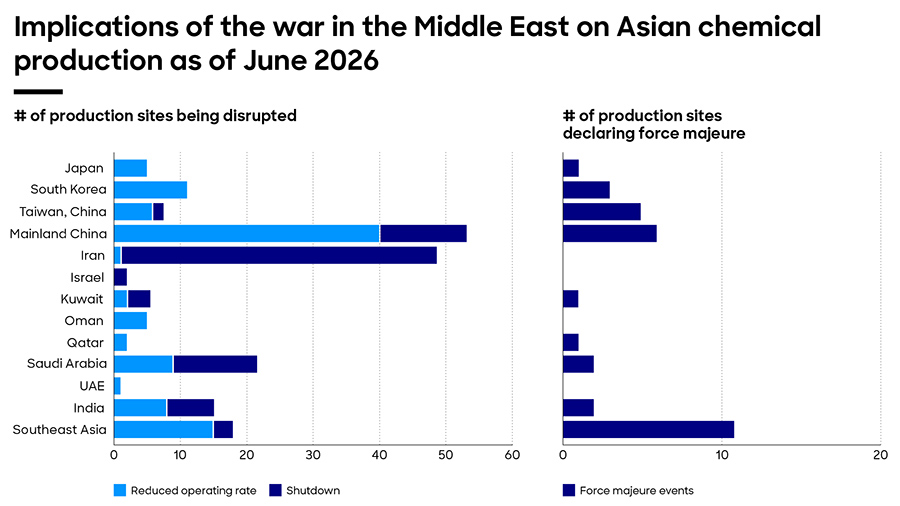
But the consequences extended well beyond energy markets. Gulf exports of naphtha, a critical feedstock for petrochemical production, were disrupted, creating shortages across Asian manufacturing. Producers in Japan, South Korea, Singapore and Taiwan reduced operating rates, declared force majeure or temporarily shut down facilities.
The effects similarly spread to industries dependent on plastics, synthetic fibers, packaging and other chemical inputs.
Source: S&P Global Energy
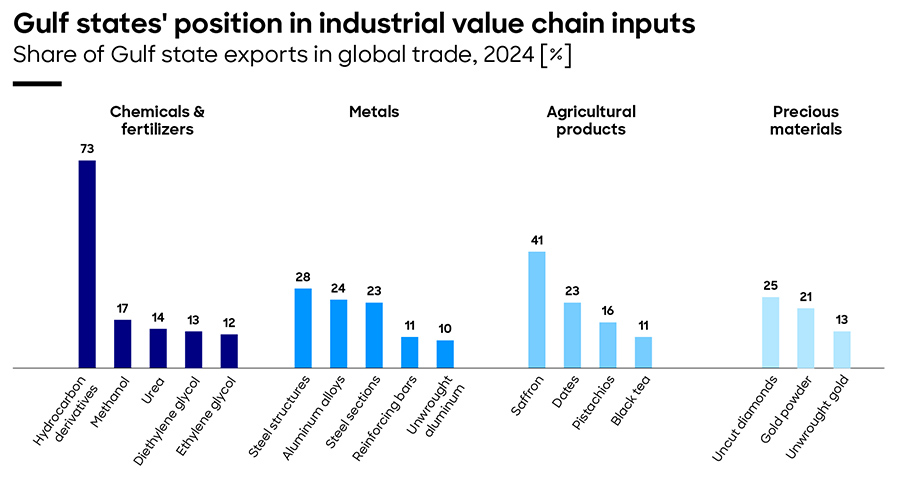
The Gulf’s importance also extends to aluminum, steel, fertilizers and agricultural products. In some categories, Gulf countries account for a substantial share of global exports. This means a disruption in one region can affect production, procurement costs and availability across multiple industries and continents.
The authors highlight how the war in the Middle East with the closure of the Strait of Hormuz and the subsequent capture of the Red Sea coast by the Iran-backed Houthis in September 2026 and the accompanying takeover of Bab el-Mandeb illustrates just how quickly the disruption of single maritime chokepoints can cascade far beyond shipping and energy supplies itself, interrupting manufacturing operations thousands of kilometers away and exposing the vulnerability of highly specialized global value chains.
Source: Kiel Institute
The next disruption may come from elsewhere
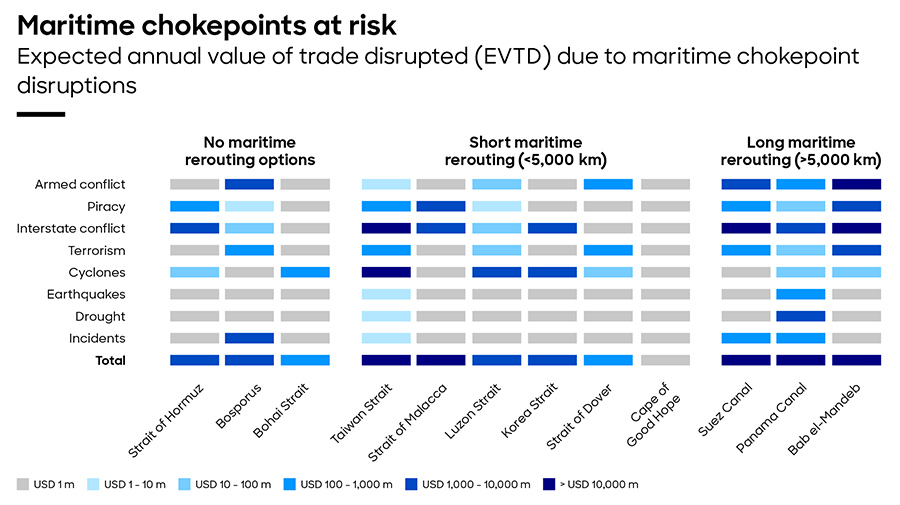
Military conflict is only one source of risk. Roland Berger identifies three broader threats: accidents, climate-related events and geopolitical intervention.
For example, the Ever Given incident in 2021 blocked the Suez Canal for six days. More than 430 vessels backed up at both entrances, holding up over $9 billion in trade a day, and the congestion took weeks to clear, with effects on ports and inventories felt into late 2021. Allianz estimated the blockage cut annual global trade growth by 0.2 to 0.4 percentage points.
Source: IMF PortWatch
For much of 2023 and 2024, drought forced the Panama Canal to halve its daily transits. The canal carries roughly 6% of global maritime trade and 40% of US container traffic.
The geopolitical dimension adds another layer. Governments are increasingly treating control over strategic infrastructure as a source of economic leverage. Indonesia’s 2026 proposal to introduce transit fees for vessels passing through the Strait of Malacca illustrates how even access to established trade routes could become subject to political and fiscal considerations.
Source: Nature Communications, Roland Berger analysis
Rethinking supply chain resilience
For governments and companies around the world, Roland Berger’s report says there is a clear message to take note of: the traditional supply chain model – built around minimizing inventories, consolidating suppliers and reducing costs – needs to be reconsidered.
As the authors put it: “The era in which maritime chokepoints could be treated as background infrastructure – reliable, invisible, and outside the strategic remit of most organizations – is over.”
Their recommendations include mapping exposure down to individual products and second-tier suppliers, securing alternative shipping capacity in advance, building targeted inventory buffers, diversifying suppliers across different maritime routes and establishing early-warning systems.
Ultimately, the report makes a case that resilience must become an integral part of supply chain strategy rather than an afterthought. In a world where geography is increasingly being used as a geopolitical instrument, the ability to keep goods moving may prove just as important as the ability to produce them efficiently.