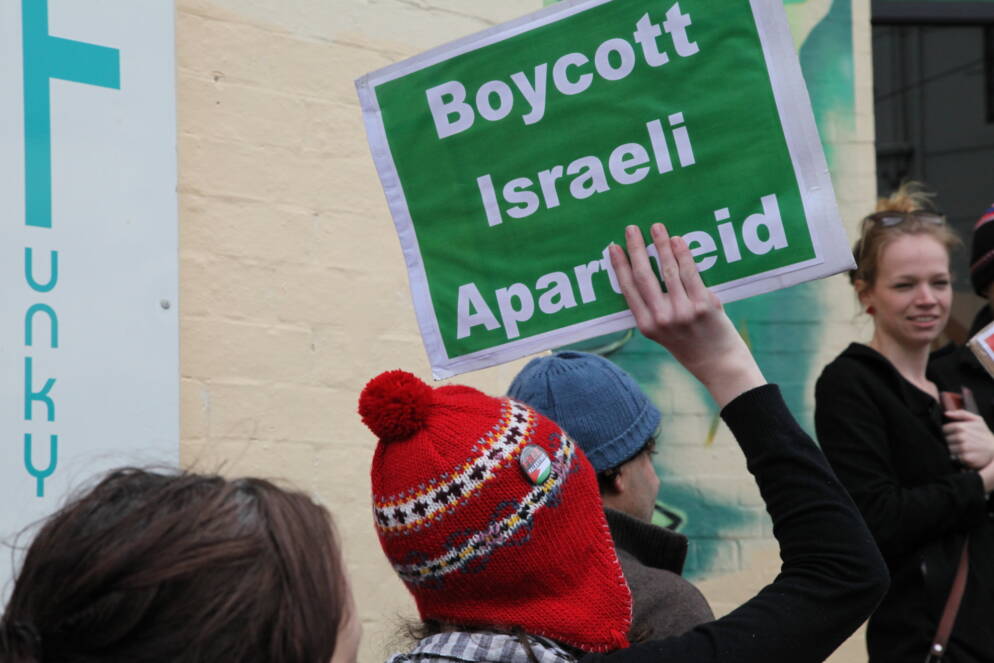
Britain, France and Canada have announced plans to restrict goods from Israeli settlements in the West Bank. Several European countries have already taken or begun similar action, while others are considering joining them.
It sounds like a significant economic blow against Israel. It isn’t.
Britain conducts roughly $8 billion in annual trade with Israel. By comparison, its total trade with the entire Palestinian territories — not merely Israeli settlements — was estimated at only about $50 million in 2025. Precise figures for settlement goods are difficult to obtain, but the commerce being targeted is plainly a tiny fraction of British-Israeli trade.
And what exactly is being restricted? Mostly agricultural products — dates, grapes, citrus, vegetables, herbs and olive oil — along with wine, cosmetics and some manufactured goods. Britain would go further, restricting certain services involving settlement financing, construction, infrastructure, real estate and advertising.
These are real businesses employing real people, and losing markets matters to them. But this is not an economic weapon likely to force Israel to reconsider its policies. Which raises the obvious question: What is it supposed to accomplish?
It will not dismantle a settlement or persuade Israelis living in Ariel or Ma’ale Adumim to move. Nor is there much reason to believe it will bring Israelis and Palestinians closer to negotiations. Indeed, foreign economic pressure may strengthen those Israelis who argue that concessions invite more pressure rather than compromise.
There is a larger problem. The ultimate boundaries between Israel and a Palestinian state are supposed to be determined through negotiation. Serious two-state proposals have long contemplated that some settlement blocs would remain Israeli, with territorial swaps compensating a Palestinian state. Yet foreign governments are imposing economic consequences today on territory whose ultimate status remains unresolved.
And the economic reality is considerably messier than the political line these governments seek to draw. Israeli and Palestinian economies are intertwined. Supply chains cross the Green Line. Palestinians work for settlement businesses. Products may contain goods originating in several places.
More troubling is where the principle leads. Once governments create legal and administrative systems for identifying and excluding settlement commerce, the target can easily expand. Today it is wine, dates and vegetables. Tomorrow it could be companies doing business in settlements, banks financing them, advertisers promoting them or suppliers serving them.
Supporters will say that is precisely the point: create pressure where diplomacy has failed. And governments certainly may distinguish between Israel and territory they do not recognize as sovereign Israeli territory. But symbolic sanctions are not necessarily harmless sanctions. They can harden positions, complicate future negotiations and establish precedents that extend far beyond their original purpose — all while allowing governments to claim action without producing meaningful change.
That is the trouble with the settlement boycott. Its immediate practical effect is modest, while its political implications are not. It substitutes punishment for persuasion and unilateral economic line-drawing for negotiation, without offering a plausible path toward changing Israeli policy or advancing peace. That is a lot of consequence for remarkably little accomplishment.