The US-Iran conflict has thrown the Middle East’s energy transport network into sharp focus, with disruption to key maritime chokepoints threatening global supplies of oil, liquefied natural gas (LNG) and trade. As sea lanes come under pressure, countries are increasingly relying on pipelines that bypass these vulnerable waterways to keep exports flowing.
The Strait of Hormuz, through which more than 20 per cent of global crude supply used to transit before the conflict, remains virtually shut and has triggered a global energy crisis.
Shipping traffic in the Bab Al Mandeb strait, which connects the Red Sea to the Gulf of Aden and the Indian Ocean, has also been affected after attacks by Iran-backed Houthi rebels in Yemen.
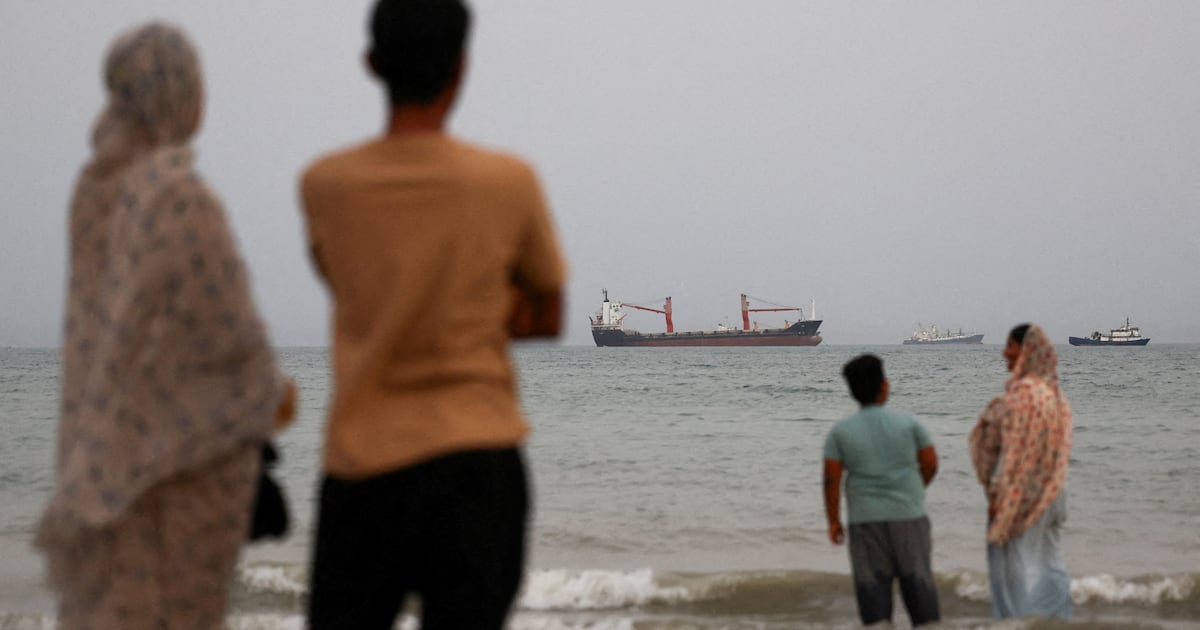
A Saudi oil tanker, Encelia, was attacked in the Red Sea on Wednesday, causing a fire in the bow. The Houthis also claimed to have attacked the Saudi tanker Layla, raising the risk of disruption to oil supplies from another critical maritime chokepoint in the region. As many as nine tankers have made U-turns amid ongoing hostilities in the Red Sea.
“The closure of both the Bab Al Mandeb strait and the Strait of Hormuz simultaneously will tighten physical oil markets critically,” Sasha Foss, energy analyst at CSC Commodities, a division of Marex, told The National.
“The Suez Canal has a capacity of 5 million barrels per day, but it would become too bottlenecked if all the supply is rerouted through it, and the natural short [way] for the product is Asia and not to the Mediterranean.”
While maritime chokepoints remain critical to global energy trade, countries are increasingly relying on overland pipelines to bypass vulnerable sea lanes. Saudi Arabia’s East-West pipeline and the UAE’s Habshan-Fujairah pipeline have emerged as key alternative export routes, while Iraq announced plans this month for a new pipeline designed to bypass the Strait of Hormuz.
Here are the chokepoints and pipelines shaping oil trade.
Strait of Hormuz
The Strait of Hormuz is an important route for the supply of crude oil and LNG from the Middle East. Gulf countries, as well as Iraq, heavily relied on the waterway for the export of crude oil by sea before the conflict broke out on February 28. The strait also serves as an important gateway for container traffic for the import and export of goods from the region.
In the fourth quarter of 2025, the Strait of Hormuz recorded 20.7 million barrels per day (bpd) of oil flows, including 15.2 million bpd of crude oil and condensate, and 5.5 million bpd of petroleum products, according to the US-based Energy Information Administration. Oil flows fell to 14.6 million bpd as a result of the Iran war in the first quarter of this year.
LNG flows, which averaged 10.1 billion cubic feet per day (cfd) in the fourth quarter, fell to 7.3 billion cfd in the first quarter.
Bab Al Mandeb
The Bab Al Mandeb strait carries about 12 per cent of global trade and a quarter of global container traffic. Oil flows through the strait averaged 9.3 million bpd in 2023, before the Houthi rebels’ tanker campaign cut that to about 4.1 million bpd in 2024 and 4.2 million bpd in the first half of 2025, according to the EIA.
Flows climbed back to about 7.4 million bpd in June, according to Kpler. The higher volumes are a result of Saudi Arabia rerouting crude through its Red Sea terminals. With Hormuz already effectively shut since February, a full closure of the Bab Al Mandeb strait could put a quarter of the world’s oil and gas supply at risk.
Suez Canal
The Suez Canal is one of the world’s most important maritime chokepoints, linking the Red Sea with the Mediterranean through the Isthmus of Suez, and providing the shortest shipping route between Asia and Europe.
Total oil flows through the Suez Canal averaged about 5.1 million bpd in the fourth quarter, including crude transported through both the canal and Egypt’s Sumed pipeline. LNG flows through the Suez Canal reached 1.6 billion cfd during the period.
If traffic were diverted away from the Strait of Hormuz, the canal could become congested as additional oil cargoes are rerouted through the Red Sea.
Alternative routes
Sumed pipeline
Unlike the Suez Canal, the Sumed pipeline is not a maritime chokepoint but an overland route. Stretching from the Gulf of Suez to Alexandria on the Mediterranean, it allows crude oil to bypass the canal when tanker draft restrictions or congestion limit shipping.
About 70 per cent of the oil shipped from the Arabian Gulf to Europe passes through the Sumed pipeline, which is jointly owned by the Egyptian General Petroleum Corporation, Mubadala Energy, Saudi Aramco, Kuwait Investment Authority and Qatar Petroleum.
East-West pipeline
Saudi Arabia, Opec’s largest producer, has the East-West crude pipeline connecting Abqaiq in the East to Yanbu in the Red Sea, with a total capacity of about 7 million bpd of crude oil.
There is also a natural gas liquids pipeline running parallel to the East-West pipeline in Saudi Arabia, with a capacity of 300,000 bpd when fully utilised, according to the International Energy Agency.
The pipeline has become a critical alternative export route following the closure of the Strait of Hormuz, but recent Houthi attacks could reduce flows through the Red Sea via the Bab Al Mandeb strait.
Habshan-Fujairah pipeline and expansion
The Habshan–Fujairah pipeline, often referred to as the West–East crude oil pipeline, is one of the UAE’s most significant energy projects. Developed by Adnoc, the pipeline was designed to transport crude from Abu Dhabi’s onshore Habshan fields to the Port of Fujairah on the Gulf of Oman, bypassing the Strait of Hormuz.
Stretching more than 360km across the UAE, the 48-inch pipeline has the capacity to transport up to 1.5 million bpd of crude oil, representing a substantial share of the country’s total oil exports.
In May, the UAE announced the expansion of the West-East crude oil pipeline to be completed by 2027, with the project expected to double export capacity through Fujairah.
Arab Gas pipeline
The Arab Gas Pipeline is a regional natural gas network connecting Egypt to Jordan, Syria and Lebanon. It has a capacity of about 353 billion cubic feet of natural gas per year. An offshore extension of the pipeline, known as the Eastern Mediterranean Gas Pipeline, can also supply gas to Israel.
New Iraq pipeline
The crisis in the Strait of Hormuz prompted Jordan and Iraq to revive an old pipeline plan linking Basra in Iraq with the Port of Aqaba to enable Baghdad to export its crude and bypass the strait.
The project is expected to have two pipeline sections, with a 700km section that would connect the Rumaila oilfield near Basra to the western city of Haditha, with a capacity of 2.25 million bpd. The second section, running from Haditha to Aqaba, would carry one million bpd.
“Pipelines will allow bypassing of the Strait of Hormuz, so before they are completed is the point of maximum leverage for Iran,” energy analyst Mr Foss said.
He added that “pipelines are static and [their] massive infrastructure makes them easy to target by drone strikes”.
