

• United States State Employment and Unemployment – 3:00 p.m. British Summer Time
• United States Usual Weekly Earnings, Second Quarter – 3:00 p.m. British Summer Time
• European Central Bank Bank Lending Survey – 9:00 a.m. British Summer Time
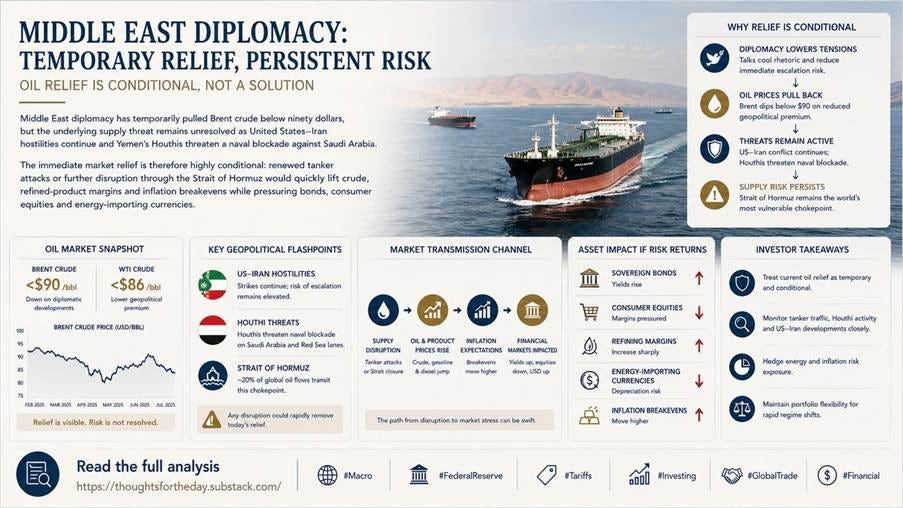
Middle East diplomacy has temporarily pulled Brent crude below ninety dollars, but the underlying supply threat remains unresolved as United States-Iran hostilities continue and Yemen’s Houthis threaten a naval blockade against Saudi Arabia. The immediate market relief is therefore highly conditional: renewed tanker attacks or further disruption through the Strait of Hormuz would quickly lift crude, refined-product margins and inflation breakevens while pressuring bonds, consumer equities and energy-importing currencies.
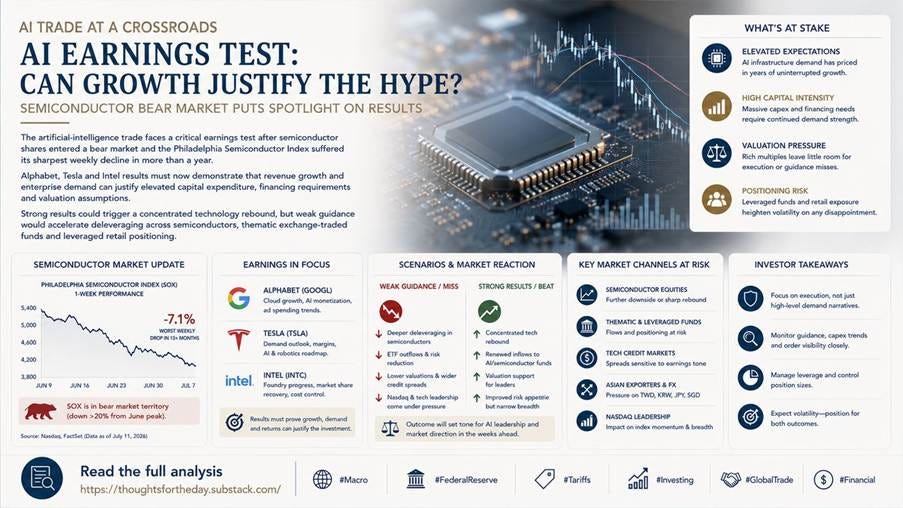
The artificial-intelligence trade faces a critical earnings test after semiconductor shares entered a bear market and the Philadelphia Semiconductor Index suffered its sharpest weekly decline in more than a year. Alphabet, Tesla and Intel results must now demonstrate that revenue growth and enterprise demand can justify elevated capital expenditure, financing requirements and valuation assumptions. Strong results could trigger a concentrated technology rebound, but weak guidance would accelerate deleveraging across semiconductors, thematic exchange-traded funds and leveraged retail positioning.
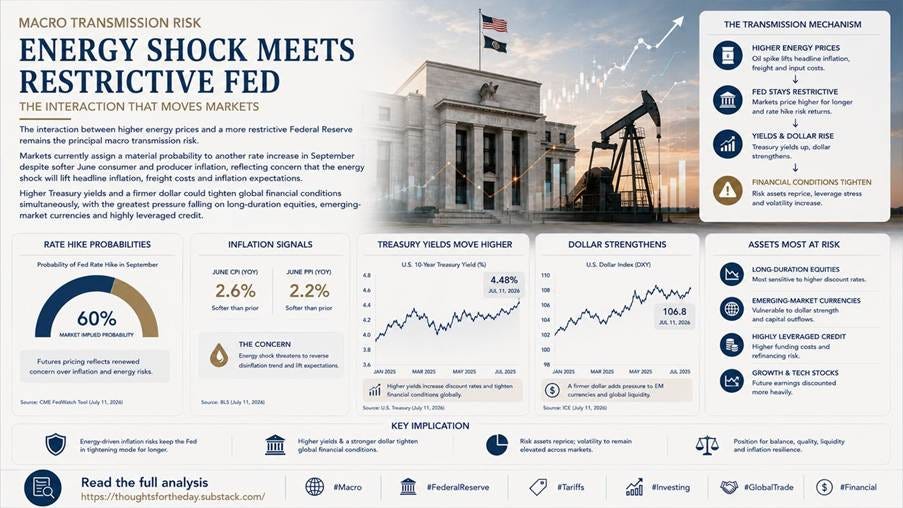
The interaction between higher energy prices and a more restrictive Federal Reserve remains the principal macro transmission risk. Markets currently assign a material probability to another rate increase in September despite softer June consumer and producer inflation, reflecting concern that the energy shock will lift headline inflation, freight costs and inflation expectations. Higher Treasury yields and a firmer dollar could tighten global financial conditions simultaneously, with the greatest pressure falling on long-duration equities, emerging-market currencies and highly leveraged credit.
The dominant macro driver is the contest between fragile Middle East diplomacy and the inflationary consequences of materially impaired Gulf energy flows. Equities are attempting to stabilise as oil retreats from its latest peak, yet government bonds and the dollar continue to price a meaningful risk that the energy shock becomes persistent rather than temporary. The unresolved market tension is that equity valuations still reflect resilient earnings and controlled inflation, while crude oil, long-dated yields and Federal Reserve pricing increasingly reflect a higher-for-longer regime. Gold’s recovery above four thousand dollars, alongside a stronger dollar and rising real yields, further indicates that geopolitical hedging and monetary-policy risk are being expressed simultaneously rather than through a conventional risk-off pattern.
Positioning remains vulnerable because investors entered the latest escalation with concentrated exposure to artificial-intelligence equities, long-duration assets and carry strategies dependent on stable volatility. The rebound in Asian technology shares suggests short covering and tactical bargain hunting, but it does not yet confirm that institutional deleveraging has ended. Scenario asymmetry remains unfavourable: successful diplomacy could remove part of the oil premium and support equities, yet renewed disruption through Hormuz or the Red Sea would affect commodities, rates, foreign exchange and credit at the same time. The most durable allocation shift is therefore likely to favour energy security, defence, short-duration credit and inflation-linked assets over unprofitable technology, highly leveraged cyclicals and energy-import-sensitive emerging markets.
ASIAN EQUITIES REBOUND AS OIL EASES AND CHIP SHORTS COVER
Key Details: Asian shares advanced as easing crude prices encouraged investors to rebuild risk exposure after three consecutive sessions of losses. Japan’s Nikkei rose more than one percent after reopening from a holiday, while South Korean technology shares produced a stronger rebound as investors covered bearish semiconductor positions ahead of major United States technology earnings.
Impact Assessment: The move reflects tactical positioning rather than a broad restoration of confidence in the artificial-intelligence cycle. Semiconductor equities and regional currencies can extend gains if United States earnings validate demand, but higher Treasury yields and oil volatility remain constraints. A disappointing earnings outlook would probably renew exchange-traded-fund outflows and strengthen defensive demand for the dollar and sovereign bonds.
US STOCKS DIP AS OIL AND YIELDS OVERRIDE CHIP REBOUND AHEAD OF PIVOTAL BIG TECH EARNINGS WEEK
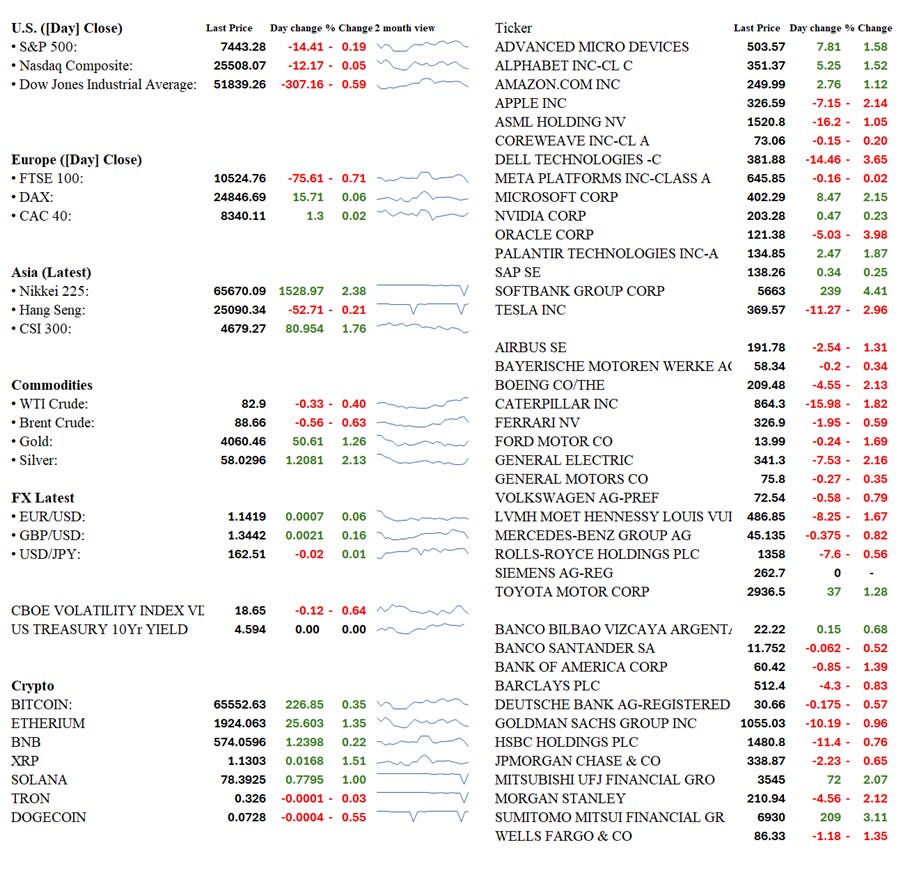
Key Details: The Dow fell 0.6%, the S&P 500 lost about 0.2% and the Nasdaq ended marginally lower after surrendering an early technology-led advance, with chip stocks trimming gains ahead of Big Tech earnings and oil volatile after touching $90 amid US-Iran attacks. Rising Treasury yields and uncertainty surrounding the United States-Iran conflict outweighed bargain hunting in semiconductor and artificial-intelligence infrastructure shares.
Impact Assessment: The failed intraday rebound shows investors remain willing to reduce technology exposure into strength, with the market balanced between war-driven inflation risk and an earnings season strong enough to absorb it. With positioning cautious after last week’s semiconductor rout, this week’s mega-cap results are the swing factor for whether indices re-test highs or extend the correction.
GLOBAL SHIPPING COSTS REMAIN ELEVATED AS SECURITY RISKS PERSIST
Key Details: Freight markets continued pricing elevated insurance premiums and longer voyage times as shipping companies avoided higher-risk transit routes through the Middle East. Diversions around Africa continue extending delivery times and increasing transportation expenses for global manufacturers.
Impact Assessment: Rising shipping costs feed directly into imported inflation while increasing working-capital requirements across international supply chains. Logistics companies may benefit from higher freight rates, but manufacturers, retailers and consumer sectors remain exposed to additional margin pressure.
US-IRAN CONFLICT ENTERS TENTH DAY OF STRIKES AS TRUMP VOWS RETALIATION AND MEDIATORS PUSH TEN-DAY TRUCE
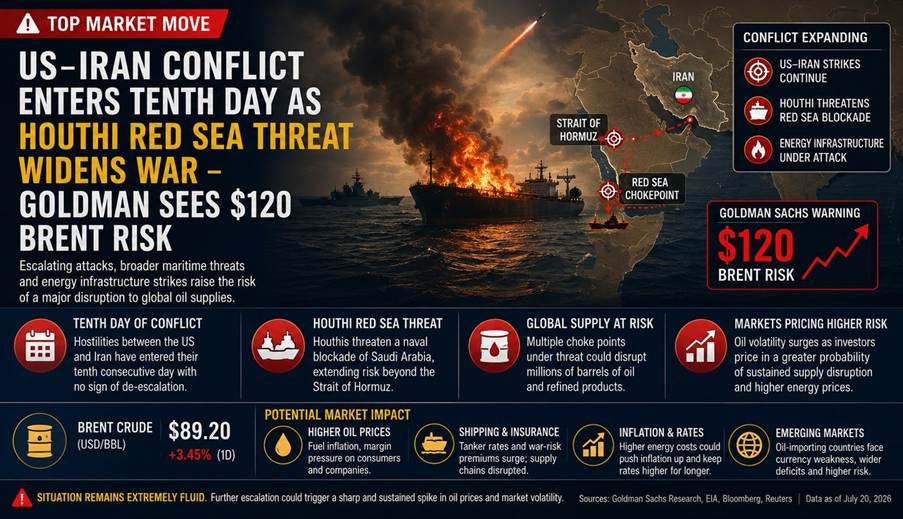
Key Details: US Central Command announced its tenth day of strikes against Iran, hitting military command centres with explosions reported at Bandar Abbas, Sirik Island and Qeshm, while Iran attacked US sites in Kuwait, Bahrain and Jordan and declared itself in full-scale war with the United States. Trump threatened Tehran repeatedly over the death of American soldiers as mediators proffered a ten-day truce; markets took the news in stride, with oil edging lower and stocks rising on a chip rally, while Goldman expects Brent to top $120 if Hormuz disruptions persist.
Impact Assessment: The conflict has moved from tit-for-tat exchanges to sustained attrition with US casualties, raising the political cost of de-escalation for Washington. The divergence between escalating headlines and softening prices signals the war premium is fully priced pending a genuine supply break — complacency is asymmetric, as the equity rally rests on an energy assumption that one supply disruption could invalidate.
CEASEFIRE PROPOSAL OFFERS TEMPORARY WINDOW FOR DE-ESCALATION
Key Details: Regional mediators have proposed a ten-day ceasefire designed to create conditions for broader negotiations between Washington and Tehran. Financial markets have responded cautiously, recognising that previous diplomatic efforts have broken down quickly amid renewed military activity.
Impact Assessment: A sustained ceasefire would likely reduce geopolitical premiums across oil, gold and defence sectors while supporting global equities. Failure of negotiations would reverse recent market gains and reinforce defensive institutional positioning.
HOUTHIS DECLARE MARITIME EMBARGO AGAINST SAUDI ARABIA, EXTENDING ENERGY RISK BEYOND HORMUZ
Key Details: Yemen’s Iran-aligned Houthi movement declared a maritime embargo against Saudi Arabia, which has been diverting millions of barrels per day through its Red Sea pipeline terminal — a crucial relief valve for global crude during the war. The group has repeatedly threatened to close the Bab el-Mandeb Strait, widening the potential disruption zone beyond the Strait of Hormuz toward Red Sea and Arabian shipping routes while United States and Iranian forces continue exchanging attacks.
Impact Assessment: A credible second chokepoint threat is the most bullish structural development for oil since the Hormuz disruption began, raising tanker rates, war-risk insurance and refinery feedstock costs even without a complete closure. If Red Sea exports are impaired while Hormuz remains constrained, the market loses its principal workaround, sharply raising the probability of $100-plus scenarios and compressing margins across transport, chemicals and consumer sectors.
IRAN STRIKES TANKERS IN HORMUZ AS SHIPPING TRAFFIC FALLS STEEPLY
Key Details: Iran’s Revolutionary Guard said it attacked two supertankers transiting Hormuz with transponders off, and ADNOC reported two tankers hit by projectiles, killing one mariner. Ship trackers observed a steep fall in strait traffic, though the US Energy Department said 8.5 million barrels transited on a single recent day.
Impact Assessment: Tanker targeting drives war-risk insurance premia and effectively rations transit capacity even without formal closure. Roughly a fifth of global oil supply historically moved through Hormuz; partial functionality sustains volatility rather than resolving it, benefiting shipping rates, alternative-route infrastructure and non-Gulf producers.
STRAIT OF HORMUZ REMAINS THE WORLD’S MOST IMPORTANT ENERGY CHOKEPOINT
Key Details: Commercial shipping continues through the Strait of Hormuz under heightened military protection, although operators remain cautious as security risks persist. Energy traders continue monitoring tanker movements for any signs of disruption to global crude exports.
Impact Assessment: Even limited disruption could rapidly tighten global oil supplies and increase freight costs. Energy producers would benefit, while airlines, manufacturers, transport companies and energy-importing economies would face renewed inflationary pressure and weaker growth prospects.
RED SEA SHIPPING ROUTES REMAIN UNDER HEIGHTENED SECURITY RISK
Key Details: Commercial shipping companies continue avoiding higher-risk Red Sea transit routes following ongoing Houthi threats and regional military activity. Alternative routes around southern Africa continue increasing delivery times and transportation costs.
Impact Assessment: Higher logistics costs contribute to global goods inflation while supporting shipping companies and freight operators. Extended disruption would place additional pressure on manufacturing margins, inventories and consumer prices across Europe and Asia.
IRANIAN STRIKES DAMAGE KUWAIT POWER AND DESALINATION INFRASTRUCTURE
Key Details: Kuwait’s energy ministry said an Iranian attack damaged a facility and sparked a fire affecting a large number of electricity generating units. Kuwait is heavily dependent on desalination for drinking water, and analysts had long feared Iran would strike infrastructure critical to civilian life in the Gulf.
Impact Assessment: Targeting civilian-critical infrastructure crosses an escalation threshold that increases pressure on Gulf states to seek accommodation or deepen US protection. It also widens the investable risk lens beyond oil to regional utilities, desalination, grid resilience and reconstruction spending across the GCC.
US SOLDIER KILLED IN IRAQ DURING CONTROLLED DETONATION OF IRANIAN DRONE
Key Details: A US soldier was killed in northern Iraq during a controlled detonation of a downed Iranian drone, one of the casualties prompting Trump to vow to hit Iran very hard in honour of killed personnel.
Impact Assessment: American fatalities are the single strongest escalation catalyst in this conflict. Each casualty narrows the administration’s political space for accepting mediated off-ramps, extending the expected duration of strikes and, by extension, the duration of the oil and defence-sector risk premium.
UNITED STATES STRENGTHENS REGIONAL MILITARY POSTURE
Key Details: The United States maintained an elevated military presence throughout the Gulf, deploying additional naval and air assets to protect commercial shipping and deter further regional escalation. Allied nations continue coordinating maritime security operations.
Impact Assessment: Increased military deployments reinforce market expectations that geopolitical risks will remain elevated even if short-term diplomacy succeeds. Defence companies continue benefiting from stronger procurement expectations, while energy markets remain sensitive to operational developments.
WASHINGTON SIDELINES ISRAEL IN LATEST ESCALATION WITH IRAN
Key Details: Israeli sources told CNN the Trump administration does not want Israel involved in the current fighting over concerns of losing control of the conflict, even as Israel’s military chief said forces are prepared to immediately resume combat against anyone who harms the country.
Impact Assessment: US management of escalation as a bilateral US-Iran matter reduces the probability of uncontrolled multi-front expansion, but concentrates decision risk in Washington. For markets, it means conflict trajectory now maps closely to US domestic politics and casualty tolerance rather than Israeli operational tempo.
ISRAELI FORCES TO BEGIN FIRST LEBANON PULLOUT AS WASHINGTON SETS DEPLOYMENT PLAN
Key Details: Washington listed three locations where Lebanon’s military is to deploy, with Israeli forces reportedly making a first withdrawal from one area on Tuesday, though the timeline for full withdrawal remains unclear.
Impact Assessment: A managed Israeli drawdown in Lebanon would remove one front from a multi-theatre conflict and signal Washington’s ability to compartmentalize the region. Progress here modestly reduces the tail risk of Hezbollah involvement, though the Iran conflict remains the dominant driver of regional risk pricing.
IRAQ SIGNS 48 DEALS WORTH OVER $60 BILLION WITH US COMPANIES, INCLUDING HORMUZ-BYPASS PIPELINE PLANS
Key Details: Iraq signed 48 deals with US companies worth over $60 billion per Reuters, including agreements with Chevron, ExxonMobil and Shell on a new pipeline to bypass the Strait of Hormuz, alongside healthcare, communications and infrastructure projects. Goldman Sachs estimates single-country pipelines take at least two and a half years to build, and these would cross two or more nations, so viable alternatives remain distant.
Impact Assessment: The deals mark a strategic realignment of Iraq toward Washington and a long-term architecture to strip Iran of its chokepoint leverage — bearish for the war premium on a multi-year horizon, irrelevant to near-term supply. China, the Gulf’s largest customer, loses influence over routes it depends on, while US majors gain premier reserve access at geopolitically motivated terms.
UKRAINE LAUNCHES MASS DRONE ATTACK ON MOSCOW AND STRIKES 20 RUSSIAN VESSELS INCLUDING 17 TANKERS
Key Details: Ukraine launched hundreds of drones toward Moscow a day after a massive Russian ballistic missile barrage, and released video of strikes on 20 Russian vessels in the Black Sea, including 17 oil tankers. Zelenskyy described the intensified strikes on Russian energy infrastructure — which have caused fuel shortages inside Russia — as a campaign of long-range sanctions.
Impact Assessment: Ukraine’s systematic targeting of Russian export logistics and shadow-fleet tankers adds a second supply-side risk channel to oil markets already stressed by the Gulf. It tightens seaborne Russian crude availability, supports freight and insurance costs, and reinforces the structural case for non-Russian, non-Gulf barrels.
RARE KYIV PROTESTS ERUPT OVER ZELENSKYY’S DISMISSAL OF DEFENCE MINISTER
Key Details: Protests broke out in central Kyiv over the dismissal of Ukraine’s defence minister, with the outgoing minister publicly accusing military chief Oleksandr Syrskyi of having split the country.
Impact Assessment: Visible fractures in Ukraine’s wartime leadership arrive at a delicate moment for Western support and battlefield momentum. Political instability in Kyiv complicates allied planning and could influence negotiations dynamics, though near-term market impact remains secondary to the energy-infrastructure strike campaign.
EUROPE ACCELERATES DEFENCE SPENDING PROGRAMMES
Key Details: European governments continue expanding defence budgets in response to persistent geopolitical instability and growing security commitments. Procurement programmes remain focused on missile defence, surveillance, cyber capabilities and ammunition production.
Impact Assessment: Sustained defence spending supports aerospace, industrial manufacturing and advanced technology companies while increasing long-term government borrowing requirements. The shift also reinforces structural investment themes linked to European strategic autonomy.
GLOBAL DEFENCE PROCUREMENT REMAINS ON AN UPWARD TRAJECTORY
Key Details: Governments across North America, Europe and parts of Asia continue increasing long-term defence procurement programmes in response to persistent geopolitical uncertainty. Spending priorities include missile defence, unmanned systems, cyber security and advanced surveillance capabilities.
Impact Assessment: Defence contractors, aerospace manufacturers and specialist technology suppliers continue benefiting from improving order books and stronger earnings visibility. Increased military expenditure also supports industrial production while placing additional pressure on long-term government fiscal balances.
UNITED STATES–CHINA TECHNOLOGY RIVALRY REMAINS A STRUCTURAL MARKET DRIVER
Key Details: Strategic competition between Washington and Beijing continues shaping investment decisions across semiconductors, artificial intelligence, advanced manufacturing and critical technologies. Export controls, investment restrictions and supply-chain diversification remain central policy priorities for both governments.
Impact Assessment: Ongoing technology decoupling supports domestic semiconductor investment and strategic manufacturing while increasing costs across global supply chains. Companies with diversified production footprints remain better positioned than businesses heavily dependent on a single jurisdiction.
EUROPEAN ENERGY SECURITY REMAINS A LONG-TERM POLICY PRIORITY
Key Details: European governments continue expanding energy-security initiatives through infrastructure investment, liquefied natural gas capacity and renewable-energy deployment following renewed geopolitical instability in the Middle East. Policymakers remain focused on reducing long-term dependence on vulnerable import routes.
Impact Assessment: Increased investment supports utilities, engineering firms, infrastructure developers and renewable-energy suppliers while reinforcing long-term demand for strategic metals. Large capital programmes are also likely to increase public borrowing and infrastructure financing activity.
SANCTIONS PRESSURE CONTINUES TO RESHAPE GLOBAL TRADE FLOWS
Key Details: Existing sanctions and export restrictions continue redirecting commodity flows, shipping patterns and financial transactions across multiple regions. Businesses remain adapting procurement strategies to improve resilience against further geopolitical disruption.
Impact Assessment: Structural shifts in trade routes benefit logistics providers, shipping operators and alternative commodity exporters while increasing operating costs for multinational manufacturers. Continued fragmentation is likely to reduce supply-chain efficiency and maintain upward pressure on global inflation.
CRITICAL MINERAL SECURITY MOVES HIGHER UP GOVERNMENT AGENDAS
Key Details: Governments continue accelerating efforts to secure domestic and allied supplies of lithium, rare earths, graphite and other critical minerals essential for defence systems, electric vehicles and artificial-intelligence infrastructure. Investment incentives and strategic partnerships remain central policy tools.
Impact Assessment: Long-term support for domestic mining and refining benefits diversified resource companies and strategic-material producers while reducing reliance on concentrated supply chains. Competition for critical minerals is expected to remain an important driver of geopolitical and industrial policy.
GLOBAL SUPPLY CHAINS CONTINUE ADAPTING TO PERSISTENT GEOPOLITICAL RISK
Key Details: Multinational companies continue relocating production, increasing inventories and diversifying supplier networks to improve resilience against geopolitical disruption. Corporate capital expenditure increasingly reflects supply-chain security rather than purely cost optimisation.
Impact Assessment: Supply-chain diversification supports industrial investment, automation providers and logistics infrastructure while increasing operating costs during the transition period. Businesses capable of executing flexible manufacturing strategies are likely to outperform those dependent on concentrated production networks.
FED’S WARSH ENDS FORWARD GUIDANCE AS HIKE ODDS COLLAPSE ON SOFT CPI
Key Details: Chair Kevin Warsh said the Fed will no longer provide traditional forward guidance, stressed price stability as the primary objective and dismissed political pressure, after rates were held at 3.50%-3.75% with growing support for hikes. June CPI fell 0.4% on the month, bringing annual inflation to 3.5% versus 3.8% expected, cutting July hike odds to 17% from 42%.
Impact Assessment: The soft CPI print bought the Fed room to stay on hold despite war-driven energy costs, but the abandonment of forward guidance raises policy uncertainty premia across the curve. Every oil spike now transmits directly into hike probability repricing, making crude the de facto Fed indicator.
FEDERAL RESERVE RATE-HIKE RISK RISES WITH ENERGY-DRIVEN INFLATION FEARS
Key Details: Interest-rate markets continue to price a significant probability of a September Federal Reserve increase despite softer June inflation data. Policymakers have warned that higher oil, import and transportation costs could prevent inflation from returning sustainably toward target, while the next Federal Reserve meeting is still expected to deliver no immediate change in the policy rate.
Impact Assessment: A higher-for-longer policy path supports the dollar and front-end Treasury yields but creates pressure on growth equities, lower-quality credit and emerging-market carry trades. Banks may benefit from wider lending spreads, although weaker loan demand and rising defaults could offset that advantage. A renewed oil surge would increase the risk that markets price multiple tightening steps rather than a single insurance increase.
TREASURY YIELDS RISE AND DOLLAR HOLDS FIRM AS WAR-DRIVEN INFLATION RISK OVERRIDES SOFTER DATA
Key Details: Treasury yields moved higher and remained close to recent highs as investors focused on energy-driven inflation risks rather than recent moderation in consumer and producer prices, with long-dated yields reflecting expectations that inflation may prove more persistent if oil prices remain elevated through the third quarter. The dollar held firm amid the US-Iran conflict, while Steel Dynamics reported earnings below expectations at $3.69 as industrial results stay mixed against the macro backdrop.
Impact Assessment: Higher real yields tighten financial conditions across equity, housing and corporate credit markets, with long-duration technology particularly sensitive while banks benefit from wider interest margins. The firm dollar reflects conviction that war-driven energy inflation constrains Fed easing regardless of soft CPI prints, simultaneously pressuring gold, emerging markets and commodity importers — the key headwind for metals until the rate outlook softens.
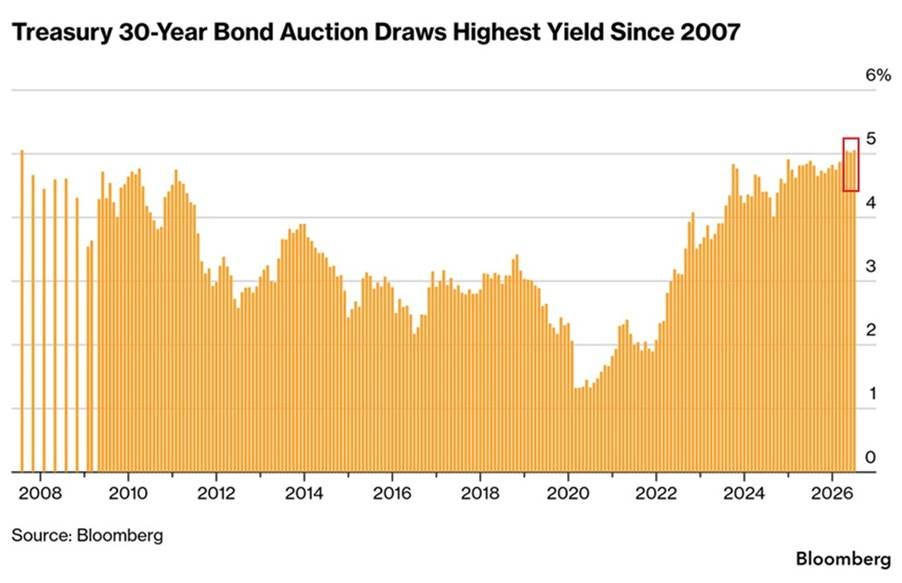
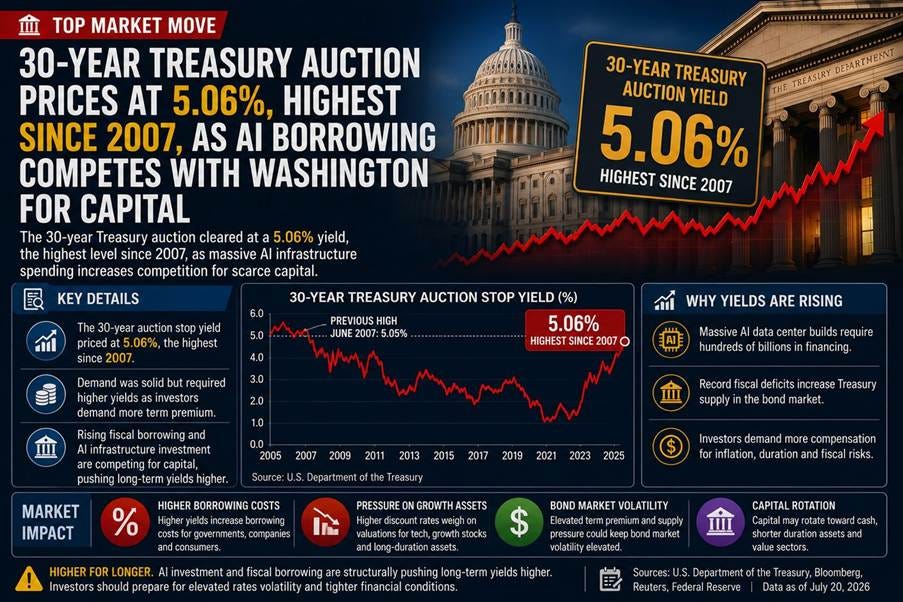
30-YEAR TREASURY AUCTION PRICES AT 5.06%, HIGHEST SINCE 2007, AS AI BORROWING COMPETES WITH WASHINGTON FOR CAPITAL
Key Details: The US sold 30-year Treasury bonds at a 5.06% yield Tuesday, the highest auction result since 2007 and up from roughly 2.00% in early 2022, with the 30-year yield back above 5.00% though below May’s 5.20% peak. Heavier Treasury supply, inflation risk and future borrowing concerns are forcing higher compensation, while record tech debt issuance for AI infrastructure competes with the government for the same capital pool.
Impact Assessment: The AI boom and the US fiscal expansion are now bidding against each other for long-duration capital, structurally repricing the entire curve higher. Sustained 5%-plus long yields compress equity multiples, raise the hurdle rate on every AI capex dollar, and pressure gold — the sovereign debt spiral thesis is moving from tail risk toward base case.
UNITED STATES RETAIL SPENDING CONTINUES TO SHOW RESILIENCE
Key Details: Recent consumer spending data continued indicating resilient household demand despite elevated borrowing costs and persistent inflation concerns. Labour-market conditions remain supportive, although rising financing costs are beginning to weigh on discretionary purchases in several consumer categories.
Impact Assessment: Consumer resilience supports corporate earnings across retail, travel and financial services while reducing immediate recession risks. However, stronger demand also risks keeping inflation above target, reinforcing expectations that monetary policy will remain restrictive for longer.
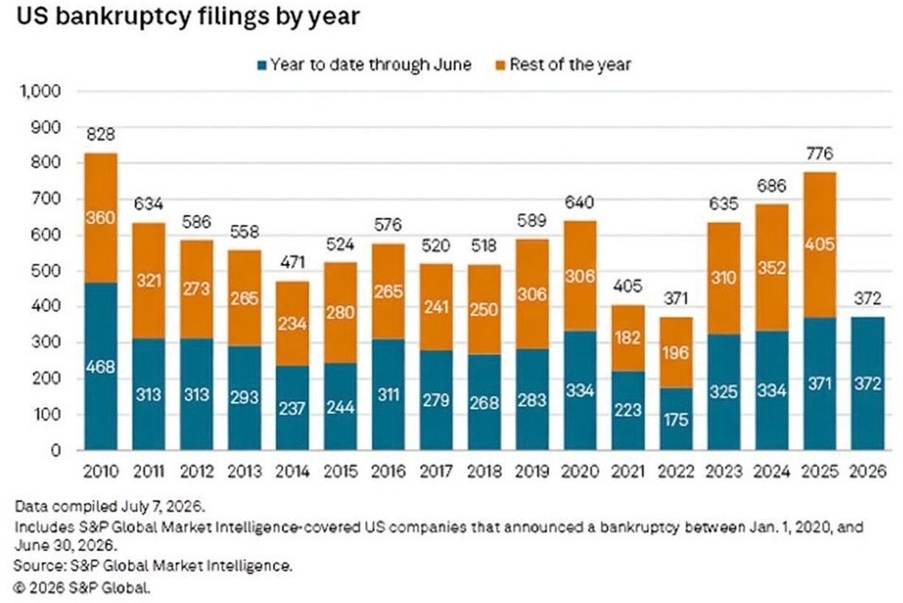
US LARGE-COMPANY BANKRUPTCIES HIT 16-YEAR HIGH IN FIRST HALF
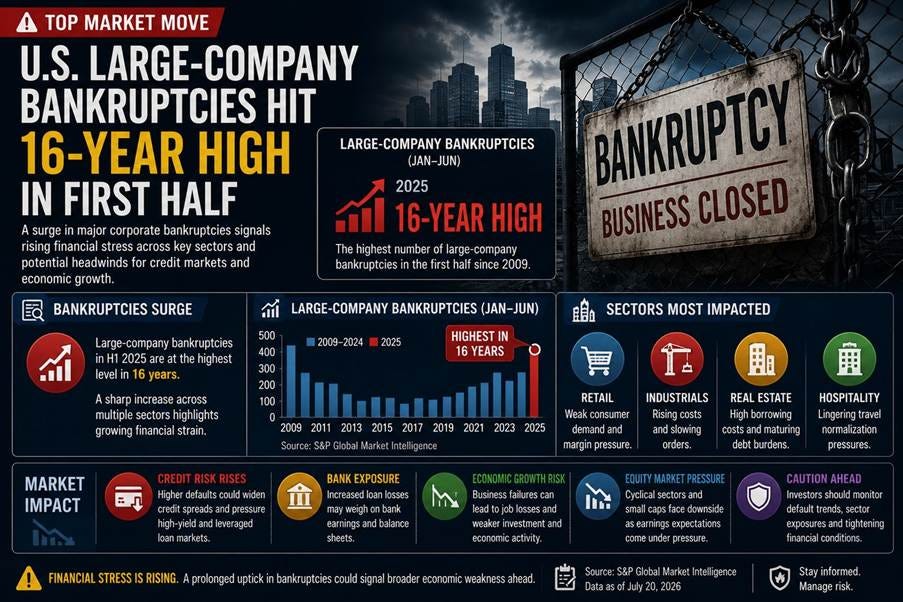
Key Details: The US recorded 372 large-company bankruptcies in the first six months of 2026, the highest first-half total in 16 years, as elevated rates, war-driven input costs and softening demand converge on leveraged balance sheets.
Impact Assessment: A bankruptcy wave exceeding anything since the GFC aftermath signals the corporate refinancing wall has arrived while the Fed is constrained from cutting. Credit stress of this breadth typically precedes labour-market deterioration and wider high-yield spreads — a warning against reaching for leveraged cyclicals and a tailwind for quality balance sheets and distressed-focused capital.
US FORECLOSURES UP 21% YEAR-ON-YEAR AS HOUSEHOLD STRESS BUILDS
Key Details: Some 227,500 properties have filed for foreclosure so far this year, a 21% increase from last year and 30% above levels two years ago, as elevated mortgage rates, insurance costs and fuel prices squeeze household balance sheets.
Impact Assessment: Foreclosure growth compounding at this pace marks the transition from corporate to household credit stress, historically the later and more damaging phase of a tightening cycle. It pressures regional banks and mortgage credit, feeds housing inventory into a frozen market, and reinforces the consumer trade-down dynamic already visible in retail and restaurant earnings.

US TO IMPOSE 50% TARIFF ON CANADIAN MILK AND BEER
Key Details: The US will impose a new 50% tariff on selected Canadian goods, including milk and beer, citing unfair treatment of American products.
Impact Assessment: Reopening a trade front with America’s largest trading partner during a war-driven inflation episode adds a self-inflicted price pressure and injects fresh uncertainty into USMCA supply chains. Consumer staples with cross-border sourcing face margin friction, and retaliation risk extends to US agriculture — a reminder that tariff policy remains a live volatility source beyond China.
EUROPEAN CENTRAL BANK SIGNALS SEPTEMBER DECISION REMAINS DATA DEPENDENT
Key Details: European Central Bank officials continue to indicate that policy decisions remain driven by incoming inflation and growth data after maintaining a cautious stance amid rising energy costs. While recent inflation readings have moderated, higher imported energy prices and weaker regional growth have complicated the outlook ahead of the September meeting.
Impact Assessment: A prolonged restrictive policy stance would support the euro and European sovereign yields while increasing financing pressure on highly leveraged companies. Banks may benefit from stronger lending margins, but cyclical equities and commercial property remain exposed if growth continues to soften alongside tighter financial conditions.
EUROZONE INFLATION EASES TO 2.8% AS ECB TIGHTENING PATH STAYS LIVE
Key Details: Eurozone inflation was confirmed at 2.8% in June, down from 3.2% in May and the lowest since February, before the Iran war disrupted energy supplies, though still above the ECB’s 2% target. The ECB delivered its first rate increase since 2023 in June, and markets expect at least one more hike this year despite a Q1 contraction.
Impact Assessment: Europe faces the worst combination in the G10: energy-imported inflation forcing tightening into a contracting economy. The June cooling relieves some pressure, but a renewed oil spike would trap the ECB between stagnation and price stability — a structurally bearish setup for European cyclicals versus exporters.
EU TO IMPOSE UNILATERAL TRADE DEFENCES AGAINST CHEAP CHINESE IMPORTS
Key Details: The European Commission will act against cheap Chinese imports by adopting unilateral defence measures before the October deadline set by trade Commissioner Maroš Šefčovič to make progress in negotiations with China, the EU’s trade enforcer told MEPs.
Impact Assessment: Europe is converging with Washington on trade confrontation just as China’s record surpluses peak. Tariff and quota action would disrupt goods flows in autos, steel and clean tech, add to European inflation pressure, and accelerate supply-chain regionalization — reinforcing the critical-minerals and reshoring investment themes.
EUROPEAN HEATWAVE DISRUPTS ENERGY LOGISTICS AS RHINE LEVELS FALL
Key Details: Europe’s heatwave is disrupting energy and transport, with low Rhine river levels restricting barge traffic and driving up shipping costs for fuel, coal and other goods.
Impact Assessment: A climate-driven logistics squeeze is stacking onto the Gulf supply disruption at the worst possible moment for European energy costs. Restricted Rhine capacity historically feeds directly into German industrial input prices, compounding the ECB’s inflation problem and the continent’s competitiveness erosion.
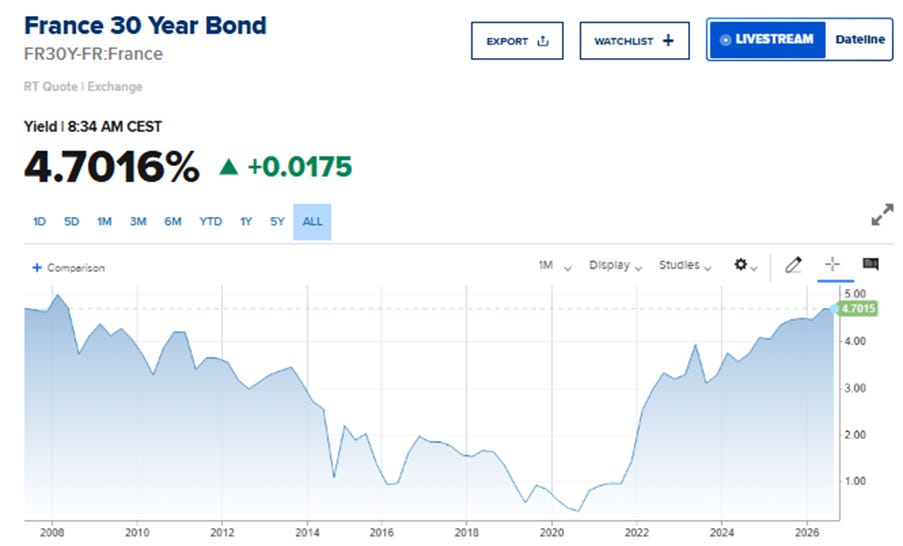
FRANCE’S 30-YEAR YIELD HITS HIGHEST LEVEL SINCE THE GLOBAL FINANCIAL CRISIS
Key Details: France’s 30-year government bond yield has risen to its highest level since the Global Financial Crisis, as war-driven inflation, ECB tightening and persistent fiscal deficits compound pressure on the eurozone’s second-largest sovereign borrower.
Impact Assessment: France is emerging as the eurozone’s fiscal fault line, with GFC-era long yields raising debt-service costs on a deficit trajectory Brussels has already flagged. Widening French spreads pressure banks holding sovereign paper and revive fragmentation risk across the bloc — a structural constraint on how far the ECB can tighten into the energy shock.
BURNHAM TAKES POWER PLEDGING RADICAL ECONOMIC RESET, NAMES HEALEY CHANCELLOR IN DEFENSE SIGNAL
Key Details: Andy Burnham pledged his first action as prime minister would be securing cost-of-living breathing space, vowing to be Britain’s most radical leader in decades with a new economic model ending what he called failed political consensus, with detailed spending plans due in the coming budget. He named John Healey Chancellor, an appointment read as a signal of intent on defence, with Healey stressing fiscal control and credibility while the Treasury has agreed to lift defence spending to 2.68% of output by 2030.
Impact Assessment: A self-declared radical program colliding with a chancellor preaching fiscal credibility is the central tension gilt markets will price immediately. Defence-heavy spending commitments alongside cost-of-living intervention imply either higher borrowing or higher taxes; sterling and long gilts are the pressure valves, while UK defence contractors are the clearest beneficiaries.
CHINA CONTINUES TO BALANCE ECONOMIC STABILITY WITH STRATEGIC COMPETITION
Key Details: Chinese policymakers continue implementing targeted measures to support domestic growth while maintaining strategic investment across advanced manufacturing, semiconductors and artificial intelligence. Officials remain cautious about introducing broad stimulus, preferring sector-specific support alongside industrial policy initiatives.
Impact Assessment: Continued targeted stimulus supports industrial metals, Asian equities and selected technology supply chains. More restrained policy, however, leaves global growth expectations dependent on private-sector demand, increasing sensitivity across commodity markets, export-oriented economies and multinational corporate earnings.
CHINA MISSES GROWTH TARGET FOR FIRST TIME SINCE COVID EVEN AS EXPORTS BOOM
Key Details: China’s economy grew 4.3% in Q2, short of the 4.5% expected, missing its target for the first time since Covid as weak domestic demand and the property downturn persisted. June exports nonetheless rose 27% year on year — the strongest since October 2021 — on booming AI hardware demand and a rush to beat anticipated US tariff hikes, with shipments hitting a record $412 billion.
Impact Assessment: China is exporting its way around domestic weakness, generating record surpluses that guarantee escalating trade friction with the US and Europe. The growth miss raises stimulus odds — supportive for copper and industrial metals — while the export surge underlines Chinese dominance of AI-adjacent manufacturing supply chains.
CHINA’S SAUDI CRUDE IMPORTS PLUNGE 38% TO LOWEST SINCE 2018
Key Details: China’s crude imports from Saudi Arabia fell 38% month-on-month in June to the lowest since 2018, while shipments from Oman also slumped. Records showed no purchases from Venezuela, Iran or the US.
Impact Assessment: The collapse in Gulf-sourced Chinese buying quantifies the Hormuz disruption’s demand-side transmission and confirms Iranian barrels have effectively vanished from the market. China drawing on reserves and alternative suppliers cushions prices now, but stockpile depletion sets up deferred restocking demand — a bullish overhang for crude once flows normalize.
JAPAN LAUNCHES WORLD’S FIRST NATIONAL AI INFRASTRUCTURE PROGRAMME WITH NVIDIA
Key Details: Japan’s government and industrial leaders launched the world’s first national AI infrastructure with Nvidia, while the company expanded its Agent Toolkit with new Omniverse libraries for building simulation-ready worlds.
Impact Assessment: Sovereign AI is becoming a distinct demand pillar independent of hyperscaler capex cycles. State-backed national programmes lengthen and de-risk Nvidia’s revenue visibility, and pull through demand for power, grid equipment, memory and data-centre construction in each participating economy — reinforcing the energy-AI investment nexus.
SOUTH KOREA’S EARLY EXPORTS SURGE 63% ON AI DEMAND
Key Details: South Korea’s early-month exports jumped 63% from a year earlier as AI demand continued to fuel growth.
Impact Assessment: Korea’s export data is the cleanest real-time proxy for AI hardware demand, and a 63% surge emphatically contradicts the capex-fatigue narrative behind the recent chip selloff. It supports memory and HBM names into this week’s earnings and suggests the semiconductor correction was positioning-driven rather than a demand signal.
DOLLAR HOLDS FIRM AS HIGHER-FOR-LONGER FED EXPECTATIONS PERSIST
Key Details: The United States dollar remained well supported as investors continued pricing a meaningful probability that the Federal Reserve will need to maintain restrictive monetary policy in response to elevated energy prices and resilient economic activity. Treasury yields stayed close to recent highs, underpinning broad demand for the dollar against most major currencies.
Impact Assessment: Continued dollar strength tightens global financial conditions by increasing funding costs for emerging markets and commodity importers. Export-oriented economies may benefit from weaker domestic currencies, while multinational earnings, commodity prices and global risk assets remain sensitive to further appreciation in the dollar.
EURO TRADES STEADILY AS ECB BALANCES INFLATION AND GROWTH RISKS
Key Details: The euro remained relatively stable as markets weighed persistent inflationary pressure from higher energy costs against slowing economic growth across the euro area. Investors continue awaiting further European Central Bank guidance before materially adjusting policy expectations.
Impact Assessment: Stable euro trading reduces near-term volatility across European financial markets, although renewed energy-price increases would likely weaken growth expectations while supporting inflation. The resulting policy uncertainty could increase volatility in sovereign bonds, banking shares and European corporate credit.
IRAN’S RIAL COLLAPSES TO RECORD LOWS AS WAR ECONOMY BITES
Key Details: Iran’s rial has fallen to record lows amid escalating military tensions, with a sharp rise in inflation pushing up the cost of basic necessities and low-income and rural households bearing the brunt.
Impact Assessment: Economic collapse compounds military pressure on Tehran and is the strongest argument that the regime eventually needs a deal — the core bearish-oil scenario. But deteriorating conditions also raise regime-survival stakes, historically a driver of escalation rather than concession, keeping both tails fat.
YEN REMAINS UNDER PRESSURE AS YIELD DIFFERENTIALS WIDEN
Key Details: The Japanese yen remained near multi-decade lows against the United States dollar as wide interest-rate differentials continued to encourage carry-trade positioning. Investors remain alert to the possibility of official intervention should further depreciation become disorderly.
Impact Assessment: Persistent yen weakness supports Japanese exporters but increases imported inflation and raises pressure on household consumption. Any intervention or policy tightening by the Bank of Japan could trigger rapid unwinding of leveraged carry trades, increasing volatility across foreign exchange, global bonds and equity markets.
COPPER STEADIES NEAR $6.25 AS CHILEAN SUPPLY DISRUPTIONS MEET STRUCTURAL AI-DRIVEN DEMAND
Key Details: Copper steadied around $6.25 per pound after sharp volatility, supported by mounting supply concerns: Antofagasta’s first-half production fell 9.5% to 285,000 tonnes, BHP warned Chilean output will decline next year, a powerful storm caused outages across Chile and the IEA flagged tightening sulphuric acid supplies. Structural demand linked to artificial-intelligence infrastructure, electrification projects and global data-centre expansion offset slowing manufacturing activity across parts of Europe and China.
Impact Assessment: The supply side is doing the heavy lifting for copper while war-driven rate fears cap the demand narrative. Producer downgrades from Chile tighten the concentrate market into an already-thin project pipeline, supporting the structural deficit thesis central to critical-minerals positioning, benefiting diversified miners and strengthening the long-term investment case for new mine development even through macro volatility.
GOLD HOLDS ABOVE $4,000 AS SAFE-HAVEN DEMAND OFFSETS RATE PRESSURE
Key Details: Gold traded around $4,016 Monday morning after opening at $4,005.60, rebounding from a sub-$4,000 Friday print despite a weekend that saw three US service members killed. Investors continued allocating toward precious metals as geopolitical uncertainty and inflation risks offset higher Treasury yields and a firm United States dollar, although the metal remains close to nine-month lows and the latest Kitco survey showed Wall Street overwhelmingly bearish near term after repeated tests of $4,000 support.
Impact Assessment: Gold’s failure to rally on war headlines confirms the rate channel is dominating the safe-haven channel, yet holding above $4,000 alongside rising yields still signals unusually broad defensive positioning. The $4,000 level is the key battleground: a decisive break lower would pressure miners, while any Fed pivot or ceasefire-driven yield relief would restore the upside case and reinforce ETF inflows.
GOLD SPECULATORS REBUILD NET LONGS TO HIGHEST SINCE JANUARY
Key Details: Weekly CFTC data showed speculative net long positions in gold at their highest since January, before bullion rolled over. The cohort has often been contrarian, buying during ETF outflows in 2023 and selling during inflows in 2025.
Impact Assessment: Crowded speculative length at the same level that preceded January’s rollover is a caution flag while gold struggles at $4,000 support against a firm dollar. The positioning leaves bullion vulnerable to a washout on any hawkish or ceasefire catalyst — near-term risk skews down even if the structural debasement thesis remains intact.
CHINA’S RARE-EARTH SUPPLY CONTROLS REMAIN A STRATEGIC RISK
Key Details: China continues maintaining tight oversight of strategic rare-earth exports, reinforcing concerns surrounding supply-chain resilience for defence, renewable-energy and advanced technology manufacturers. Governments and corporations remain focused on diversifying refining capacity outside China.
Impact Assessment: Continued export restrictions support prices for strategic materials while encouraging investment in alternative mining and refining projects. Defence contractors, electric-vehicle manufacturers and semiconductor producers remain exposed to supply-chain disruption and higher input costs.
SILVER EXTENDS HISTORIC RUN AS LONDON SQUEEZE PERSISTS
Key Details: Silver gained 4.21% on the week as two-year Treasury yields fell, extending a run built on six years of supply deficits, US stockpiling exceeding 500 million ounces that has drained London inventories, soaring lease rates, extreme premiums and a market in backwardation.
Impact Assessment: Silver’s physical squeeze dynamics are increasingly divorced from gold’s rate-driven weakness, with backwardation signalling genuine scarcity rather than speculative froth. Continued London inventory depletion supports both the metal and producers, and validates silver’s positioning as the tightest of the monetary metals complex.
URANIUM HOLDS NEAR $86 AS NUCLEAR REVIVAL AND STRUCTURAL DEMAND BROADEN
Key Details: Uranium traded at $85.70 per pound, up over 20% year on year, as governments continue supporting nuclear generation to strengthen energy security and meet long-term decarbonisation objectives. Italy became the latest government moving to restore nuclear power, India and several developed economies are progressing reactor expansion plans, US utilities are restarting shuttered plants as the administration pushes new reactor construction, and AI hyperscalers are driving interest in the fuel while utilities allocate from long-term contracts and dozens of startups attract buyers for future output.
Impact Assessment: The consolidation near $86 masks accelerating structural demand from policy reversals in Europe, restarts in the US and data-centre offtake stacking onto an inelastic supply base. The spot lull reflects utility contracting patterns rather than thesis deterioration, keeping accumulation conditions intact for uranium producers, nuclear-fuel suppliers and related infrastructure while reinforcing broader demand for strategic materials.
Commodities
EUROPEAN NATURAL GAS PRICES REMAIN VOLATILE ON LNG SUPPLY RISKS
Key Details: European gas markets remained sensitive to developments in the Middle East as traders assessed potential disruption to global liquefied natural gas shipments. Although physical supply remains uninterrupted, geopolitical uncertainty continues supporting elevated volatility across regional energy contracts.
Impact Assessment: Higher gas prices raise operating costs for chemicals, manufacturing and utilities while supporting energy producers and infrastructure operators. Increased volatility also complicates inflation forecasting for the European Central Bank and could delay expectations for future monetary easing.
OIL RETREATS FROM ONE-MONTH HIGH ABOVE $91 AS CEASEFIRE PROPOSAL OFFSETS TRUMP’S RETALIATION VOW
Key Details: Brent gained about 1.3% to close at $89.22 and WTI advanced 0.9% to $83.23 after Trump said Iran would pay for the deaths of three US service members. Brent briefly topped $91 before paring gains as Iran’s Foreign Ministry confirmed receiving a proposed ten-day ceasefire from international mediators intended to create a path toward a broader agreement with the United States, although continuing military strikes, tanker disruptions and the Houthi threat against Saudi shipping leave the physical-supply outlook highly unstable.
Impact Assessment: Crude remains the key cross-asset switch, trading headline-by-headline between escalation and diplomacy with a substantial war premium intact. Easing prices supported Asian equities and relieved sovereign bonds, but the repricing is vulnerable to reversal: sustained prices near $90 feed inflation expectations and central-bank hawkishness, keeping energy equities bid and pressuring rate-sensitive assets until Hormuz flows normalise.
ENERGY ASPECTS WARNS OIL COULD EXCEED $100 ON HORMUZ SLOWDOWN AND DEPLETED INVENTORIES
Key Details: Amrita Sen of Energy Aspects said a substantial slowdown in Hormuz shipping traffic and depleted global inventories could push oil above $100 per barrel, describing the market as still quite complacent despite the price increase already seen.
Impact Assessment: Low inventory cover means each marginal disruption has outsized price impact. A move through $100 would harden the higher-for-longer rate narrative in both the US and Europe, pressure equity multiples, and accelerate rotation toward energy producers, tankers and inflation hedges within portfolios.
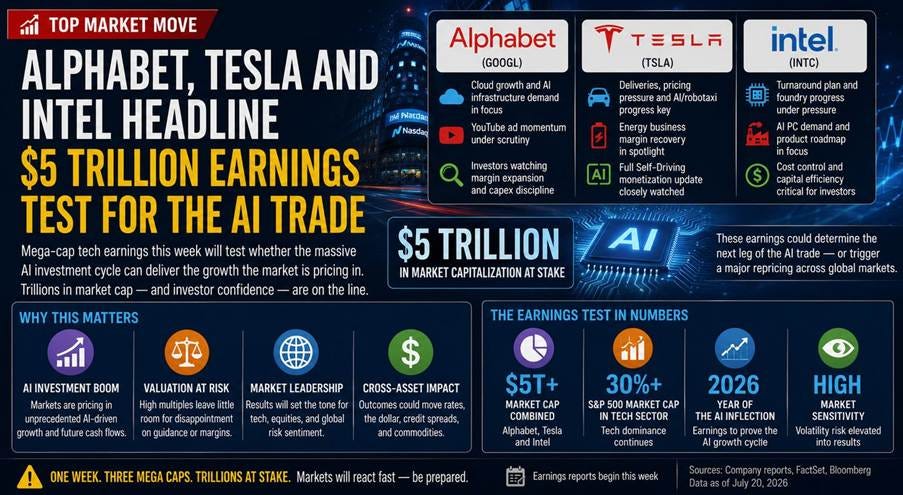
US CRUDE INVENTORIES FALL TO 43 DAYS OF SUPPLY — LOWEST IN 45 YEARS — AS GAS PRICES BREAK BACK ABOVE $4.00
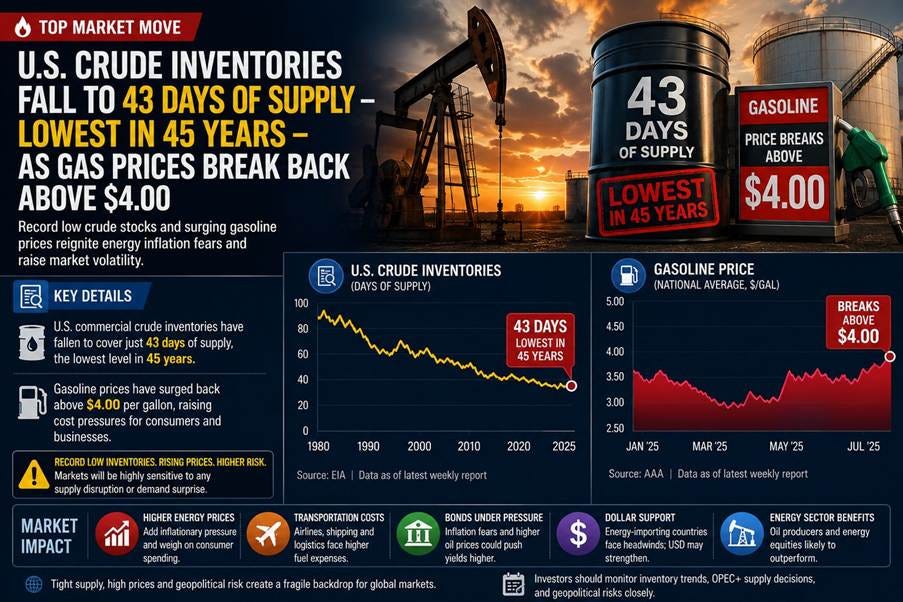
Key Details: US crude oil inventories have fallen to just 43 days of supply, the lowest level in 45 years, as the Hormuz disruption drains stockpiles faster than they can be replenished. Simultaneously, the average US gasoline price officially rose back above $4.00 per gallon as the war reignited and the Memorandum of Understanding with Iran collapsed.
Impact Assessment: Four-decade-low inventory cover removes the buffer that has kept crude’s response to war headlines contained — every future disruption now transmits directly into price. Gasoline above $4.00 is politically radioactive into US midterms and inflationary toxic for the Fed, hardening the higher-for-longer rate path and strengthening the case for energy producers and refiners over rate-sensitive assets.
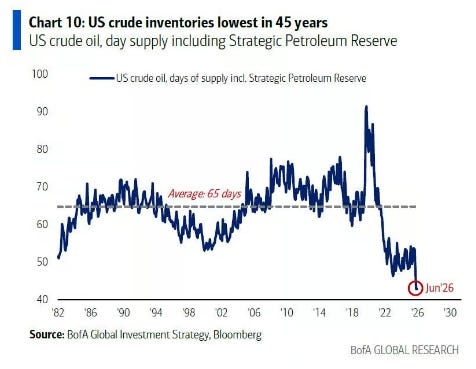
ALPHABET, TESLA AND INTEL HEADLINE $5 TRILLION EARNINGS TEST FOR AI-DRIVEN VALUATIONS
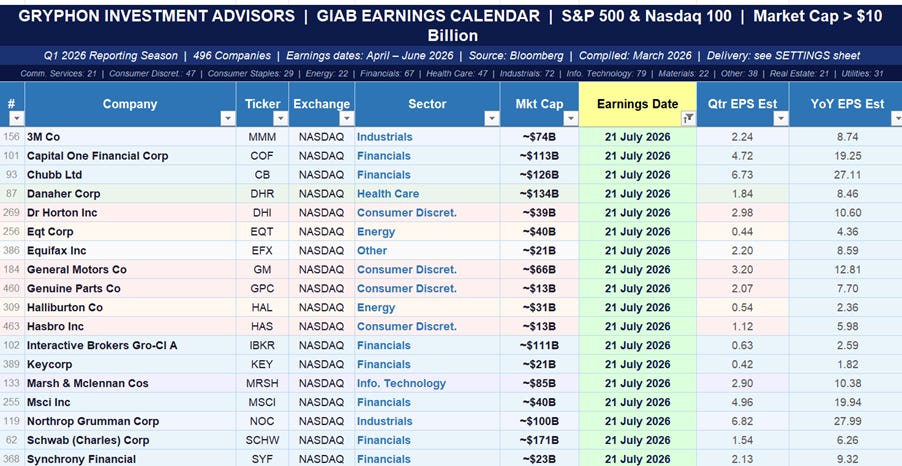
Key Details: Alphabet, Tesla and Intel — together representing well over $5 trillion in market value — report within 48 hours following the recent correction across semiconductor shares, offering a critical read on AI spending, EV demand and the semiconductor recovery. Alphabet reports Wednesday after the close with consensus revenue near $101 billion on accelerating Cloud growth, while Intel follows Thursday with expected EPS of $0.22 on 12.1% revenue growth. The reporting season is expected to determine whether artificial-intelligence investment continues supporting premium market valuations despite rising financing costs.
Impact Assessment: This is the first real test of AI capex at scale, with Alphabet’s $462 billion Cloud backlog and Intel’s 18A yields under scrutiny. Strong results would trigger renewed buying across semiconductor, software and cloud-computing sectors; weak guidance would pressure technology-focused funds, strengthen defensive positioning and determine whether the recent chip selloff was profit-taking or the start of an AI-spending reappraisal.
CHIP STOCKS RECOVER AFTER WORST WEEK IN OVER A YEAR
Key Details: The PHLX Semiconductor Index fell more than 9% last week, with Nvidia down 2% Friday and AMD, Broadcom and Intel lower, though analysts attribute the slump primarily to profit-taking after a prolonged run-up, noting Micron is still up 197% and Sandisk 471% this year. A recovery began Monday as analysts raised targets across Nvidia, AMD and Micron.
Impact Assessment: The correction has reset expectations without breaking the AI infrastructure thesis — memory and HBM names retain enormous year-to-date gains. The durability of Monday’s bounce depends entirely on this week’s earnings confirming that hyperscaler capex remains intact, which would mark the selloff as a buyable rotation.
CHINA’S KIMI K3 BREAKTHROUGH READ AS GIFT RATHER THAN THREAT TO US AI FIRMS
Key Details: Chinese startup model Kimi K3 benchmarked competitively against leading US efforts while still trailing the most powerful proprietary models. Rather than triggering panic, the launch is seen as providing US AI companies justification to sustain heavy spending on development and implementation.
Impact Assessment: Unlike the DeepSeek episode, credible Chinese competition is now interpreted as validating rather than undermining US AI capex — a telling shift in market psychology. Competitive pressure that ratchets spending higher supports Nvidia, memory and data-centre demand, though it simultaneously compresses expected returns on that spending, deferring the monetization question.
NEW YORK’S DATA CENTER MORATORIUM SEEN AS OPENING WAVE OF STATE RESTRICTIONS
Key Details: New York has implemented a one-year moratorium on new data centres over environmental harm and electricity price concerns, and commentary suggests other states may follow. Analysis notes such friction can slow growth while forcing reassessment of which regulatory constraints are necessary.
Impact Assessment: State-level moratoriums introduce a genuine bottleneck to the AI buildout that capital cannot simply outspend, raising the value of already-permitted sites, behind-the-meter generation and jurisdictions courting development. It strengthens the nuclear and dedicated-power thesis — compute increasingly goes where electrons are politically available, not just cheap.
PROTESTERS TARGET ANTHROPIC AND OPENAI OVER SELF-IMPROVING AI RACE
Key Details: Protesters marched between the San Francisco headquarters of Anthropic and OpenAI calling for a pause on the race toward recursive self-improvement, as billions of dollars flow into developing AI that can automate AI research. Both established labs and startups are pursuing the technology, with some experts warning the benefits may not justify the risks.
Impact Assessment: Public opposition moving from online discourse to physical protest marks a shift in the AI backlash’s maturity. Near-term financial impact is negligible, but rising salience of safety concerns raises the probability of regulatory intervention in frontier development — a tail risk for the capex assumptions underpinning the entire AI infrastructure trade.
ALPHABET FACES DEFINING AI EARNINGS TEST
Key Details: Alphabet reports this week with investors focused on whether artificial intelligence investment is translating into accelerating cloud revenue, search monetisation and operating leverage. Capital expenditure remains elevated as the company expands data-centre capacity to support growing demand for Gemini models and enterprise AI services.
Impact Assessment: Strong results would reinforce confidence across the artificial-intelligence ecosystem, supporting semiconductor manufacturers, cloud infrastructure providers and power-related industries. Weak guidance would likely pressure technology valuations, reduce risk appetite and extend sector rotation into defensive and value-oriented equities.
AMAZON ACCELERATES DATA-CENTRE EXPANSION
Key Details: Amazon continues expanding artificial-intelligence infrastructure through additional cloud investment and data-centre construction to support enterprise demand. Capital spending remains elevated as competition intensifies across hyperscale cloud providers.
Impact Assessment: Continued infrastructure expansion benefits industrial suppliers, utilities, electrical equipment manufacturers and construction companies. Higher investment also supports structural demand for copper and energy while reinforcing expectations of sustained corporate capital expenditure.
AMD LAUNCHES FIRST FULL AI SYSTEM AND SIGNS MICROSOFT AND META
Key Details: AMD rivalled Nvidia with its first complete AI system, signing Microsoft and Meta as customers, ahead of a two-day San Francisco conference beginning Wednesday where it is expected to showcase its latest AI chips, with analysts anticipating possible new partnerships or customers.
Impact Assessment: Landing two top hyperscalers for a rack-scale system is AMD’s most credible challenge yet to Nvidia’s full-stack dominance. It validates a genuine second source in AI compute, supports AMD’s multiple, and incrementally pressures Nvidia’s pricing power — a structural shift worth monitoring across AI infrastructure holdings.
ARTEMIS GOLD POSTS RECORD QUARTER AS MID-TIER PRODUCERS DELIVER
Key Details: Artemis Gold reported record quarterly production of 74,063 ounces from the Blackwater mine in British Columbia, while tin miner Alphamin Resources guided to a 6% quarter-on-quarter EBITDA increase.
Impact Assessment: Operational delivery from mid-tier producers into a $4,000-plus gold environment is generating exceptional margin capture even with bullion off its highs. Strong quarters from ramping assets like Blackwater support the case for growth-stage producers over majors in precious metals allocations.
ASML BENEFITS FROM STRUCTURAL AI INVESTMENT
Key Details: Investors continue responding positively to ASML’s outlook following stronger guidance supported by robust demand for advanced lithography systems used in next-generation semiconductor manufacturing. Artificial-intelligence infrastructure spending remains the principal driver of long-term order visibility.
Impact Assessment: Continued strength supports capital-equipment suppliers, semiconductor manufacturers and European technology equities. Any slowdown in customer investment plans would quickly affect the broader chip supply chain and weaken confidence in artificial-intelligence capital expenditure assumptions.
DOMINO’S MISSES PROFIT ESTIMATES AGAIN BUT SHARES JUMP ON REVENUE RESILIENCE
Key Details: Domino’s missed quarterly profit estimates for a second straight quarter as weak consumer demand and intense competition weighed on results, though revenue slightly exceeded forecasts and shares climbed 7% premarket.
Impact Assessment: A 7% rally on a second consecutive profit miss shows how thoroughly expectations for the value-consumer segment have been reset — top-line resilience is now sufficient. The read-through is a squeezed but still-spending consumer trading down, consistent with fuel-price pressure on discretionary budgets benefiting value formats over mid-tier dining.
INTEL LOOKS TO REBUILD INVESTOR CONFIDENCE
Key Details: Intel’s results are expected to provide further evidence regarding the pace of its manufacturing turnaround, foundry strategy and artificial-intelligence product roadmap. Markets remain focused on execution following several quarters of restructuring and elevated investment spending.
Impact Assessment: Better-than-expected progress would improve sentiment across semiconductor equipment manufacturers and domestic chip-production beneficiaries. Continued execution challenges would reinforce investor preference for established artificial-intelligence leaders while maintaining pressure on legacy semiconductor valuations.
MAGNOLIA OIL & GAS TO ACQUIRE WILDFIRE IN $4.1 BILLION EAGLE FORD EXPANSION
Key Details: Magnolia Oil & Gas agreed to buy WildFire in a $4.1 billion deal expanding its Eagle Ford position, extending US shale consolidation into a period of war-elevated crude prices.
Impact Assessment: Consolidation continuing at premium valuations signals producer confidence that elevated prices have duration, not just war premium. Scale acquisitions in the Eagle Ford also reflect the scarcity of remaining quality inventory — supportive for asset values across the remaining independent US onshore complex.
MERCEDES LOBBIES TO SOFTEN US LAW THAT WOULD BAN IT OVER CHINESE OWNERSHIP
Key Details: Mercedes is pushing to water down a proposed law that would ban the company from the US market over its partial Chinese ownership, according to people familiar with the matter.
Impact Assessment: Legislation reaching a marquee German brand shows ownership-based decoupling has moved beyond Chinese firms to any company with Beijing-linked shareholders. The precedent threatens European multinationals with Chinese anchor investors broadly, forces potential shareholder restructurings, and deepens the transatlantic-China triangle strain already visible in the EU’s own trade defence measures.
META PLATFORMS CONTINUES AGGRESSIVE AI INVESTMENT
Key Details: Meta continues directing substantial investment toward artificial-intelligence infrastructure and advanced model development while expanding monetisation opportunities across advertising and digital engagement. Investors remain focused on balancing revenue growth against rising operating expenses.
Impact Assessment: Successful monetisation supports internet advertising, digital infrastructure and semiconductor demand. Rising expenditure without proportional revenue growth would pressure profitability expectations and encourage investors to favour companies generating stronger free cash flow.
MICROSOFT CLOUD DEMAND CONTINUES SUPPORTING AI INFRASTRUCTURE
Key Details: Microsoft continues investing heavily in cloud infrastructure as enterprise demand for artificial-intelligence services remains strong. Investors are closely monitoring whether accelerating Azure growth offsets rising capital expenditure requirements and infrastructure costs.
Impact Assessment: Continued enterprise demand supports software, networking and data-centre industries while reinforcing positive sentiment toward digital infrastructure. Slower cloud adoption would pressure technology multiples and reduce expectations for infrastructure investment across the broader sector.
NETFLIX SLIDES ON NARROW REVENUE MISS AS INVESTORS REASSESS GROWTH QUALITY
Key Details: Netflix reported Q2 revenue of $12.56 billion, narrowly missing estimates, though adjusted EPS of 80 cents beat consensus and the company projected more than $3 billion in 2026 advertising revenue. The stock dropped 11.5% and is down roughly 41% over the past year, with Q3 revenue growth guided to 11.7% — the smallest increase since late 2023 — sharpening investor focus on advertising expansion, pricing power and long-term margin sustainability.
Impact Assessment: The derating illustrates how unforgiving the market has become toward decelerating growth even at profitable franchises — a warning for the broader megacap complex reporting this week. Guidance-driven volatility may spread across communication services and technology, encouraging more selective institutional positioning; the advertising ramp is the remaining bull case, and execution there determines whether the stock finds a floor.
NVIDIA REMAINS AT THE CENTRE OF AI POSITIONING
Key Details: Nvidia continues acting as the primary benchmark for artificial-intelligence investment sentiment despite the recent correction across semiconductor shares. Investors remain focused on customer spending intentions, supply-chain demand and the sustainability of premium valuation multiples.
Impact Assessment: Continued strength would encourage renewed institutional inflows into growth funds and semiconductor exchange-traded funds. Any evidence of slowing demand would have significant consequences across technology, commodities, foreign exchange and broader global equity markets.
JUDGE PAUSES PARAMOUNT’S $110 BILLION WARNER BROS. DISCOVERY TAKEOVER ON ANTITRUST GROUNDS
Key Details: A federal judge granted a two-week pause on Paramount Skydance’s $110 billion takeover of Warner Bros. Discovery, saying the deal likely violates antitrust law. Opposing state attorneys general want a trial in April next year, which could cost Paramount well over $1 billion given daily late fees of roughly $7 million. Paramount argues the deal is a net win for Hollywood, providing needed competition against tech giants, and says the states’ arguments lack merit.
Impact Assessment: The $7 million daily fee structure turns litigation delay itself into a material financial weapon, pressuring Paramount toward concessions regardless of legal merits. A state-led antitrust block succeeding where federal enforcers stood aside would reset deal-risk calculus across pending media and large-cap M&A, widening arbitrage spreads on every transaction with concentration questions.
RYANAIR PROFIT DROPS 34% AS WAR-DRIVEN FUEL COSTS BITE
Key Details: Ryanair reported a 34% drop in quarterly pre-tax profit to $678 million as higher fuel costs from the Iran conflict and weaker travel demand pressured earnings.
Impact Assessment: Europe’s lowest-cost operator absorbing a 34% profit decline quantifies the war’s transmission into the real economy — carriers with weaker balance sheets face worse. Sustained $90 crude implies fare increases into softening demand, a stagflationary squeeze across European aviation and a leading indicator for consumer discretionary pressure continent-wide.
SK HYNIX DEBUTS ON NASDAQ AFTER SEALING MAJOR NVIDIA PARTNERSHIP
Key Details: SK Hynix began trading on a US exchange immediately after forming a major partnership with Nvidia covering AI-driven chip design and automated fab operations. The company controls 56% of the high-bandwidth memory market versus Micron’s estimated 21%, though the memory sector remains among the most cyclical in semiconductors.
Impact Assessment: US listing of the HBM leader gives investors direct access to the tightest bottleneck in AI compute. The Nvidia partnership entrenches SK Hynix’s default-supplier status, though cyclicality risk is real: today’s demand-over-supply regime is exceptional, and memory downcycles have historically been brutal.
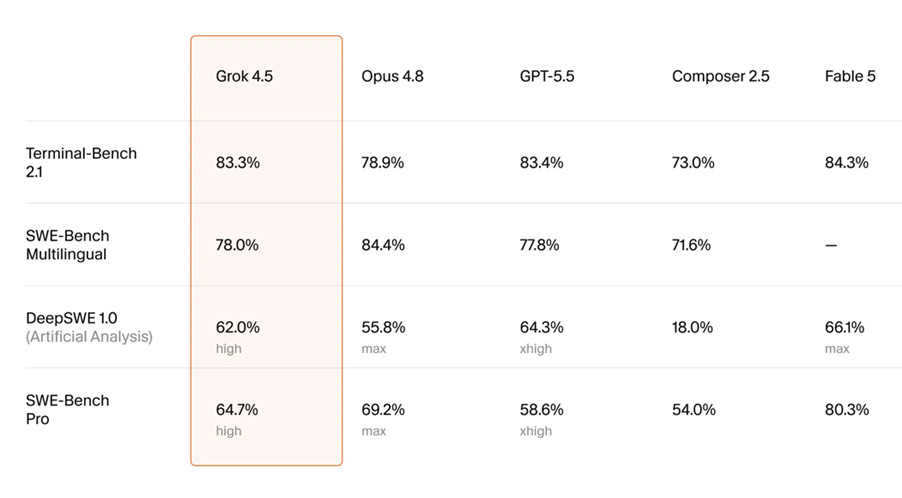
SPACEXAI LAUNCHES GROK 4.5 WITH AGGRESSIVE PRICING AND OFFICE-SUITE INTEGRATION
Key Details: SpaceX AI introduced Grok 4.5, positioned as its smartest model for coding, agentic tasks and knowledge work, with strength across science, engineering and math. It serves 90 tokens per second using over four times fewer tokens than comparable leading models, integrates directly into Microsoft PowerPoint, Word, Excel and Outlook plus Google Docs, Sheets and Slides, and is priced at $2 per million input tokens and $6 per million output tokens.
Impact Assessment: Frontier-adjacent capability at commodity pricing accelerates the deflation in AI inference costs, pressuring OpenAI and Anthropic margins while expanding total usage — the pattern that keeps infrastructure demand rising even as per-token economics compress. Native office-suite integration attacks Microsoft Copilot’s distribution moat directly, and strengthens the AI narrative inside any SpaceX valuation work ahead of the IPO.
TESLA EXPECTED TO POST 30% PROFIT GROWTH ON RECORD DELIVERIES AS MARGINS AND AI STRATEGY FACE SCRUTINY
Key Details: Wall Street expects Tesla to report adjusted EPS of $0.52, up 30% year over year, on revenue of about $26.07 billion after a record 480,126 vehicle deliveries in the quarter, with analysts encouraged by stronger-than-expected Q2 deliveries and competitive demand in China and Europe. Investors will scrutinise vehicle margins, autonomous-driving and robotaxi progress, capital allocation and the company’s artificial-intelligence initiatives beyond its automotive operations.
Impact Assessment: Options markets imply a roughly 7% post-earnings move, more than double the recent average, reflecting genuine uncertainty over margins and the cybercab ramp. A clean beat would validate the EV demand recovery and support battery manufacturers, industrial metals and broader growth sectors; a margin miss would reignite competition concerns and increase volatility across high-growth equities.
TSMC CAPITAL EXPENDITURE REMAINS GLOBAL FOCAL POINT
Key Details: Taiwan Semiconductor Manufacturing Company continues expanding global production capacity while progressing substantial United States investment plans designed to meet growing demand for advanced artificial-intelligence processors. Investors remain focused on utilisation rates and customer demand trends.
Impact Assessment: Sustained investment supports equipment suppliers, industrial automation companies and critical-material producers. Any reduction in expansion plans would weigh on semiconductor supply-chain earnings expectations and reduce confidence in long-term artificial-intelligence infrastructure spending.

BITCOIN STABILISES AS MACRO RISKS OFFSET ETF SUPPORT
Key Details: Bitcoin traded near sixty-five thousand dollars as investors balanced continued institutional demand against higher Treasury yields, elevated geopolitical risk and expectations that United States monetary policy may remain restrictive. Spot-market activity remained orderly despite increased volatility across broader financial markets.
Impact Assessment: Stable pricing supports institutional participation and digital-asset sentiment, but rising real yields continue limiting upside. Sustained macro uncertainty could strengthen demand for alternative stores of value, while a stronger dollar would likely cap near-term cryptocurrency gains.
SPOT BITCOIN ETFS CONTINUE ATTRACTING LONG-TERM CAPITAL
Key Details: United States spot Bitcoin exchange-traded funds continued recording healthy institutional participation as pension funds, wealth managers and asset allocators maintained exposure despite heightened macro volatility. Long-term allocation trends remain supportive even as short-term trading activity fluctuates.
Impact Assessment: Persistent ETF inflows improve market liquidity and reduce reliance on speculative retail participation. Continued institutional accumulation supports Bitcoin while strengthening the broader digital-asset ecosystem, although higher interest rates remain an important valuation headwind.
STABLECOINS REMAIN CENTRAL TO DIGITAL-ASSET LIQUIDITY
Key Details: Stablecoins continue expanding their role in global digital payments, decentralised finance and institutional settlement infrastructure. Regulatory clarity in several major jurisdictions has encouraged further adoption by financial institutions exploring tokenised payment systems.
Impact Assessment: Continued stablecoin growth supports trading liquidity, tokenisation initiatives and blockchain infrastructure providers. Greater institutional usage also increases the integration between traditional financial markets and digital assets, making crypto increasingly sensitive to monetary-policy expectations.
TOKENISATION ADOPTION CONTINUES TO ACCELERATE
Key Details: Financial institutions continue expanding tokenisation initiatives covering money-market funds, government securities and private-market assets. The technology is increasingly viewed as a mechanism for improving settlement efficiency, transparency and collateral management across capital markets.
Impact Assessment: Growing tokenisation supports blockchain infrastructure companies while strengthening institutional confidence in distributed-ledger technology. Wider adoption may gradually reshape capital-market plumbing, benefiting digital-asset infrastructure providers while increasing competition for traditional settlement businesses.
CRYPTO MARKETS TRACK GLOBAL MACRO POSITIONING
Key Details: Cryptocurrency markets continue responding primarily to movements in the United States dollar, Treasury yields and geopolitical developments rather than crypto-specific catalysts. Institutional investors increasingly view Bitcoin as part of broader macro asset-allocation decisions.
Impact Assessment: Continued macro integration increases correlation between cryptocurrencies, equities and real yields during periods of market stress. While this may reduce diversification benefits over shorter periods, it also reinforces the asset class’s growing acceptance among institutional investors.
STRATEGY ADDS $225 MILLION TO USD RESERVE, HOLDS 843,775 BITCOIN
Key Details: Strategy announced a $225 million increase in its USD reserve to a total of $3.2 billion, while continuing to hold 843,775 BTC.
Impact Assessment: Building a $3.2 billion cash buffer rather than converting every available dollar into bitcoin marks a notable defensive turn for the sector’s most aggressive accumulator. It signals management is provisioning for obligations or volatility ahead — prudent for creditors, but a sentiment tell for bitcoin proxies whose premium rests on relentless accumulation.
ECB SELECTS 36 PROVIDERS FOR 2027 DIGITAL EURO PILOT AS CIPOLLONE FRAMES PROJECT AS DEFENCE AGAINST STABLECOINS
Key Details: The ECB selected 36 payment service providers for a year-long digital euro pilot starting in 2027, the latest milestone in the EU’s effort to create a digital form of central bank money while reducing reliance on foreign payment networks. Board member Piero Cipollone warned stablecoin adoption could drain banks’ retail deposits and disrupt lending, positioning the digital euro as the response, with guardrails including no interest payments and holding limits to address deposit-flight risks.
Impact Assessment: Europe is explicitly framing the digital euro as a defensive instrument against dollar-stablecoin encroachment, hardening the regulatory environment for private issuers in the bloc. The design guardrails reassure European banks, while long-run pressure falls on US card networks’ European economics and stablecoin growth prospects there — a slow-burn structural theme rather than a tradeable catalyst today.