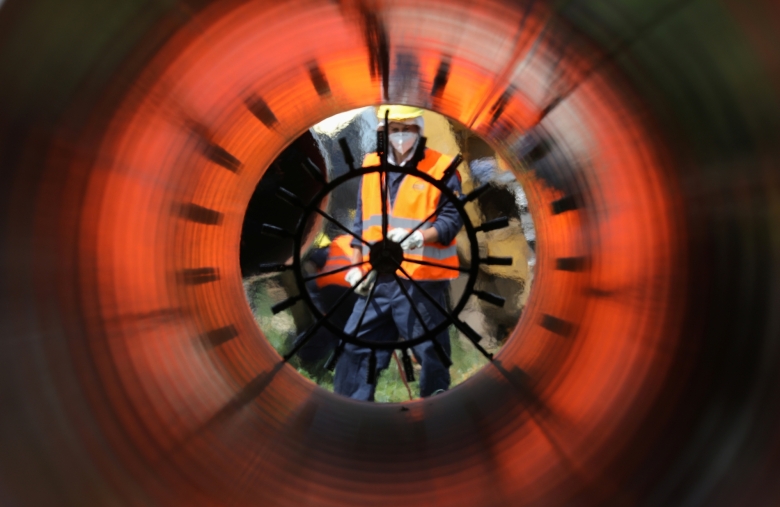
Türkiye has also become an oil and gas producer through the development of the Sakarya gas field in the Black Sea and the Gabar oil fields. Sakarya has produced around 9.5 million cubic metres (mcm) of gas per day since April 2025, with plans to double output by the end of 2026. Production from the Gabar fields reached 81,000 barrels of oil per day (bpd) in 2025, but output still falls short of demand, so Ankara wants to combine domestic production with its pipeline network and LNG infrastructure to strengthen Türkiye’s position as a regional centre for energy trading.
Türkiye is already well placed to serve as a major route for regional energy flows. A genuine energy hub, however, requires more than pipelines. It also needs a transparent market, stable rules, and the ability to influence prices and trading patterns.
Broadened ambitions
Israel has followed a different course. It initially placed its hopes in the EastMed pipeline, designed to carry Israeli and Cypriot gas directly to Europe. Israel, Greece and Cyprus signed the agreement in 2020, envisaging a pipeline that would transport gas from eastern Mediterranean fields to Europe through Cyprus and Greece, initially 10bcm but with scope to double that volume at a later stage.
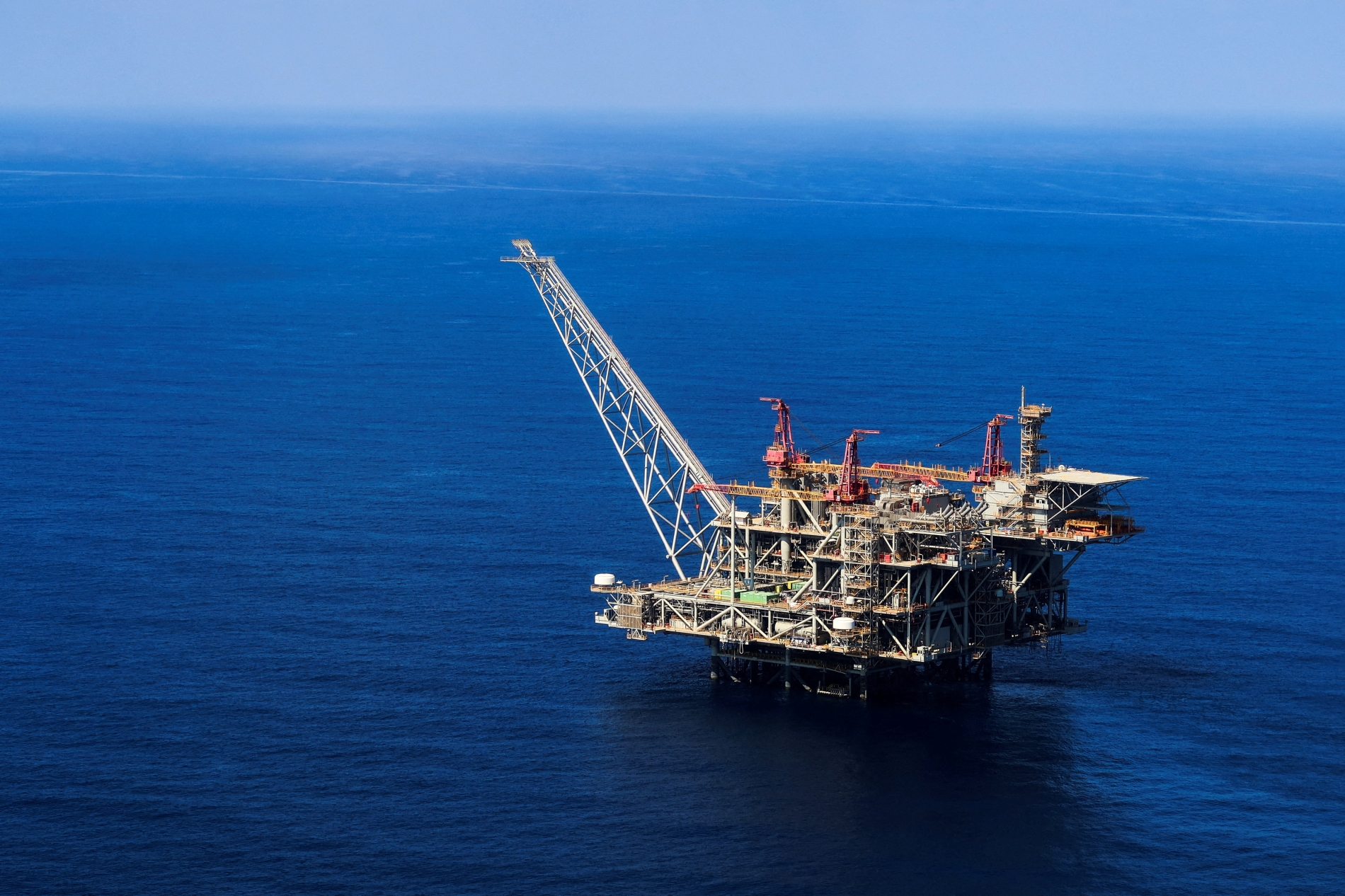
Economic and technical obstacles prevented it from advancing, however, prompting Israel to broaden its ambitions. Gas exports are now only one part of the strategy. Israel wants closer integration with Europe through energy, infrastructure, and technology. Its plans include increasing gas exports through Egypt, participating in electricity interconnection projects, and expanding cooperation in clean energy and technology.
Since the discovery of the Tamar field in 2009 and Leviathan in 2010, Israel has moved from a gas importer to a gas exporter. In 2024, output hit 27bcm. More than half went to the domestic market, the rest went to Egypt and Jordan. According to Israel’s Energy Ministry, exports were 13% higher than the previous year. Israel’s gas resources are nevertheless too limited to rival those of the world’s leading suppliers. For example, Norway exported more than 100bcm to Europe in 2024, while US exports of LNG to Europe topped 6bcm the same year.
Israel has therefore turned towards deeper integration with Europe’s energy system. It aims to increase gas exports through Egypt’s LNG terminals, take part in electricity interconnection projects and expand cooperation in low-carbon hydrogen, renewable energy, energy efficiency and innovation. These priorities were set out in the memorandum of understanding signed by the EU, Egypt and Israel in 2022. It says all parties will cooperate in “renewable and low-carbon hydrogen, renewable gases, energy efficiency, energy-saving technologies and the reduction of methane emissions”.
Connectors and corridors
The Great Sea Interconnector, formerly known as the EuroAsia Interconnector, forms part of this broader strategy. It involves laying a subsea electricity cable linking the grids of Greece, Cyprus, and Israel. Although it faces political and financial difficulties, it is expected to link the electricity networks of the eastern Mediterranean to the European market, strengthen security of supply, and support the integration of renewable energy. The European Commission has designated it a ‘Project of Common Interest’ that could end Cyprus’s energy isolation by connecting it to the European electricity grid.
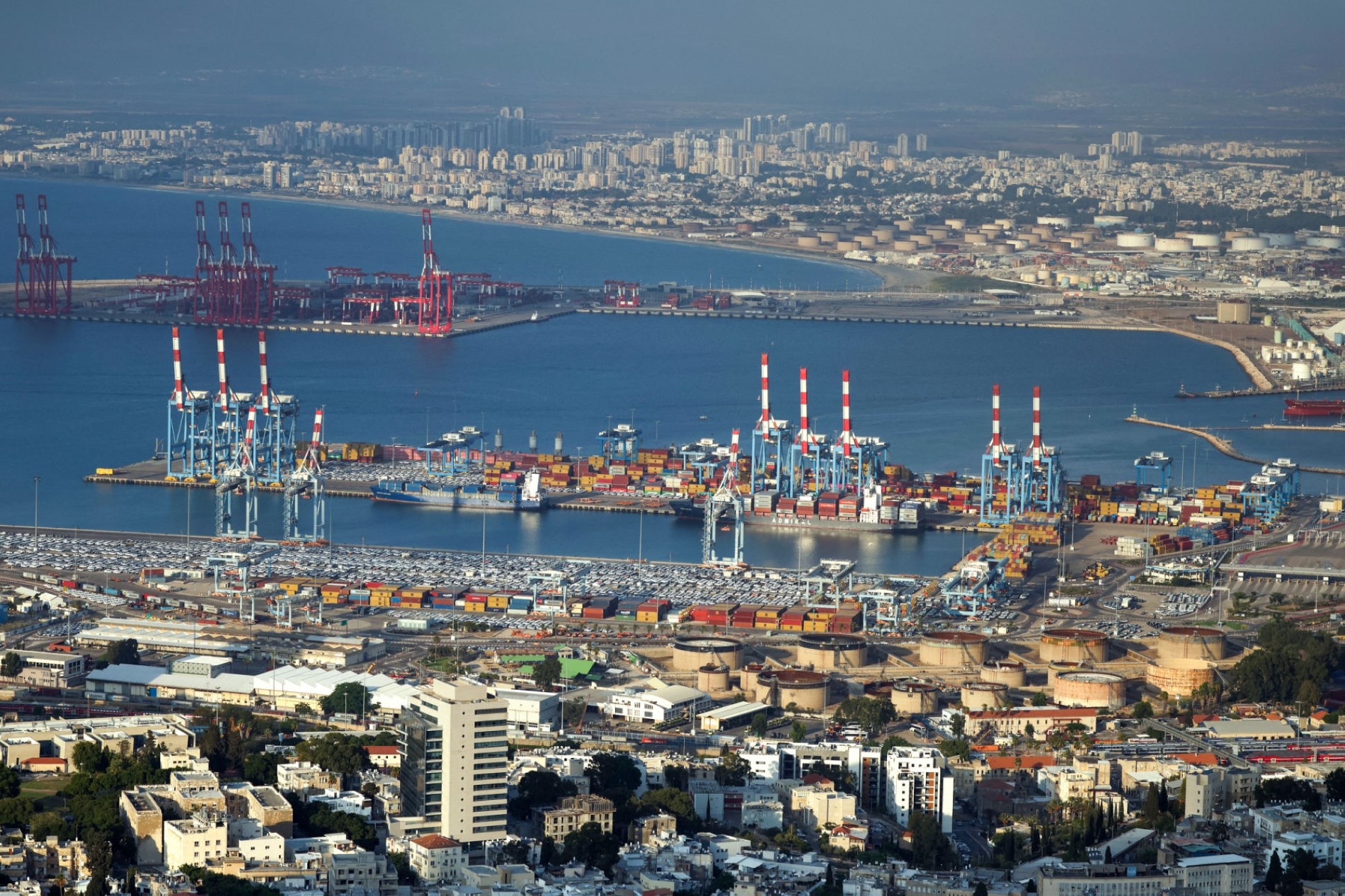
The India-Middle East-Europe Economic Corridor, known as IMEC, also fits this broader Israeli strategy. Announced at the G20 summit in New Delhi in 2023, the initiative brings together India, the EU, the US, Saudi Arabia, the UAE, and Israel. The corridor is envisaged as an integrated network of ports, railways, digital infrastructure, and energy systems stretching across Asia, the Middle East, and Europe.
For Israel, it offers a pivotal position between the Gulf and the Mediterranean. It could strengthen the country’s role in regional trade while connecting it to the energy and communications networks planned under the corridor. IMEC would therefore give Israel an opportunity to establish itself as a logistics and energy gateway between Asia and Europe, rather than remaining as a gas exporter.
The project also carries wider geopolitical significance. Several research institutions, including the Atlantic Council, regard it as part of the West’s alternative to China’s Belt and Road Initiative (BRI). It is also intended to diversify supply chains and make them more resilient as US-China competition spreads across global trade and infrastructure.
Despite its economic and geopolitical promise, IMEC faces significant obstacles. These include no comprehensive financing framework, tensions in the Middle East, and difficulties coordinating such a large number of participating states, not to mention competition from established trade routes, including the Suez Canal and the BRI. The transport corridor alone faces a $5bn funding shortfall before even a basic operational link between Gulf ports and Haifa can be established.
Most of the unmet financing needs are concentrated in Jordan and Israel, as well as in proposed logistics centres at several locations. These include Haradh and Al Haditha in Saudi Arabia, Mafraq in Jordan, and an area near Beit She’an in Israel. Researchers therefore think the project will advance more gradually through a series of smaller, interconnected schemes, rather than as a single undertaking.
Compete or complement?
Analysts ask whether IMEC is a rival to Türkiye, or a complement to it, amidst a wider debate over the future of Türkiye’s geoeconomic role. IMEC’s proposed route bypasses Turkish territory, even though Türkiye is a natural bridge between Asia and Europe through its extensive trade, energy and transport networks. “There can be no corridor without Türkiye,” said President Recep Tayyip Erdoğan bluntly.
The global economy, however, seldom depends on a single route. Europe’s experience with Russia exposed the risks of an excessive reliance on one supplier or corridor and encouraged a broader range of alternatives. IMEC need not displace Türkiye, and Türkiye’s continuing importance would not mean that the corridor had failed. Türkiye may remain a principal hub for energy flowing westwards, while Israel becomes part of a wider commercial and technological network linking the Gulf, India, and Europe.
The difference lies in what each country is betting on. Türkiye relies on geography and established infrastructure, while Israel places greater emphasis on economic and technological integration. The two models may yet prove complementary. Türkiye has considerable strength in conventional gas and north-south transit routes, while IMEC is conceived mainly as an east-west multimodal corridor. Despite continuing political tensions, future cooperation between the two could increase the region’s overall capacity to meet Europe’s energy and commercial needs.
The competition will not be decided by gas volumes alone. The EU is pursuing policies designed to create a low-carbon economy, increasing the importance of electricity, renewables and low-carbon hydrogen, and digital infrastructure to both energy security and economic competitiveness. This is reflected in the European Green Deal, which aims to make the EU climate-neutral by 2050.
