
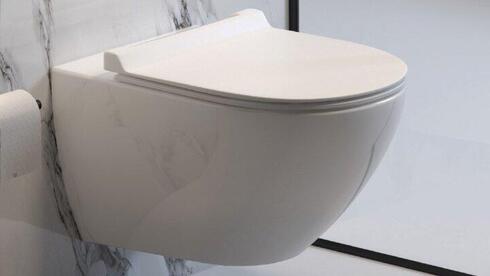
Hamat’s board of directors has decided to halt the company’s self-manufacturing operations in Turkey, about a decade after it established a sanitary ware plant there. The products are manufactured through its subsidiary MCP, which oversees the production of ceramic sanitary ware, including the design, development, manufacturing and sale of toilets and sinks, mainly for other subsidiaries in the group. This field constitutes a separate operating segment in the company’s financial reports.
The decision to halt operations comes against the backdrop of continuing losses at the Turkish plant. In the first quarter of 2026, those losses deepened by 10% to about 3 million shekels. The loss-making activity stems from low demand from the group’s subsidiaries, difficulty marketing the products in the Turkish market against the backdrop of the boycott declared by President Recep Tayyip Erdogan on trade activity with Israel, and difficulty marketing them outside Israel as well. Hamat is facing fierce competition from imports of cheap products from the Far East, and its activity is also being affected by these market pressures.
Following the plant’s closure, which is expected to take place within a short time, most of the workers in Turkey will be laid off. Hamat estimates that the cost of terminating the plant employees’ employment will total 1.7 million shekels, and that once the move is completed, ongoing expenses related to this activity are expected to amount to a sum that is not material to the company.
Alongside the halt in production, Hamat is examining options for realizing its assets in Turkey. Among other things, it is looking into the possibility of selling the operation in its entirety, including all of its assets, or selling separately the plant, the land on which it is built – which is owned by Hamat, and the machinery and equipment.
As of March 31, 2026, the value of the machinery and equipment stood at 53.5 million shekels in the company’s reports. Hamat estimates it will record an impairment for some of the machinery and equipment, but at this stage it cannot estimate the scale of the accounting write-down. However, according to the company, the land and plant, excluding the machinery and equipment, are listed in its reports at a value of about 28.8 million shekels. An external valuation conducted in December 2025, however, valued those assets at 97 million shekels.
Hamat said the halt in operations applies only to the production of sanitary ware at the Turkish plant, and that it intends to continue operating in the sanitary ware sector. It will try to locate alternative manufacturers to supply the products, so that the cost to the company will be lower than self-manufacturing, and it estimates that the change in its operating model will improve profitability in the field.
Hamat is traded at a valuation of 570 million shekels and is managed by CEO and controlling shareholder Yoav Golan. It ended 2025 with sales of 954 million shekels, reflecting a decline compared with its prewar revenue. In 2022, the company’s revenue stood at more than 1 billion shekels. Annual net profit totaled 30 million shekels. The company ended the first quarter of 2026 with a 7% decline in sales, which totaled 223 million shekels, and a 32% drop in net profit, which stood at 6 million shekels.