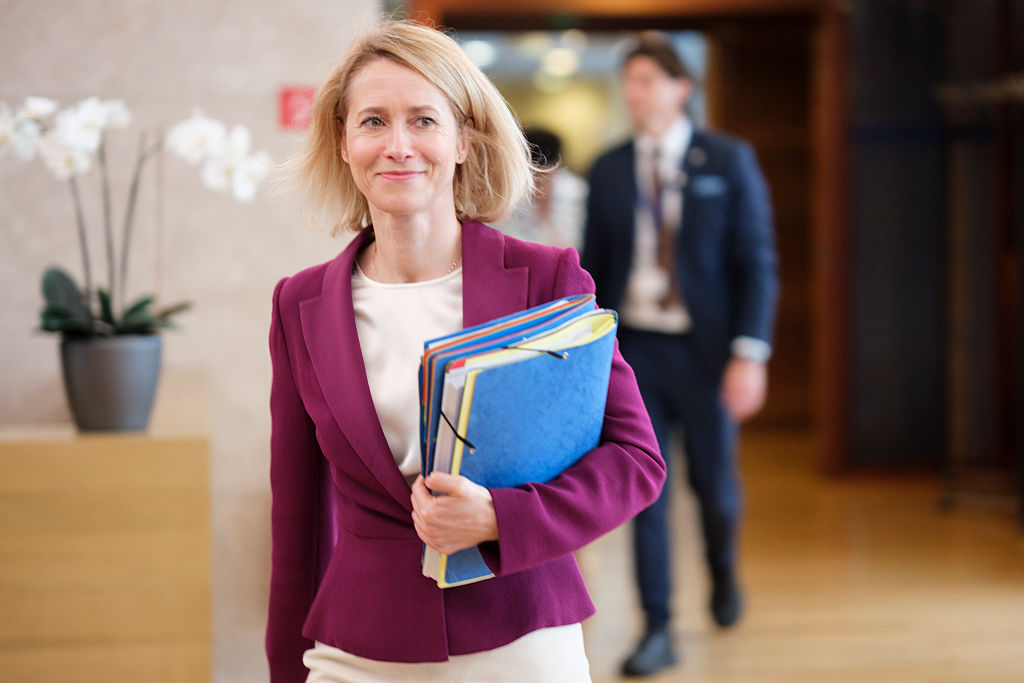
It has played badly in Berlin, but the diplomatic spat between Kaja Kallas and Israel might well end up playing in her favour.
The EU foreign affairs chief has been widely viewed as soft on Israel. But in recent weeks, that perception has begun to change, in no small part due to a row between her and Tel Aviv that exploded into the open as she was celebrating her 49th birthday in Brussels.
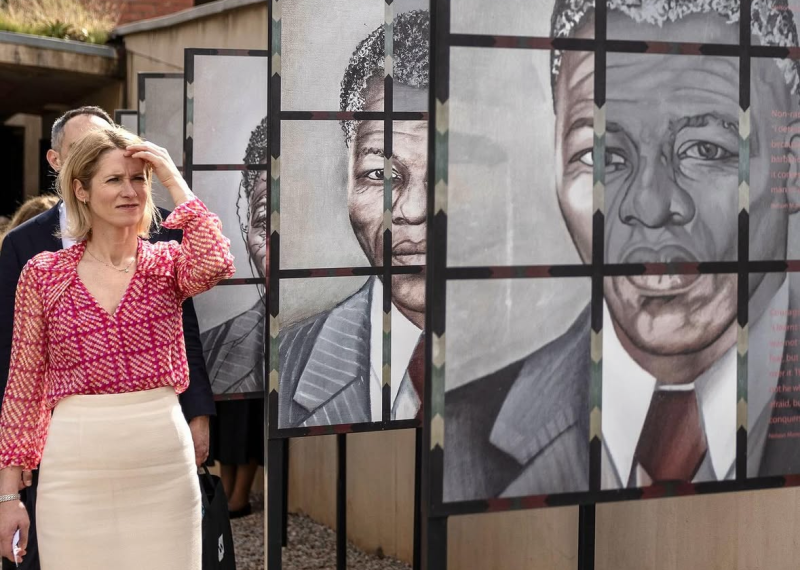
Gideon Sa’ar said he was cutting off all ties with the Kallas on Thursday, six days after Euractiv revealed she had likened Israel’s treatment of Palestinians to South African apartheid.
When asked about her stance on ‘apartheid’ in the West Bank at Thursday’s European summit, she refused to comment on remarks she made behind closed doors.
“I can’t fight the shadows all the time,” she said, urging journalists to focus on her public statements on Israel, which do not mention apartheid, as it is not official EU policy.
Kallas’ critics point to her native Estonia’s warm ties with Israel – a relationship that remains politically relevant because her party still governs in Tallinn – and her deal with Benjamin Netanyahu’s government to get humanitarian aid into the Gaza Strip without coordinating with the Berlaymont.
She has also been criticised for focusing exclusively on the war in Ukraine since taking the job in late 2024.
EXCLUSIVE: Kallas’ Israel ‘apartheid’ remarks deepen EU foreign policy crisis
Kaja Kallas compared Israel to South Africa’s racist apartheid era during high-level talks in Mexico,…
4 minutes
Her latest diplomatic row comes as Kallas fends off internal attacks from within the European Commission in a foreign-policy turf war that pits Ursula von der Leyen against her smaller, much less well-resourced European External Action Service.
The spat will help Kallas put more political distance between herself and the German von der Leyen, who is still viewed as resolutely pro-Israel.
Iratxe García, the European Parliament’s socialist chief, who is no natural ally of Kallas, even reposted her statement rebutting Sa’ar’s criticism.
Barry Andrews, a senior Irish MEP who argues that Israel is guilty of apartheid in the West Bank, said Kallas is “moving in the right direction”.
Kallas has stood up for the “many” foreign ministers she said this week have demanded that the Commission come forward with a list of legal options for banning trade with illegal Israeli settlements, something von der Leyen and other commissioners are reluctant to do.
Election mode
Antonio Tajani, the Italian foreign minister, put the Israeli diplomatic escalation in the context of the upcoming October elections in Israel. Netanyahu and his allies, like Sa’ar, are fighting tooth and nail to remain in power.
“It’s absolutely domestic politics… since the elections are coming and this is part of the campaign,” said Maya Sion Tzidkiyahu, director of Israel-Europe Relations Program, Mitvim Institute, an Israeli think tank.
“Yet it has to be said that the word ‘apartheid’ could not be ignored by any foreign minister in Israel,” she added.
The upcoming elections are also a reason why some EU governments are hesitating on imposing sanctions on two far-right ministers in Netanyahu’s government, Itamar Ben-Gvir and Bezalel Smotrich.
(bw, mm)